
Your skeleton is rebuilding itself all the time, and it needs more than just calcium to do that well. Vitamin D helps you absorb it, vitamin K points it at your bones, and vitamin C and magnesium do their part too. These juices are built around the foods richest in those nutrients: leafy greens, arugula, mustard greens, bok choy, fresh parsley, fresh nettles, fresh moringa, broccoli, rhubarb, citrus, kiwi, figs and fortified plant milks.
All our bone-health juices
Kale Kiwi and Celery Juice
A crisp green juice that tastes far sweeter than it looks, loaded with the vitamin K and calcium your bones need.
Check out this recipe
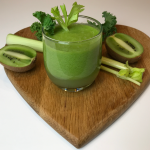
Bone Boost Juice
A sweet green juice that delivers a proper hit of calcium, plus the vitamin D and K your bones need to put it to work.
Check out this recipe
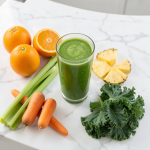
Green Bone Builder Juice
Spinach and broccoli bring calcium and vitamin K, the building blocks your bones actually need.
Check out this recipe
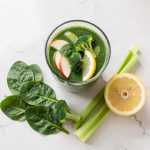
Watercress Pear and Cucumber Juice
Peppery watercress softened by sweet pear and cool cucumber. Watercress is one of the best green sources of vitamin K and calcium you can actually juice, and this is the glass I reach for when I want something savoury but still easy to drink. Ten minutes, two glasses.
Check out this recipe
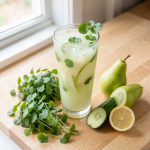
Kale and Orange Juice
Kale and orange is a friendlier pairing than it sounds. Two oranges and a sweet apple take the edge off the kale, and a knob of ginger keeps it interesting. It is the glass I reach for when I want a green juice that actually tastes like a treat.
Check out this recipe
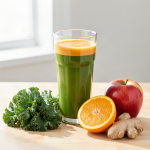
Swiss Chard and Apple Juice
Swiss chard has an unfair reputation as the awkward green. Its flavour is mild, almost earthy-sweet, and it juices into a gentle green glass that takes well to sweet apple and a thumb of ginger. Chard is one of the few vegetables with a serious amount of vitamin K, the nutrient that helps your body put calcium where it belongs, so this is the juice I reach for when I want a green that earns its keep without tasting like lawn clippings.
Check out this recipe
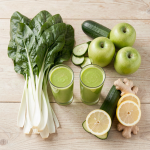
Spinach, Orange and Apple Juice
This is the green juice I make when I want something gentle rather than grassy. Two oranges and a green apple sweeten it enough that you do not need to add anything else, and the spinach slips in behind without taking over. Spinach brings vitamin K and calcium, the orange brings the vitamin C you need to build the collagen that holds bone together, and it takes about four minutes from fridge to glass.
Check out this recipe
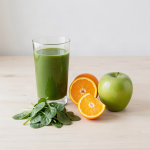
Fig and Apple Juice
Ripe figs and green apple with a whole lemon to sharpen it. Soft, sweet and a little jammy, and one of the few juices that brings calcium, potassium and vitamin K along with the sugar.
Check out this recipe
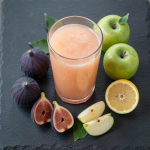
Pak Choi and Orange Juice
Pak choi is the green I buy when I want something for my bones without another kale juice. It carries a useful amount of calcium that your body can actually absorb, because unlike spinach and chard it is low in oxalates, and it brings vitamin K and vitamin C with it. Two oranges and half a cucumber turn it into a green citrus glass rather than a salad, and a thumb of ginger keeps it bright. Four ingredients, ten minutes, nothing to cook.
Check out this recipe

Kale, Apple and Cucumber Juice
A sharp green juice that leans on kale for the minerals, apple for the sweetness and cucumber to keep it light. This is the one I make when I want something green that does not taste like punishment. Two minutes in a juicer, no cooking, and it keeps in a bottle until the next morning.
Check out this recipe
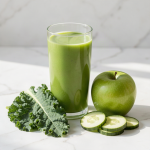
Collard Greens, Apple and Lemon Juice
Collard greens juice better than they cook. They are milder than kale and lower in the oxalates that tie up the calcium in spinach, so the minerals in this one are easier for your body to use. Apple softens the green edge and lemon keeps it bright. Two glasses, ten minutes, no cooking.
Check out this recipe
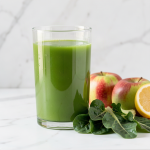
Arugula, Apple and Cucumber Juice
Arugula is the peppery one, and it juices into something far softer than it tastes in a salad. It is also one of the higher-calcium salad greens, so this is a bone-friendly glass that does not taste like homework. Cucumber stretches it out, apple sweetens it, lemon keeps it bright. Two glasses, ten minutes, no cooking.
Check out this recipe
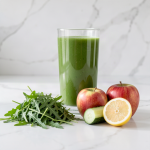
Rhubarb, Apple and Orange Juice
Raw rhubarb is far too sharp to drink on its own, which is why nearly every rhubarb juice recipe out there simmers it with a cup of sugar. This one skips the sugar instead. The apples and an orange do the sweetening and the rhubarb keeps the whole thing tasting clean and slightly tart. Pink, properly refreshing, and about ten minutes from the fridge to the glass. It is a real source of vitamin K and potassium, and I have been straight in the notes about the calcium.
Check out this recipe
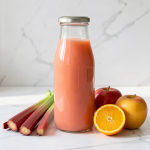
Mustard Greens, Apple and Carrot Juice
Mustard greens are one of the few juice greens where the calcium is worth counting, because they are low in oxalate so your body actually absorbs it. Carrot and apple bring the sweetness and the lemon keeps the peppery edge in check. It works out at around 133 calories a glass with roughly 20 g of sugar, and straining does lose most of the fibre you would get from eating them whole.
Check out this recipe
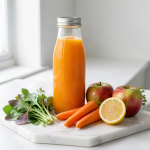
Parsley, Apple and Cucumber Juice
Parsley is the one ingredient here with a genuine bone story, because it is the richest everyday source of vitamin K there is. Paired with sweet apple and cool cucumber it makes a clean, savoury green juice that is nothing like the bitter shot you might be expecting. The apple sweetens it, the cucumber keeps it light, and the lemon stops the parsley going flat.
Check out this recipe

Nettle, Apple and Cucumber Juice
Nettle is the one ingredient here you can pick for nothing, and a glass of it is a deep green, genuinely mineral-dense drink cut with sweet apple and cucumber so it slips down easily instead of tasting like a hedge. The honest part is the calcium. Nettle really does contain a fair amount, but nearly every "more calcium than spinach" claim you will read is comparing dried nettle powder with fresh spinach, and nettle is a mineral accumulator that takes up whatever is in the soil it grew in, so the published numbers swing from modest to enormous. Drink it for the vitamin K and because it is a proper dark leaf, and pick your nettles before the plants flower.
Check out this recipe
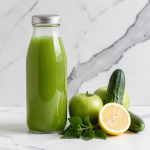
Bok Choy, Apple and Cucumber Juice
Bok choy is the green I reach for when I want a bone-friendly juice that does not taste like a punishment. On its own it is mild and slightly cabbagey, so two sweet apples carry it and half a cucumber keeps the whole thing light. The lemon is not decoration, it lifts the glass and stops the apple reading as pure sweet. Two heads and two apples gives you two proper glasses in about eight minutes.
Check out this recipe
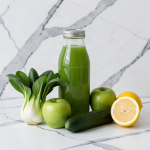
Moringa, Apple and Cucumber Juice
The green juice I make when the bag of moringa leaves in the fridge is starting to look sorry for itself. Moringa on its own tastes grassy and a bit bitter, so the cucumber waters it down and the apple and lime do the flavouring. What you get is a clean, bright green glass that is easy to drink and happens to be a real source of calcium, vitamin K and iron.
Check out this recipe
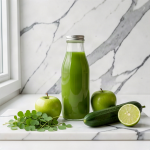

Kale Kiwi and Celery Juice
A crisp green juice that tastes far sweeter than it looks, loaded with the vitamin K and calcium your bones need.
Equipment
- 1 Juicer or a blender and a nut milk bag
- 2 Airtight glass bottles for storing
- 1 Budget cold press juicer a great value alternative
- 1 Budget blender a great value alternative
Ingredients
- 2 cups kale stems removed
- 2 kiwi peeled
- 3 stalks celery
- 1 green apple cored
- 1/2 cucumber
- 1/2 lemon peeled
Instructions
Juicer method
- Wash everything, then peel the kiwi and lemon.
- Feed the kale, celery, cucumber and apple through the juicer, then finish with the kiwi and lemon.
- Stir and serve straight away, or bottle and chill for up to 24 hours.
Blender method
- Chop the kale, celery, cucumber and apple roughly and add to a blender with the kiwi and lemon.
- Add a splash of water and blend until smooth.
- Strain through a nut milk bag or fine sieve and serve.
Notes
Kale and celery are two of the best leafy sources of vitamin K, which helps your body send calcium to your bones. Swap the kale for spinach if you want something milder. Nutrition is an estimate per glass and will vary with your produce.
Nutrition
Serving: 1glassCalories: 120kcalCarbohydrates: 28gProtein: 3gFat: 1gSaturated Fat: 1gSodium: 90mgPotassium: 600mgFiber: 7gSugar: 18gVitamin A: 7000IUVitamin C: 180mgCalcium: 223mgIron: 2mg
Tried this recipe?Let us know how it was!
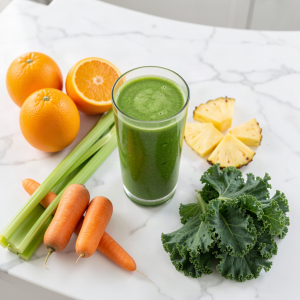
Bone Boost Juice
A sweet green juice that delivers a proper hit of calcium, plus the vitamin D and K your bones need to put it to work.
Equipment
- 1 Juicer masticating or centrifugal
- 1 High-speed blender for the blender method
- 1 Nut milk bag or fine-mesh sieve to strain the blender version
- 2 Airtight glass bottles for storing
- 1 Budget cold press juicer a great value alternative
- 1 Budget blender a great value alternative
Ingredients
Juice base
- 2 cups collard greens or kale, chopped
- 2 medium oranges, peeled
- 2 medium carrots, peeled
- 2 stalks celery
- 1 cup pineapple chunks (fresh or frozen)
Boost
- 1 tbsp chia seeds optional
- 1 cup calcium-fortified almond milk or filtered water
Instructions
Juicer method
- Wash all produce thoroughly, then peel the oranges and carrots.
- Feed the collard greens (or kale), oranges, carrots, celery and pineapple through your juicer.
- Stir in the chia seeds, then pour in the calcium-fortified almond milk (or filtered water).
- Leave to sit for 5 minutes so the chia seeds swell slightly (optional).
- Serve immediately, or store in airtight glass bottles in the fridge for up to 24 hours.
Blender method
- Roughly chop all the produce and add to a high-speed blender with the almond milk (or water).
- Blend on high until completely smooth.
- Strain through a nut milk bag or fine-mesh sieve for a smoother juice.
- Stir in the chia seeds and serve.
Notes
Collard greens, kale and spinach are interchangeable here. Collards and kale carry more calcium and vitamin K; spinach is milder.
A pinch of turmeric, with black pepper, adds some anti-inflammatory value without changing the taste much.
Nutrition figures are an estimate per glass and will vary with your exact ingredients.
Nutrition
Serving: 1glassCalories: 205kcalCarbohydrates: 40gProtein: 5gFat: 3gSaturated Fat: 1gSodium: 85mgPotassium: 790mgFiber: 10gSugar: 24gVitamin A: 6000IUVitamin C: 125mg
Tried this recipe?Let us know how it was!
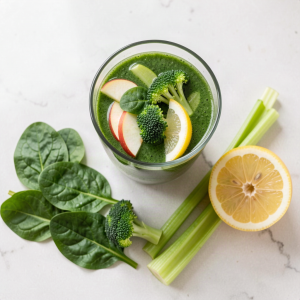
Green Bone Builder Juice
Spinach and broccoli bring calcium and vitamin K, the building blocks your bones actually need.
Equipment
- 1 Juicer or blender and nut milk bag
- 1 Budget cold press juicer a great value alternative
- 1 Budget blender a great value alternative
Ingredients
- 2 cups spinach
- 1 cup broccoli florets
- 2 stalks celery
- 1 apple cored
- 1/2 lemon peeled
Instructions
Juicer method
- Wash everything and core the apple.
- Juice the spinach, broccoli and celery first, then the apple and lemon.
- Stir and serve immediately.
Blender method
- Blend everything with a little water until smooth.
- Strain through a nut milk bag and serve.
Notes
Broccoli and spinach are two of the most calcium-dense greens you can juice, and their vitamin K helps your body put that calcium to work in your bones. Nutrition is an estimate per glass.
Nutrition
Serving: 1glassCalories: 90kcalCarbohydrates: 21gProtein: 3gSodium: 90mgPotassium: 600mgFiber: 5gSugar: 13gVitamin A: 6000IUVitamin C: 60mg
Tried this recipe?Let us know how it was!
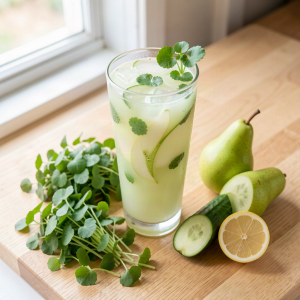
Watercress Pear and Cucumber Juice
Peppery watercress softened by sweet pear and cool cucumber. Watercress is one of the best green sources of vitamin K and calcium you can actually juice, and this is the glass I reach for when I want something savoury but still easy to drink. Ten minutes, two glasses.
Equipment
- 1 Juicer masticating or centrifugal
- 1 High-speed blender for the blender method
- 1 Nut milk bag or fine-mesh sieve to strain the blender version
- 2 Airtight glass bottles for storing
- 1 Budget cold press juicer a great value alternative
- 1 Budget blender a great value alternative
Ingredients
Juice base
- 100 g watercress, thick stems trimmed about a standard supermarket bag
- 2 ripe pears, cored conference or williams; the riper the sweeter
- 1/2 cucumber no need to peel
- 1/2 lemon, peeled the pith is what makes it bitter
- 100 ml cold water only if using the blender method
Instructions
Juicer method
- Wash the watercress and shake it dry. Trim off any thick woody stems, the thin ones are fine to juice.
- Core the pears and peel the lemon half. The cucumber goes in as is.
- Feed the cucumber through the juicer first, then the pears, then the watercress. Packing the leaves in with the firmer fruit stops them spinning around and getting stuck.
- Stir, pour into two glasses and drink straight away. It separates as it sits, so give it a swirl if you put it down.
Blender method
- Prep everything the same way: watercress washed and trimmed, pears cored, lemon peeled.
- Tip everything into a high-speed blender with the cold water and blend on high for 60 seconds, until completely smooth.
- Pour through a nut milk bag or a fine-mesh sieve and squeeze out as much juice as you can.
- Taste and thin with a splash more water if it is thicker than you like. Serve over ice.
Nutrition
Serving: 1glassCalories: 85kcalCarbohydrates: 21gProtein: 1gSodium: 25mgPotassium: 280mgFiber: 1gSugar: 16gVitamin A: 1000IUVitamin C: 24mgCalcium: 50mg
Tried this recipe?Let us know how it was!
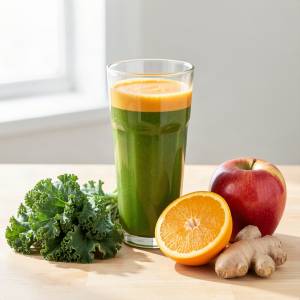
Kale and Orange Juice
Kale and orange is a friendlier pairing than it sounds. Two oranges and a sweet apple take the edge off the kale, and a knob of ginger keeps it interesting. It is the glass I reach for when I want a green juice that actually tastes like a treat.
Equipment
- 1 Juicer
Ingredients
- 100 g curly kale, thick stalks removed
- 2 large oranges, peeled
- 1 sweet apple such as Gala or Pink Lady, cored
- 10 g fresh ginger, peeled
- 200 ml cold water (for the blender method)
Instructions
Juicer method
- Wash the kale and shake it dry, then strip the leaves from the thick stalks, which are tough and bitter. Peel the oranges and roughly chop them. Core the apple and cut it into quarters. Peel the ginger.
- Feed the kale through the juicer a handful at a time, then the apple and ginger, and finish with the oranges. The wet orange flushes the last of the green pulp through the machine and sweetens everything as it goes.
- Stir the juice, pour it into two glasses and drink straight away.
Blender method
- Roughly chop the kale. Peel and chop the oranges and the apple, and peel the ginger.
- Put everything in a blender with 200 ml cold water and blend on high for 60 to 90 seconds, until the kale is completely broken down.
- Strain through a nut milk bag or a fine-mesh sieve, squeezing well to get every drop out. Pour into two glasses and serve.
Notes
Kale is at its best from early autumn through winter, when the cold weather makes the leaves sweeter. Curly kale is the mildest of the kales, so start with it if you are new to green juice, and always strip the thick stalks before juicing.
Nutrition is an estimate per glass.
Nutrition
Serving: 1glassCalories: 95kcalCarbohydrates: 22gProtein: 2gSodium: 25mgPotassium: 480mgFiber: 2gSugar: 16gVitamin A: 3500IUVitamin C: 90mgCalcium: 60mg
Tried this recipe?Let us know how it was!
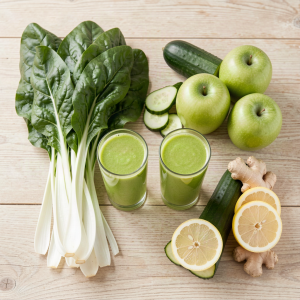
Swiss Chard and Apple Juice
Swiss chard has an unfair reputation as the awkward green. Its flavour is mild, almost earthy-sweet, and it juices into a gentle green glass that takes well to sweet apple and a thumb of ginger. Chard is one of the few vegetables with a serious amount of vitamin K, the nutrient that helps your body put calcium where it belongs, so this is the juice I reach for when I want a green that earns its keep without tasting like lawn clippings.
Equipment
- 1 Juicer masticating or centrifugal
- 1 High-speed blender for the blender method
- 1 Nut milk bag or fine-mesh sieve to strain the blender version
- 2 Airtight glass bottles for storing
- 1 Budget cold press juicer a great value alternative
- 1 Budget blender a great value alternative
Ingredients
- 150 g Swiss chard leaves about 4 big leaves. Rinse well and chop roughly, juicy white stalks included
- 2 sweet apples about 300g, quartered. Gala or Jazz work well; the sweeter the apple, the less green it tastes
- 100 g cucumber roughly a third of one, no need to peel
- 1/2 lemon peeled so the pith does not make it bitter
- 10 g fresh ginger peeled, about a thumb-sized piece
- 150 ml cold water only if using the blender method
Instructions
Juicer method
- Rinse the chard well and shake off most of the water. Chop it and the apples into pieces that fit your feed tube, peel the lemon and ginger, and cut the cucumber into chunks.
- Feed the chard through the juicer a handful at a time, pushing an apple wedge through behind each handful. Leafy greens can cling to the auger, and the apple clears it. Follow with the cucumber, then the lemon and ginger.
- Stir the juice, pour into two glasses and drink straight away. If you want it cold, chill the ingredients for an hour first rather than adding ice and watering it down.
Blender method
- Put the chard, apples, cucumber, lemon and ginger in a blender with the cold water. Blend on high for 45 to 60 seconds, until completely smooth.
- Pour through a nut milk bag or fine-mesh sieve and press well with the back of a spoon to get every drop out.
- For a little more fibre, leave some of the pulp in. Pour into two glasses and drink straight away.
Notes
Keeps for up to 24 hours in an airtight bottle in the fridge. It separates as it sits, so shake well before pouring. One honest word: chard is naturally high in oxalates, so this is an everyday green for most people but not something to drink by the litre. If you have ever had kidney stones, check with your GP before making it a regular habit.
Nutrition
Serving: 1glassCalories: 110kcalCarbohydrates: 27gProtein: 2gSodium: 150mgPotassium: 540mgFiber: 1gSugar: 18gVitamin A: 3800IUVitamin C: 30mg
Tried this recipe?Let us know how it was!
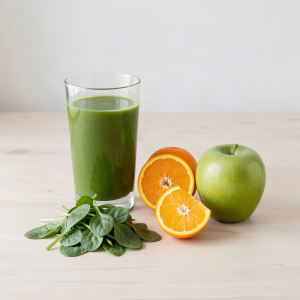
Spinach, Orange and Apple Juice
This is the green juice I make when I want something gentle rather than grassy. Two oranges and a green apple sweeten it enough that you do not need to add anything else, and the spinach slips in behind without taking over. Spinach brings vitamin K and calcium, the orange brings the vitamin C you need to build the collagen that holds bone together, and it takes about four minutes from fridge to glass.
Equipment
- 1 Juicer masticating or centrifugal
- 1 High-speed blender for the blender method
- 1 Nut milk bag or fine-mesh sieve to strain the blender version
- 2 Airtight glass bottles for storing a batch
- 1 Budget cold press juicer the cheaper option if you are just starting out
- 1 Budget blender works fine here, just strain it a little harder
Ingredients
- 3 handfuls baby spinach about 90g, loosely packed
- 2 oranges peeled, pith removed
- 1 green apple cored, skin left on
Instructions
Juicer method
- Rinse the spinach and shake off the excess water.
- Peel the oranges and pull them into segments. Quarter the apple and cut out the core.
- Feed the spinach through the juicer first, then the apple, then the orange. Alternating the greens with the apple stops them clogging the basket on a centrifugal machine.
- Stir, pour into two glasses and drink it while it is still cold.
Blender method
- Put the spinach, the peeled orange segments and the chopped apple into a blender with 120ml cold water.
- Blend on high for 45 to 60 seconds until there are no leafy flecks left.
- Tip it through a nut milk bag or a fine sieve and press the pulp with the back of a spoon to get the last of the juice out.
- Taste it. If your oranges were sharp, squeeze in the juice from the pulp you strained and give it a stir.
Notes
Baby spinach blends smooth; big mature leaves leave a bit of grit behind, so if that is all you have, blend an extra 20 seconds. This one separates after about ten minutes, which is normal. Give it a stir before drinking. Kept in an airtight glass bottle in the fridge it holds for a day, though the vitamin C drops the longer it sits, so fresh is better.
Nutrition
Serving: 1glassCalories: 115kcalCarbohydrates: 27gProtein: 3gFat: 0.5gSaturated Fat: 0.1gSodium: 35mgPotassium: 550mgFiber: 4gSugar: 20gVitamin A: 3200IUVitamin C: 95mg
Tried this recipe?Let us know how it was!
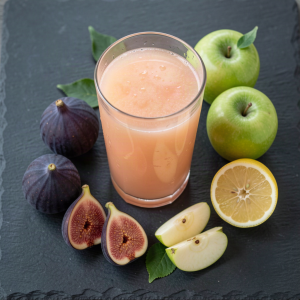
Fig and Apple Juice
Ripe figs and green apple with a whole lemon to sharpen it. Soft, sweet and a little jammy, and one of the few juices that brings calcium, potassium and vitamin K along with the sugar.
Equipment
- 1 Juicer masticating or centrifugal
- 1 High-speed blender for the blender method
- 1 Nut milk bag or fine-mesh sieve to strain the blender version
- 2 Airtight glass bottles for storing
- 1 Budget cold press juicer a cheaper way to get more juice out of soft fruit
- 1 Budget blender works fine for the blender method
Ingredients
Juice base
- 4 ripe fresh figs, stems trimmed about 200g
- 2 medium green apples cored
- 1 lemon, peeled keep as much of the white pith off as you can
Instructions
Juicer method
- Rinse the figs and apples. Trim the fig stems, cut the apples into wedges and peel the lemon.
- Feed the apple wedges through the juicer first, then alternate fig and apple so the soft figs do not clog the machine. Push the lemon through last.
- Stir and taste. If it is sweeter than you like, squeeze in a little more lemon.
- Pour straight away, or bottle in airtight glass and drink within 24 hours.
Blender method
- Roughly chop the figs, cored apples and peeled lemon and put them in a high-speed blender with 150ml cold water.
- Blend on high for about 60 seconds, until there are no lumps of fig left.
- Strain through a nut milk bag or fine sieve for a clear juice. Leave it unstrained for a thicker drink with more fibre in it.
- Chill for 20 minutes or serve over ice.
Notes
Fresh figs are at their best here from late August to October. Out of season, soak four dried figs in warm water for 20 minutes and use those instead: dried figs carry roughly four times the calcium of fresh, but the juice turns thicker and sweeter, closer to a syrup.
Soft, ripe figs give the most juice. If yours are firm, the blender method gets more out of them than a juicer does.
A pinch of ground cinnamon stirred in at the end works well with fig, and a small piece of fresh ginger is worth trying if you want less sweetness.
Nutrition figures are an estimate per glass and will vary with the size of your fruit.
Nutrition
Serving: 1glassCalories: 155kcalCarbohydrates: 38gProtein: 2gFat: 0.5gSaturated Fat: 0.1gSodium: 5mgPotassium: 420mgFiber: 3gSugar: 30gVitamin A: 230IUVitamin C: 17mgCalcium: 45mgIron: 0.6mg
Tried this recipe?Let us know how it was!
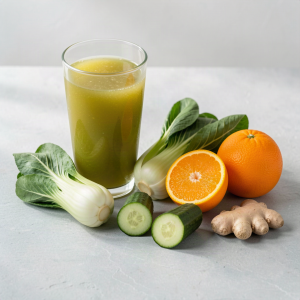
Pak Choi and Orange Juice
Pak choi is the green I buy when I want something for my bones without another kale juice. It carries a useful amount of calcium that your body can actually absorb, because unlike spinach and chard it is low in oxalates, and it brings vitamin K and vitamin C with it. Two oranges and half a cucumber turn it into a green citrus glass rather than a salad, and a thumb of ginger keeps it bright. Four ingredients, ten minutes, nothing to cook.
Equipment
- 1 Juicer masticating or centrifugal
- 1 High-speed blender for the blender method
- 1 Nut milk bag or fine-mesh sieve to strain the blender version
- 2 Airtight glass bottles for storing
- 1 Budget cold press juicer a great value alternative
- 1 Budget blender a great value alternative
Ingredients
Juice base
- 150 g pak choi about 4 large leaves, white stalks and all. Rinse well between the stalks and chop roughly
- 2 oranges large ones, about 300g peeled. Peel right down to the flesh and pull off the white pith
- 150 g cucumber about half a large one, unpeeled
- 10 g fresh ginger peeled, about a thumb-sized piece
- 150 ml cold water for the blender method only
Instructions
Juicer method
- Rinse the pak choi and shake off most of the water. Chop it and the cucumber into pieces that fit your feed tube, peel the oranges down to the flesh and cut them into chunks, and peel the ginger.
- Feed the pak choi through the juicer a handful at a time and push an orange chunk through behind each handful. Greens on their own give up very little juice and they can cling to the auger, so the orange clears the way and carries the pak choi with it. Follow with the cucumber, then the ginger.
- Stir, pour into two glasses and drink it straight away. If you want it properly cold, chill the ingredients for an hour first rather than adding ice, which only waters it down.
Blender method
- Peel the oranges and cut the pak choi, cucumber and ginger into rough chunks. Put everything in a blender with 150ml of cold water.
- Blend on high for about 60 seconds. The stalks take longer than the leaves, so check for pale flecks before you switch it off and give it another 15 seconds if you can still see any.
- Pour through a nut milk bag or a fine-mesh sieve and press the pulp with the back of a spoon to get the last of it out. Pour into two glasses and drink it fresh.
Notes
Keeps for up to 24 hours in an airtight bottle in the fridge. It separates as it stands, so shake it before you pour.
Worth knowing: pak choi is one of the few leafy greens that is low in oxalates, and that is exactly why its calcium is worth having. Spinach and chard are high in oxalates and lock most of their calcium away, so it passes straight through you. If you take warfarin or another blood thinner, keep your vitamin K steady from day to day rather than drinking this in fits and starts, and check with your GP or nurse first.
Nutrition
Serving: 1glassCalories: 95kcalCarbohydrates: 23gProtein: 3gFat: 0.5gSodium: 50mgPotassium: 590mgFiber: 1gSugar: 16gVitamin A: 600IUVitamin C: 100mgCalcium: 140mgIron: 1mg
Tried this recipe?Let us know how it was!
Kale, Apple and Cucumber Juice
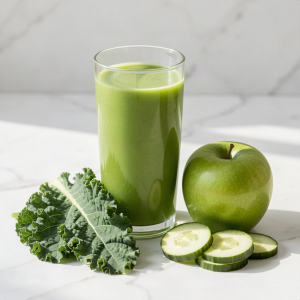
A sharp green juice that leans on kale for the minerals, apple for the sweetness and cucumber to keep it light. This is the one I make when I want something green that does not taste like punishment. Two minutes in a juicer, no cooking, and it keeps in a bottle until the next morning.
Equipment
- Nut milk bag
Ingredients
Juice
- 3 large kale leaves about 60g, stalks removed and roughly chopped
- 1 green apple about 150g, cored and cut into wedges
- 0.5 cucumber about 150g, cut into rough chunks
- 0.5 lemon peeled
- 2 cm fresh ginger about 10g, peeled
Instructions
Juicer method
- Rinse the kale and shake it dry. Tear the leaves off the thick stalks and chop them roughly. Leave the stalks out, they turn the juice bitter and stringy.
- Core the apple and cut it into wedges that fit your juicer's feed chute. There is no need to peel it.
- Cut the cucumber into rough chunks, then peel the lemon and the ginger.
- Feed the kale through first, then the apple, cucumber, lemon and ginger. Sending the apple and cucumber through after the kale helps push the last of the green out of the machine.
- Stir the juice, pour it into a glass, and drink it within 20 minutes if you can. It holds in the fridge for a day in a sealed bottle, though it separates, so give it a shake.
Blender method
- Chop everything the same way, then tip it into a high speed blender with 150ml cold water.
- Blend on high for 45 to 60 seconds until there are no green flecks left.
- Pour it through a nut milk bag or a fine sieve and squeeze the pulp to get the liquid out. It takes a couple of minutes and the texture is much better for it.
- Serve straight away, over ice if the weather calls for it.
Notes
Kale is one of the few greens whose calcium your body actually absorbs well, and vitamin K helps your body hold on to that calcium in the first place. If you take warfarin or another blood thinner, keep your vitamin K intake steady week to week and have a word with your GP before you drink a green juice like this every day.
Nutrition
Calories: 66kcalCarbohydrates: 15gProtein: 1.5gFat: 0.5gSaturated Fat: 0.1gSodium: 8mgPotassium: 210mgFiber: 2.5gSugar: 11gVitamin A: 350IUVitamin C: 45mgCalcium: 50mgIron: 0.5mg
Tried this recipe?Let us know how it was!

Collard Greens, Apple and Lemon Juice
Collard greens juice better than they cook. They are milder than kale and lower in the oxalates that tie up the calcium in spinach, so the minerals in this one are easier for your body to use. Apple softens the green edge and lemon keeps it bright. Two glasses, ten minutes, no cooking.
Equipment
- Nut milk bag
Ingredients
Juice
- 4 large collard green leaves about 120g, thick central stems removed
- 2 sweet apples about 300g, Braeburn or Gala, cored and cut into wedges
- 0.5 lemon about 30g, peeled
Instructions
Juicer method
- Rinse the collard leaves and shake them dry. Cut the thick central stem out of each leaf and trim the bottom of the stalk. Those stems are fibrous and they turn the juice bitter, so they go in the compost.
- Core the apples and cut them into wedges that fit your juicer's feed chute. Keep the skin on, that is where a good deal of the flavour and the colour sits.
- Peel the half lemon and cut it into two or three pieces.
- Feed the collard leaves through first, then the apple, then the lemon. On a slow juicer, alternate a leaf with a piece of apple so the greens do not clog the pulp outlet.
- Stir the juice and drink it while it is fresh, or pour it into a sealed glass bottle and keep it in the fridge for up to 24 hours. It separates as it sits, so give the bottle a shake before you pour.
Blender method
- Chop the collard leaves, the apple and the peeled lemon into small pieces and put them in the blender with 200ml cold water.
- Blend on high for a full minute until there are no big green flecks of leaf left.
- Tip the lot through a nut milk bag or a fine sieve set over a jug, then squeeze the pulp hard to get the last of the liquid out. You should end up with roughly 500ml of juice.
- Chill it for ten minutes before you drink it, it tastes better cold.
Notes
Collard greens are one of the better plant sources of calcium because they are low in oxalates, the compound that ties up the calcium in spinach. Vitamin K is what helps your body hold on to that calcium in the first place. One glass of this covers well over twice the vitamin K most adults need in a day, so if you take warfarin or another blood thinner, keep your vitamin K intake steady from week to week and have a word with your GP before you drink this every day. Juicing also leaves most of the fibre behind in the pulp, so a glass of this is not a swap for actually eating your greens.
Nutrition
Calories: 103kcalCarbohydrates: 25gProtein: 2.5gFat: 0.5gSaturated Fat: 0.1gSodium: 25mgPotassium: 320mgFiber: 3gSugar: 16gVitamin A: 3250IUVitamin C: 38mgCalcium: 164mgIron: 0.6mg
Tried this recipe?Let us know how it was!
Arugula, Apple and Cucumber Juice
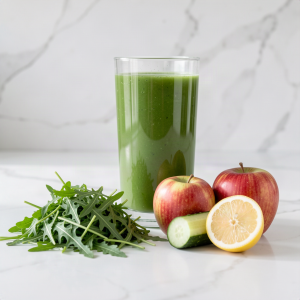
Arugula is the peppery one, and it juices into something far softer than it tastes in a salad. It is also one of the higher-calcium salad greens, so this is a bone-friendly glass that does not taste like homework. Cucumber stretches it out, apple sweetens it, lemon keeps it bright. Two glasses, ten minutes, no cooking.
Equipment
- Nut milk bag
Ingredients
Greens and fruit
- 2 large handfuls arugula (rocket) about 60g, rinsed and shaken dry
- 2 sweet apples about 300g, Braeburn or Gala, cored and cut into wedges
- 1/2 cucumber about 150g, peeled if the skin tastes bitter
- 1/2 lemon peeled, or leave the peel on if your juicer handles it
Instructions
Juicer method
- Rinse the arugula and shake it dry. Feed it in as small loose handfuls rather than one big wet clump, which tends to spin around the drum and give you less juice than you expect.
- Core the apples and cut them into wedges that fit your feed chute. Leave the skin on, because that is where most of the colour and a good deal of the flavour sits.
- Peel the cucumber if the skin tastes bitter, then cut it into batons long enough to reach the blades. Juice it straight after the greens so it rinses the arugula through the machine.
- Juice the lemon last with the skin off. It clears the last of the greens out, and the acid stops the whole glass tasting flat.
- Stir once, pour into two glasses and drink them within about fifteen minutes, while the vitamin C is still doing its job.
Blender method
- Chop everything smaller: arugula roughly, apples and peeled cucumber into chunks, lemon peeled and quartered.
- Blend with 100ml of cold water for 45 to 60 seconds on high, until you cannot see any pieces of leaf left.
- Tip it into a nut milk bag or a fine sieve over a jug and squeeze the pulp properly. There is a surprising amount of juice still in there.
- Serve over ice. It separates as it stands, so give it a stir before you drink it.
Notes
Arugula is one of the higher-calcium salad greens and it is low in oxalates, the compound that locks up the calcium in spinach, so the minerals here are easier for your body to use. It is also very high in vitamin K, which is what helps you hold on to that calcium in the first place. If you take warfarin or another blood thinner, keep your vitamin K intake steady from week to week and have a word with your GP before you drink this every day.
Juicing leaves most of the fibre behind in the pulp, so a glass of this is not a swap for eating your greens. Arugula varies a lot in heat: if yours is aggressively peppery, add another apple or a little more lemon rather than more greens.
Nutrition
Calories: 95kcalCarbohydrates: 24gProtein: 2gFat: 0.5gSaturated Fat: 0.1gPolyunsaturated Fat: 0.2gMonounsaturated Fat: 0.1gSodium: 11mgPotassium: 395mgFiber: 2gSugar: 17gVitamin A: 860IUVitamin C: 23mgCalcium: 70mgIron: 0.6mg
Tried this recipe?Let us know how it was!

Rhubarb, Apple and Orange Juice
Raw rhubarb is far too sharp to drink on its own, which is why nearly every rhubarb juice recipe out there simmers it with a cup of sugar. This one skips the sugar instead. The apples and an orange do the sweetening and the rhubarb keeps the whole thing tasting clean and slightly tart. Pink, properly refreshing, and about ten minutes from the fridge to the glass. It is a real source of vitamin K and potassium, and I have been straight in the notes about the calcium.
Equipment
- Nut milk bag
Ingredients
- 3 rhubarb stalks roughly 200 g, trimmed, with the leafy tops cut off and thrown away
- 2 sweet apples roughly 250 g, cored, skin left on
- 1 orange roughly 180 g, peeled, with as much of the white pith taken off as you can
Instructions
Juicer method
- Rinse the rhubarb stalks and cut the dry ends off. Cut the leafy green tops off too and throw them away, they are not edible. Chop the stalks into lengths that fit your juicer's feed tube.
- Core the apples and cut them into quarters, but leave the skin on. Peel the orange and take off as much of the white pith as you can, because the pith is what turns a sweet citrus juice bitter.
- Feed the rhubarb and the apple through together, alternating between the two. The apple carries the rhubarb through the machine and keeps the pulp moving, and it also takes the edge off the sharpness. Put the orange segments through last so they rinse the last of the rhubarb colour out of the juicer.
- Stir the juice and pour it straight into two glasses. Drink it within the day.
Blender method
- Chop the rhubarb and the apples as above, leave the apple skins on, and peel and segment the orange.
- Put everything in the blender with 100 ml of cold water. Blend on high for about a minute, until you cannot see any solid pieces left.
- Tip the lot into a nut milk bag or a fine sieve set over a jug, then squeeze or press it through. It takes a couple of minutes, but you end up with a much cleaner juice than the blender alone gives you.
- Pour into two glasses and drink straight away. It separates as it sits, so give it a stir.
Notes
Rhubarb earns its place here for two reasons and I want to be straight about both. The stalks are one of the very few fruits or vegetables with a genuinely high calcium figure, about 86 mg in every 100 g. The catch is that a fair amount of that calcium is locked up as calcium oxalate, which your body cannot absorb well, so this is not a glass you drink for your bones in the way you would drink milk. What rhubarb does give you properly is vitamin K, around 29 µg per 100 g, and vitamin K is the nutrient that tells calcium where to go in the body. So it works alongside calcium rather than replacing it, and that is the honest version of the claim.
The other thing to know is oxalic acid. Raw rhubarb stalks carry a good deal of it, which is why rhubarb tastes so sharp and why it can leave your teeth feeling furry. If you have had kidney stones, or you have gout or kidney disease, this is one to skip. Rhubarb leaves are not edible at all, so only ever juice the stalks.
There is about 20 g of sugar in a glass and every gram of it comes from the apple and the orange, not from a bag. That is still sugar and it still counts, particularly if you are watching your blood sugar or your teeth, so treat it as one glass a day rather than a jug to sip all afternoon.
Make it in season if you can. Yorkshire forced rhubarb arrives from January and field rhubarb runs from roughly April to July, and both taste far better than the imported stuff. If you make it ahead, an airtight bottle in the fridge holds it for about 24 hours before the flavour drops off, and give it a stir before you pour because the rhubarb sediment settles at the bottom.
Nutrition
Calories: 116kcalCarbohydrates: 29gProtein: 2gFat: 0.5gSaturated Fat: 0.1gPolyunsaturated Fat: 0.2gMonounsaturated Fat: 0.2gSodium: 6mgPotassium: 540mgFiber: 1gSugar: 20gVitamin A: 315IUVitamin C: 48mgCalcium: 120mgIron: 0.4mg
Tried this recipe?Let us know how it was!
Mustard Greens, Apple and Carrot Juice
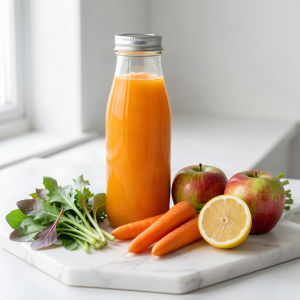
Mustard greens are one of the few juice greens where the calcium is worth counting, because they are low in oxalate so your body actually absorbs it. Carrot and apple bring the sweetness and the lemon keeps the peppery edge in check. It works out at around 133 calories a glass with roughly 20 g of sugar, and straining does lose most of the fibre you would get from eating them whole.
Equipment
- 1 Juicer A masticating or cold press juicer gets more out of leafy greens, but a centrifugal one works if you alternate the apple through with the mustard greens.
- 1 Budget cold press juicer The cheapest sensible way in if you are not sure you will stick at it.
- 1 High-speed blender Use this route if you already own a blender and no juicer.
- 1 Nut milk bag For straining the blended version, a fine sieve also works.
Ingredients
- 100 g mustard greens about one thick bunch, stems and all
- 2 sweet eating apples roughly 250 g, cored and quartered
- 3 medium carrots roughly 250 g, scrubbed, tops trimmed
- 0.5 lemon unwaxed, cut in half, peel left on
Instructions
Juicer method
- Rinse the mustard greens well in cold water and shake them dry. They grow low and sandy, so a second rinse does no harm. Leave the stems on, they carry the same minerals as the leaves.
- Core and quarter the apples and cut the carrots into lengths that will fit your juicer's feed tube. Nothing needs peeling.
- Cut the lemon in half and leave the peel on, as long as it is unwaxed. It is what keeps the peppery heat from the greens in check.
- Feed the mustard greens through the juicer first, then alternate the apple, carrot and lemon so the drier leaves keep moving. If your machine is centrifugal, sandwich the greens between pieces of apple.
- Stir the juice, pour it into two glasses and drink it straight away, or bottle it and keep it in the fridge for up to 48 hours. Give it a shake before you drink it.
Blender method
- Chop the greens, apples, carrots and lemon into rough pieces and put them in the blender with about 150 ml of cold water. The water is not optional, without it a blender will not move mustard leaves.
- Blend on high for about a minute until there are no large pieces left. It will look thick and flecked with green at this stage, which is normal.
- Tip the lot into a nut milk bag or a fine sieve over a jug and squeeze or press it until only dry pulp is left. Take your time, the leaves hold on to their liquid.
- Taste it. If the peppery edge is too strong, stir in the rest of the lemon or a splash more cold water, then serve straight away.
Notes
Mustard greens are sold as mustard greens, mustard leaves or red mustard. Asian grocers and the larger supermarkets usually have them, and the bunches with a reddish tint to the stems are the same vegetable. A bag of mixed mustard salad leaves works at a push but is much milder.
Nutrition
Calories: 133kcalCarbohydrates: 32gProtein: 3gFat: 0.7gSaturated Fat: 0.1gSodium: 98mgPotassium: 740mgFiber: 1gSugar: 20gVitamin A: 22500IUVitamin C: 53mgCalcium: 109mgIron: 1.4mg
Tried this recipe?Let us know how it was!
Parsley, Apple and Cucumber Juice
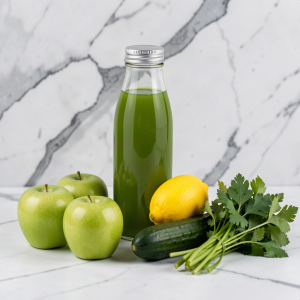
Parsley is the one ingredient here with a genuine bone story, because it is the richest everyday source of vitamin K there is. Paired with sweet apple and cool cucumber it makes a clean, savoury green juice that is nothing like the bitter shot you might be expecting. The apple sweetens it, the cucumber keeps it light, and the lemon stops the parsley going flat.
Equipment
- Nut milk bag
Ingredients
For the juice
- 1 large bunch flat-leaf parsley about 50 g, stalks and all
- 2 sweet apples cored and quartered (about 300 g)
- 1 cucumber roughly chopped (about 300 g)
- 1/2 unwaxed lemon peel left on
Instructions
Juicer method
- Wash the parsley properly, especially down the stems where grit likes to settle, and give it a shake. There is no need to pick the leaves off, the stalks juice fine.
- Core and quarter the apples and chop the cucumber into chunks that will fit your feed chute. Leave the peel on the lemon half and cut it into two pieces.
- Feed everything through the juicer, leading with a piece of cucumber so the parsley has something wet to follow, then alternate the parsley with the apple and the cucumber.
- Stir the juice, pour it into two glasses and drink it straight away, or bottle it and keep it in the fridge for up to 24 hours.
Blender method
- Chop the parsley, apples and cucumber roughly and put them in a high-speed blender with 150 ml of cold water.
- Blend on high for about 45 seconds until everything has broken down.
- Tip the lot into a nut milk bag or a fine sieve set over a jug and squeeze the juice out, then stir in the juice of the half lemon.
- Pour into two glasses. It will be a little cloudier than the juicer version, which is fine.
Notes
Parsley is the richest everyday source of vitamin K there is, at around 1640 micrograms per 100 g raw, so even a 50 g bunch genuinely matters. If you take warfarin or another vitamin K antagonist, keep your intake steady and tell your anticoagulant clinic before this becomes a daily habit.
Parsley is also high in oxalate, so if you have had kidney stones, keep this to a small glass now and then rather than something you drink every day.
Concentrated parsley oil, parsley seed and parsley supplements are a different thing altogether and are not for eating, especially in pregnancy. A glass of fresh herb juice is an ordinary culinary amount, but do not treat parsley as a medicine.
Because the juice is strained, most of the fibre stays behind in the pulp. A glass carries roughly 20 g of sugar from the apple and the lemon, so it is a good habit rather than a low-sugar one.
Nutrition
Calories: 115kcalCarbohydrates: 29gProtein: 3gFat: 0.6gSaturated Fat: 0.1gSodium: 10mgPotassium: 590mgFiber: 1gSugar: 20gVitamin A: 2200IUVitamin C: 55mgCalcium: 80mgIron: 2.4mg
Tried this recipe?Let us know how it was!
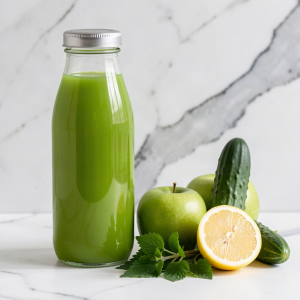
Nettle, Apple and Cucumber Juice
Nettle is the one ingredient here you can pick for nothing, and a glass of it is a deep green, genuinely mineral-dense drink cut with sweet apple and cucumber so it slips down easily instead of tasting like a hedge. The honest part is the calcium. Nettle really does contain a fair amount, but nearly every "more calcium than spinach" claim you will read is comparing dried nettle powder with fresh spinach, and nettle is a mineral accumulator that takes up whatever is in the soil it grew in, so the published numbers swing from modest to enormous. Drink it for the vitamin K and because it is a proper dark leaf, and pick your nettles before the plants flower.
Equipment
- Nut milk bag
Ingredients
For the juice
- 50 g young stinging nettle tops the top four to six leaves of each plant, picked before it flowers
- 2 sweet apples cored (about 300 g)
- 0.5 cucumber about 150 g
- 0.5 unwaxed lemon peeled if you want it softer
Instructions
Juicer method
- Rinse the nettles in a colander and pull the leaves away from the thicker stalks. Wear gloves while you do it. A rinse does not blunt the sting, only breaking the hairs does, and the juicer is what does that.
- Feed the apples and the cucumber through first so the basket is already wet and moving, then drop the nettle leaves in a handful at a time, alternating each handful with a piece of apple. Nettle is a soft leaf and it needs something firm alongside it or it simply spins round the basket.
- Squeeze in the lemon, stir and taste. Nettle is grassy with a faint bitterness underneath, and if it is too green for you, add a little more apple.
- Pour into two glasses or two bottles and drink it cold and fresh.
Blender method
- Blend the nettle leaves with 150 ml of cold water for about 30 seconds, then strain through a nut milk bag or a fine sieve into a jug. This is also what breaks the sting, so nothing stinging ever reaches the glass.
- Blend the cored apples, the cucumber and the lemon juice, then strain that through the bag as well, pressing the pulp with the back of a spoon to get the last of it out.
- Stir the two juices together, pour into two glasses or bottles and drink it cold.
Notes
Start with the calcium, because the internet is not straight with you about it. Nettle does contain calcium, and unlike spinach its oxalate level is low, so more of that calcium is available than spinach gives you. But the headline figures you see quoted, often 600 mg or more per 100 g, were measured on dried nettle leaf or nettle powder. Weighed like for like against fresh spinach, a fresh nettle leaf is a good green vegetable rather than a bone cure. Almost every comparison you will read is dried against fresh, which is not a fair fight.
The second reason to distrust any single number: nettle is a mineral accumulator. It takes up minerals from the soil it grows in, so a patch on rich ground can test several times higher than a patch on poor ground a field away. A glass is a genuine top-up of calcium, vitamin K, beta-carotene and a little iron, and it is a sensible thing to drink, but do not treat it as a measured dose.
What nettle does have solidly is vitamin K, the vitamin that activates osteocalcin, the protein that binds calcium into bone, and it is why a dark leaf belongs on the bone shelf at all. If you take warfarin or another vitamin K antagonist, keep your intake steady rather than swinging about, and tell your GP or anticoagulant clinic that you have added it.
About the sting. A nettle leaf is covered in hollow silica hairs that snap off when you brush them and inject formic acid along with histamine, serotonin and acetylcholine, which is the burning you feel. Rinsing does not switch that off and neither does cooking it into soup quietly, the hairs have to be broken. The juicer does it mechanically, which is why a nettle that stings your hand does not sting your glass. Pick and rinse them in gloves all the same.
Pick the top four to six leaves of young plants and pick them before the plants flower. There is a long standing foraging rule that nettles which have gone over develop cystoliths, gritty calcium carbonate crystals in the leaves, and are harder on the kidneys. It is tradition rather than a tested finding, so treat it as a sensible habit rather than a warning, though the leaves also go tough and stringy once the plant is seeding. Never pick from a roadside, a sprayed verge or a route where dogs are walked, and wash everything well.
Two cautions worth keeping. Nettle is a mild diuretic, so a glass is fine but pints of it are not, and anyone with a kidney stone history should go steady because the leaf is not free of oxalate. Concentrated nettle preparations and extracts are advised against in pregnancy, even though a small amount of the cooked leaf is a traditional spring vegetable, so if you are pregnant talk to your midwife before drinking it raw.
The one decent piece of human evidence for nettle leaf is a small double-blind trial in hay fever, where a freeze-dried nettle preparation was rated effective by more people than the placebo (Mittman, Planta Medica, 1990). It was one trial, it used capsules of dried leaf rather than juice, and it has never really been repeated, so it is interesting rather than a reason to throw away your antihistamines.
And a last honest note on the iron. There is some in the glass, but it is plant iron, it is a nudge rather than a treatment, and if you are persistently tired that needs a blood test rather than more juice. There is about 18 g of fruit sugar a glass and straining leaves most of the fibre in the bag, so it is a proper drink rather than a low calorie one.
Nutrition
Calories: 105kcalCarbohydrates: 27gProtein: 2gFat: 0.5gSaturated Fat: 0.1gSodium: 8mgPotassium: 450mgFiber: 1gSugar: 18gVitamin A: 2500IUVitamin C: 30mgCalcium: 115mgIron: 0.9mg
Tried this recipe?Let us know how it was!
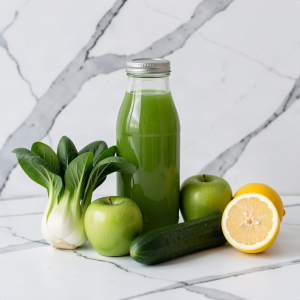
Bok Choy, Apple and Cucumber Juice
Bok choy is the green I reach for when I want a bone-friendly juice that does not taste like a punishment. On its own it is mild and slightly cabbagey, so two sweet apples carry it and half a cucumber keeps the whole thing light. The lemon is not decoration, it lifts the glass and stops the apple reading as pure sweet. Two heads and two apples gives you two proper glasses in about eight minutes.
Equipment
- 1 Juicer
- 1 Nut milk bag
Ingredients
- 2 heads bok choy pak choi, about 300 g, washed well and bases trimmed, stalks and leaves both used
- 2 sweet apples about 300 g, cored and quartered, skin left on
- 1/2 cucumber about 150 g, roughly chopped
- 1/2 unwaxed lemon peeled if you want a softer edge, unpeeled if you want the oils
- ice to serve
Instructions
Juicer method
- Wash the bok choy properly. Grit settles right down in the base of the stalks, so split each head lengthways and rinse it under a running tap before you start. Nothing ruins a green juice faster than a mouthful of soil.
- Put the apples through first. They wet the basket and the mesh, which matters here, because bok choy leaves on their own will smear across a dry basket and clog it.
- Follow with the bok choy, one head at a time, alternating with the cucumber so something wet keeps the pulp moving. Do not feed a whole head in at once, the leaves wrap around the auger and stall it.
- Push the lemon through last, stir once, and pour over ice. Drink it within the hour for the best of it.
Blender method
- Chop the cucumber and the apples roughly and put them in the blender with 100 ml of cold water. Blitz for 40 seconds until you have a loose slush.
- Add the bok choy in two batches, stalks first and leaves second, blitzing for about 20 seconds between each. All the leaves at once will stall the blades.
- Squeeze in the lemon and blitz for another 5 seconds.
- Strain through a nut milk bag or a fine sieve, pressing gently with the back of a spoon. If you squeeze hard you push pulp through and get a cloudy drink that separates in the glass within minutes.
Notes
Bok choy is the best-absorbed calcium of any leafy green I have written about on this site, and the reason is oxalate. On paper a raw bok choy has about 105 mg of calcium per 100 g and raw spinach has about 99 mg, so they look almost identical on a label. The difference is how much of it you actually get. In the isotope work done at Creighton, fractional calcium absorption from bok choy came out at about 52 percent (Heaney, Weaver, Hinders, Martin and Packard, Journal of Food Science, 1993, 58(6), 1378-1380), against roughly 48 percent for broccoli and 49 percent for kale. The same group had already shown spinach giving up only about 5 percent of its calcium (Heaney, Weaver and Recker, American Journal of Clinical Nutrition, 1988, 47(4), 707-709), because spinach locks most of its calcium up as oxalate. One glass of this carries about 175 mg of calcium, so roughly half of that is available, which is the same ballpark as the fraction you absorb from milk.
Two honest limits. The first is vitamin K. Bok choy is very high in it, around 85 micrograms in this glass, and vitamin K is what tells your body where to put the calcium. If you take warfarin or another vitamin K antagonist, the rule is consistency rather than avoidance, so tell your anticoagulant clinic you are drinking this and keep the amount steady week to week. The second is that bok choy is a brassica, so it carries goitrogens. That only matters in practice at very high intakes alongside a low iodine diet, but if you have an underactive thyroid, keep it to a glass a day rather than a litre.
Worth saying plainly: straining the juice leaves most of the fibre in the pulp, and the roughly 19 g of sugar a glass is the apples, not the greens. Eating bok choy stir-fried still beats drinking it for fibre. The juice is a way to get the minerals and vitamin K into a drink you will actually finish.
Storage: best drunk within the hour, but it holds in a sealed bottle in the fridge for 24 hours. Shake before you pour, it separates.
Nutrition
Calories: 112kcalCarbohydrates: 27gProtein: 3gFat: 0.7gSaturated Fat: 0.2gSodium: 100mgPotassium: 650mgFiber: 2gSugar: 19gVitamin A: 6800IUVitamin C: 82mgCalcium: 175mgIron: 1.6mg
Tried this recipe?Let us know how it was!
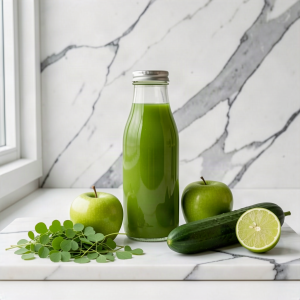
Moringa, Apple and Cucumber Juice
The green juice I make when the bag of moringa leaves in the fridge is starting to look sorry for itself. Moringa on its own tastes grassy and a bit bitter, so the cucumber waters it down and the apple and lime do the flavouring. What you get is a clean, bright green glass that is easy to drink and happens to be a real source of calcium, vitamin K and iron.
Equipment
- 1 Juicer any masticating juicer handles leaves well, a centrifugal one will throw moringa pulp into the jug
- 1 Budget cold press juicer the cheaper option, feed the leaves slowly between the apple pieces
- 1 High-speed blender for the blender method
- 1 Budget blender works too, just blend for the full minute
- 1 Nut milk bag for straining the blended version
- 1 Airtight glass bottles fill right to the top to keep the air off it
Ingredients
For two glasses
- 60 g fresh moringa leaves about two big handfuls, stripped off the stems, stems discarded
- 2 crisp green apples about 300 g, skin on, quartered and cored
- 1 cucumber about 300 g, a standard supermarket one
- 0.5 unwaxed lime peel on if unwaxed, otherwise peel it first
Instructions
Juicer method
- Strip the moringa leaflets off the stems with your fingers. The stems are tough and stringy and they wrap round an auger, so bin them. You want a loose 60 g of leaves, roughly two big handfuls.
- Feed the cucumber through first. It is mostly water and it wets the basket, which stops the dry leaves clogging the mesh before the juice starts flowing.
- Juice the two apples, then the moringa a handful at a time, alternating with apple so the leaves are always sandwiched between wet fruit instead of going through on their own.
- Juice the half lime last so the sharpness stays bright, stir the jug once, and either drink it straight away or bottle it right to the top and keep it in the fridge for a day.
Blender method
- Strip the leaves, chop the apples and cucumber into rough chunks, and put everything in the blender with 100 ml of cold water.
- Blend on high for 45 to 60 seconds until there are no leaf fragments left. Moringa is papery and it needs the full minute.
- Squeeze the lime in at the end rather than blending it, so the pith does not turn the drink bitter.
- Strain through a nut milk bag or a fine sieve, pressing the pulp with the back of a spoon, then bottle it. The strained version is best inside 24 hours.
Notes
Fresh moringa leaves turn up in South Asian grocers and in the world food aisle of the bigger supermarkets, usually in 100 g bags, and they freeze well. If you can only find moringa powder, do not put it through the juicer, it turns the glass to sludge: stir a teaspoon into the finished juice instead.
There is about 32 mg of vitamin C in a glass, which is under the 40 mg UK reference intake and most of it comes from the apple and the lime, not the moringa. The roughly 18 g of sugar is the apples. Both are worth knowing before you drink two of these a day.
Moringa leaves are genuinely high in vitamin K, so if you take warfarin or another anticoagulant, keep your intake steady rather than swinging about and mention this juice to your clinic. The leaves also carry oxalate, so anyone with a history of kidney stones should go easy. Only the leaves go in the glass: the root, bark and seeds are not for eating. If you are on medication for diabetes, moringa may nudge blood sugar down, so ask your GP or pharmacist before making it a daily habit.
Nutrition
Calories: 125kcalCarbohydrates: 30gProtein: 2gFat: 0.4gSaturated Fat: 0.1gSodium: 12mgPotassium: 530mgFiber: 1gSugar: 18gVitamin A: 2100IUVitamin C: 32mgCalcium: 95mgIron: 1.8mg
Tried this recipe?Let us know how it was!
Surprisingly sweet for a green juice. Love it.
Glad there’s a proper bone health option.