
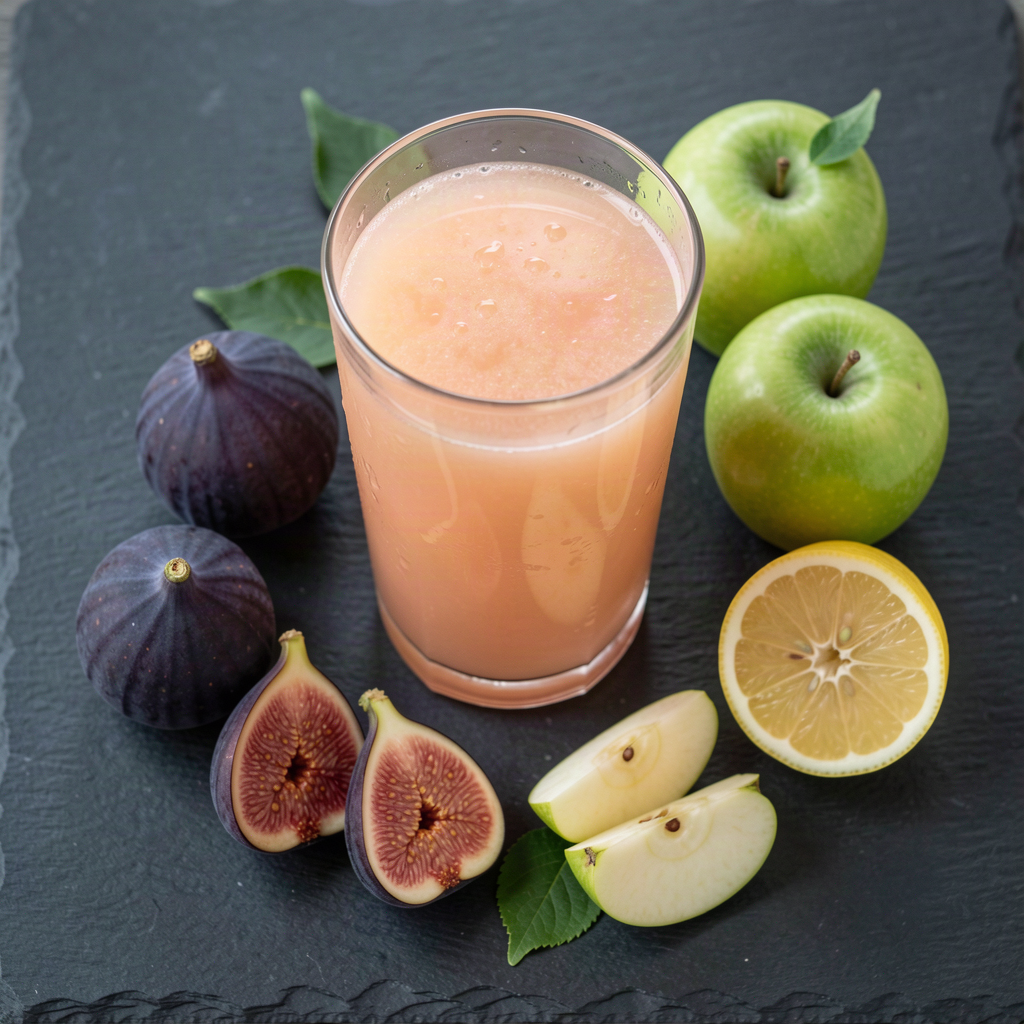
Figs rarely make it as far as the juicer in our house. They get eaten standing up in the kitchen, usually before I have finished putting the shopping away. When I do hold a few back, this is what I make with them: ripe figs, a couple of green apples, and a whole lemon to stop the whole thing turning to syrup. It comes out a soft rose colour and thicker than most of the juices on here, and it is the only one I make that carries calcium and potassium rather than just vitamin C. Ten minutes, nothing to cook, and it uses up the figs that went soft at the bottom of the bowl.
Why these ingredients work
Figs are the reason this juice exists. They are one of the better fruit sources of calcium at around 35mg per 100g fresh, and they bring potassium, magnesium and vitamin K with them, which is why fruit and vegetables keep turning up in bone health advice and calcium tablets do not do the whole job on their own. Dried figs are the stronger version by a long way, roughly four times the calcium of fresh, and I still make it with fresh when they are in season because the taste is cleaner.
The green apples are the backbone. Figs on their own are too thick to press properly, so apple adds the liquid, a bit of vitamin C and a clean finish. The lemon matters more than it sounds, and the peel matters even more: leave the white pith on and a sweet juice turns bitter within a minute or two. Peel it properly and the lemon lifts the fig instead of covering it.
Worth being straight about the numbers. A glass comes in around 155 calories and 30g of sugar, mostly from the figs and the apple, so it is sweeter than most of what I make and I treat it as an afternoon glass rather than a breakfast one. The calcium works out around 45mg a glass. That is real, and it is also modest. If bones are the actual goal, this is one habit alongside the kale and watercress juices, not a replacement for any of them.
FAQ
Do I need fresh figs, or can I use dried?
Either works. Dried figs carry roughly four times the calcium of fresh, about 162mg per 100g against around 35mg, so if calcium is the reason you are making it, soak four dried figs in warm water for 20 minutes and blend those. Expect a darker, thicker, sweeter glass, closer to a syrup than a juice. Soaked figs are very soft, so the blender handles them better than the juicer does.
Can you make fig and apple juice without a juicer?
Yes. Blend the figs, the cored apples and the peeled lemon with 150ml of cold water for about a minute, then strain through a nut milk bag or a fine sieve if you want it clear. Leave it unstrained and you keep the fibre, but it drinks more like a thin smoothie and it will not keep as well in the fridge.
Why is it so sweet, and can I fix it?
Ripe figs are mostly sugar and green apples are sweet too, so 30g a glass is about right for this recipe. Squeeze in extra lemon, top the glass up with sparkling water, or drop to one apple and keep four figs. A centimetre of fresh ginger also cuts through the sweetness without changing what the juice is for.
More bone health juices: see the full Structure collection.
Fig and Apple Juice
Equipment
- 1 Juicer masticating or centrifugal
- 1 High-speed blender for the blender method
- 1 Nut milk bag or fine-mesh sieve to strain the blender version
- 2 Airtight glass bottles for storing
- 1 Budget cold press juicer a cheaper way to get more juice out of soft fruit
- 1 Budget blender works fine for the blender method
Ingredients
Juice base
- 4 ripe fresh figs, stems trimmed about 200g
- 2 medium green apples cored
- 1 lemon, peeled keep as much of the white pith off as you can
Instructions
Juicer method
- Rinse the figs and apples. Trim the fig stems, cut the apples into wedges and peel the lemon.
- Feed the apple wedges through the juicer first, then alternate fig and apple so the soft figs do not clog the machine. Push the lemon through last.
- Stir and taste. If it is sweeter than you like, squeeze in a little more lemon.
- Pour straight away, or bottle in airtight glass and drink within 24 hours.
Blender method
- Roughly chop the figs, cored apples and peeled lemon and put them in a high-speed blender with 150ml cold water.
- Blend on high for about 60 seconds, until there are no lumps of fig left.
- Strain through a nut milk bag or fine sieve for a clear juice. Leave it unstrained for a thicker drink with more fibre in it.
- Chill for 20 minutes or serve over ice.