
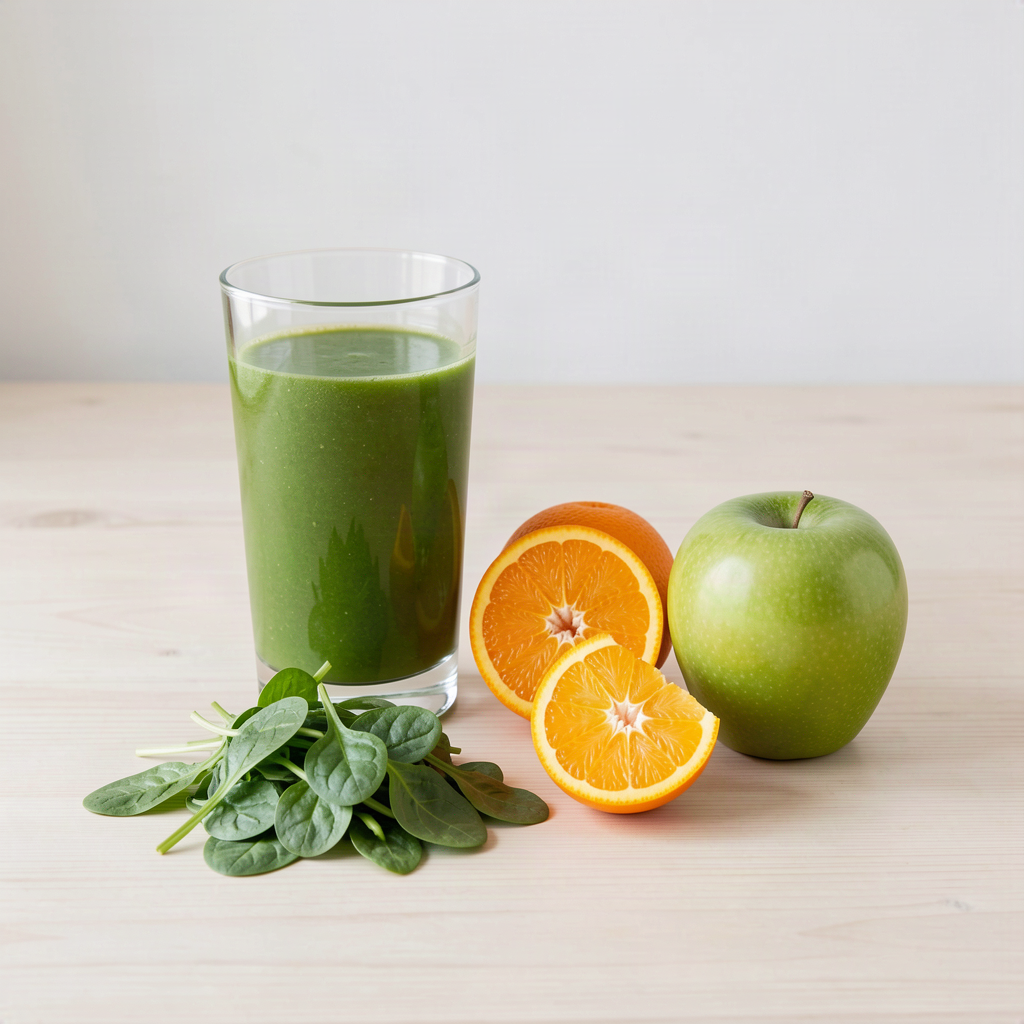
I keep coming back to this one because it is genuinely easy to drink. A lot of green juice tastes like a lawn, and I have tipped more than one batch down the sink. The oranges carry the flavour here, the apple rounds off the sharp edges, and the spinach sits behind both of them doing its job without announcing itself. Four minutes start to finish, one juicer basket to rinse, nothing to cook.
It is also the simplest way I have found to get leafy greens into a day that has gone sideways. Two oranges, one green apple, three handfuls of baby spinach. That is the whole shopping list.
Why these ingredients work
Spinach is one of the better plant sources of vitamin K, and it brings calcium and magnesium along with it. Vitamin K is what activates osteocalcin, the protein that binds calcium into bone, which is why leafy greens keep turning up in bone health advice. Oranges supply the vitamin C your body needs to build collagen, the protein framework that bone mineral is laid down on. One glass of this gives you about 95mg of vitamin C, more than twice the 40mg an adult in the UK needs in a day.
The apple is mostly there for taste. It adds a little potassium and fibre as well, and it keeps the juice from being cloying. Per glass it works out at 115 calories and 20g of sugar, all of it from the fruit and none of it added. If your oranges are sharp rather than sweet, leave the apple in and skip any thoughts about adding honey.
FAQ
Do I need a juicer to make this?
No. The blender method on the card below gives you the same drink, you just need a nut milk bag or a fine sieve to strain it. Blend for 45 to 60 seconds so there are no leafy flecks left, then press the pulp with the back of a spoon. A juicer gives a clearer, thinner glass, while the blender version keeps a bit more of the pulp and fibre. Both are fine. I use the juicer when I am making two glasses and the blender when I am in a hurry and cannot be bothered taking the machine apart.
How much vitamin C is in one glass?
About 95mg, which is more than the 40mg a day an adult in the UK needs. Almost all of it comes from the two oranges. Vitamin C is water soluble and it fades with heat and time, so this is a drink it fresh job. If you make it in the morning and leave it until the evening, you are still getting the spinach but a fair chunk of the vitamin C has gone.
Is spinach juice actually good for bones?
Spinach brings vitamin K, calcium and magnesium, and the reason it is paired with orange here is that the two work on different parts of the same job. Vitamin C from the orange for collagen, vitamin K from the spinach for the protein that pulls calcium into bone. One glass is 115 calories, so it is an easy habit to keep. It is not a treatment for bone loss. If you have been told you have osteopenia or osteoporosis, this sits alongside what your GP has advised, it does not replace it.
More bone health recipes: see the full Structure collection.
Spinach, Orange and Apple Juice
Equipment
- 1 Juicer masticating or centrifugal
- 1 High-speed blender for the blender method
- 1 Nut milk bag or fine-mesh sieve to strain the blender version
- 2 Airtight glass bottles for storing a batch
- 1 Budget cold press juicer the cheaper option if you are just starting out
- 1 Budget blender works fine here, just strain it a little harder
Ingredients
- 3 handfuls baby spinach about 90g, loosely packed
- 2 oranges peeled, pith removed
- 1 green apple cored, skin left on
Instructions
Juicer method
- Rinse the spinach and shake off the excess water.
- Peel the oranges and pull them into segments. Quarter the apple and cut out the core.
- Feed the spinach through the juicer first, then the apple, then the orange. Alternating the greens with the apple stops them clogging the basket on a centrifugal machine.
- Stir, pour into two glasses and drink it while it is still cold.
Blender method
- Put the spinach, the peeled orange segments and the chopped apple into a blender with 120ml cold water.
- Blend on high for 45 to 60 seconds until there are no leafy flecks left.
- Tip it through a nut milk bag or a fine sieve and press the pulp with the back of a spoon to get the last of the juice out.
- Taste it. If your oranges were sharp, squeeze in the juice from the pulp you strained and give it a stir.