
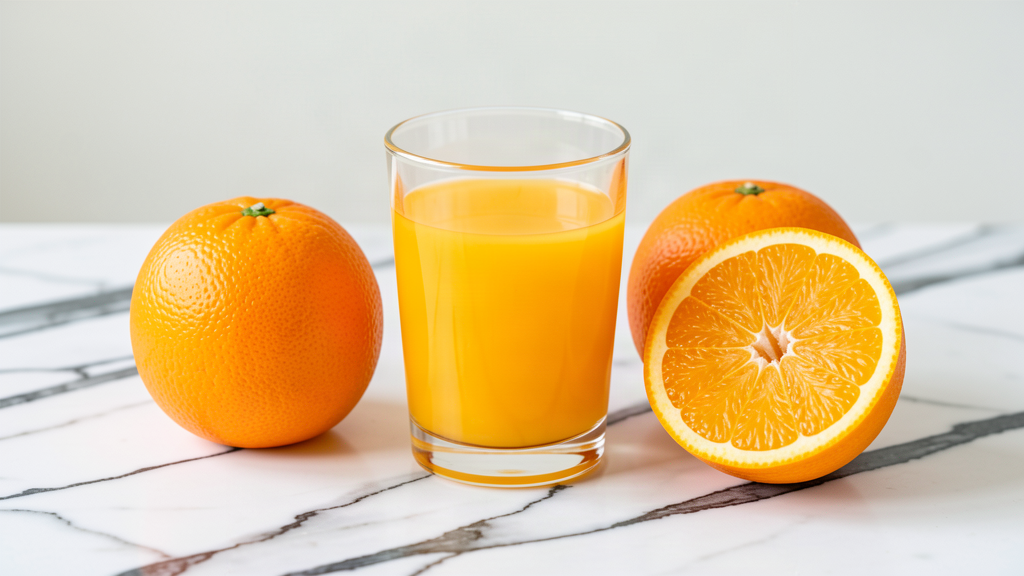
On sugar alone, a glass of pure fruit juice is roughly level with a full sugar cola. Per 100ml they land in almost the same place. What separates them is everything else in the glass, and what both of them are missing compared with eating the fruit whole.
I used to treat juice as the safe option and cola as the villain. Then I started reading labels properly and realised I had been pouring something with as much sugar as a can of Coke, and calling it healthy because the carton said 100%.
The sugar is closer than you think
The NHS is clear that the sugars in unsweetened fruit juice count as free sugars, in the same group as the sugar you spoon into tea. Not because anything was added, but because juicing releases sugars that were previously locked inside the fruit’s cells.
The numbers back it up. A study in BMJ Open looked at drinks sold for children and found the 100% fruit juice category averaged 10.7g of sugar per 100ml. Full sugar cola sits at around 10.6g per 100ml. So a 250ml glass of pure orange juice carries about 27g of free sugars, against a daily limit of 30g for an adult.
That is why the NHS caps juice and smoothies at a combined 150ml a day. One small glass. Not one carton, and certainly not a bottle sipped through the afternoon.
What juice has that cola doesn’t
Juice is not nutritionally empty. A glass of orange juice brings vitamin C, potassium and some folate, and there is nothing in it that was not in the fruit to begin with. Cola brings sugar, caffeine and phosphoric acid, and no vitamins or minerals worth counting.
The catch is the fibre. When you juice, most of the fibre stays in the pulp and goes in the bin. That changes how the sugar arrives, because fibre in whole fruit slows the whole process down. Eating an orange and drinking a glass of orange juice are not the same event, even when the sugar figure on paper looks similar. I went through that properly in does juicing remove fibre.
Vegetable led juices change the maths, since carrot, cucumber, celery and greens bring far less sugar than fruit does. A glass built mostly from vegetables with one apple in it is a different drink from apple juice, and it is the version I make most often now.
The bit most comparisons skip: your teeth
Juice is arguably the worse of the two for your teeth, and it has little to do with the sugar figure. NHS dental advice says sugars in whole fruit are less likely to cause decay because they are still held inside the structure of the fruit. Juice them and those sugars are released, and they sit against your enamel along with a decent dose of acid.
Cola is acidic too, so this is not a contest juice wins. But there is a habit difference. People tend to drink a small glass of juice with breakfast. Fizzy drinks get nursed over an hour, and every sip restarts the acid attack. If you are having either, have it with a meal rather than sipping it slowly on its own, and leave a gap before you brush your teeth.
Where cola is genuinely worse
It comes down to portion and habit. A can is 330ml and it is easy to have two. A 150ml glass of juice is one portion by definition, and the NHS advice gives you a stopping point. Cola also carries caffeine, which matters if you drink it late, and it has no nutritional reason to exist at all.
How I use it now
I keep juice to one small glass with breakfast, usually vegetable led, and I count it as a portion of fruit rather than a drink to quench thirst. Water does that job. I also stopped assuming fresh beats everything: bottled juice against fresh is mostly about how it was stored rather than the sugar, which barely changes.
If you want the low sugar end of this, the weight loss juices are mostly vegetable based, and there is more in the detox collection. For the wider question of whether any of this is worth doing, is juicing healthy is the honest version, and when to drink it covers timing.
FAQ
Does 100% juice count towards 5 A Day?
Yes, but only once. 150ml of unsweetened 100% juice counts as one portion, and drinking more than that on the same day does not add another. The detail is in does juice count as 5 a day.
Is freshly squeezed juice better than carton juice?
For vitamin C, yes, because it fades with time and heat. For sugar and acid, no. The carton and the fresh glass carry much the same load, so squeezing it yourself does not buy you a free pass on quantity. What you want to avoid is the carton with sugar added, which is a juice drink rather than juice.
Should children drink fruit juice?
The NHS is blunt that squash, fizzy drinks and juice drinks have no place in a child’s daily diet. Water and milk are the everyday drinks. If a child has juice, keep it to 150ml with a meal rather than as a snack between meals.
None of this makes juice a bad drink. It makes it a small one, best had with a meal, and not a replacement for eating the fruit.