
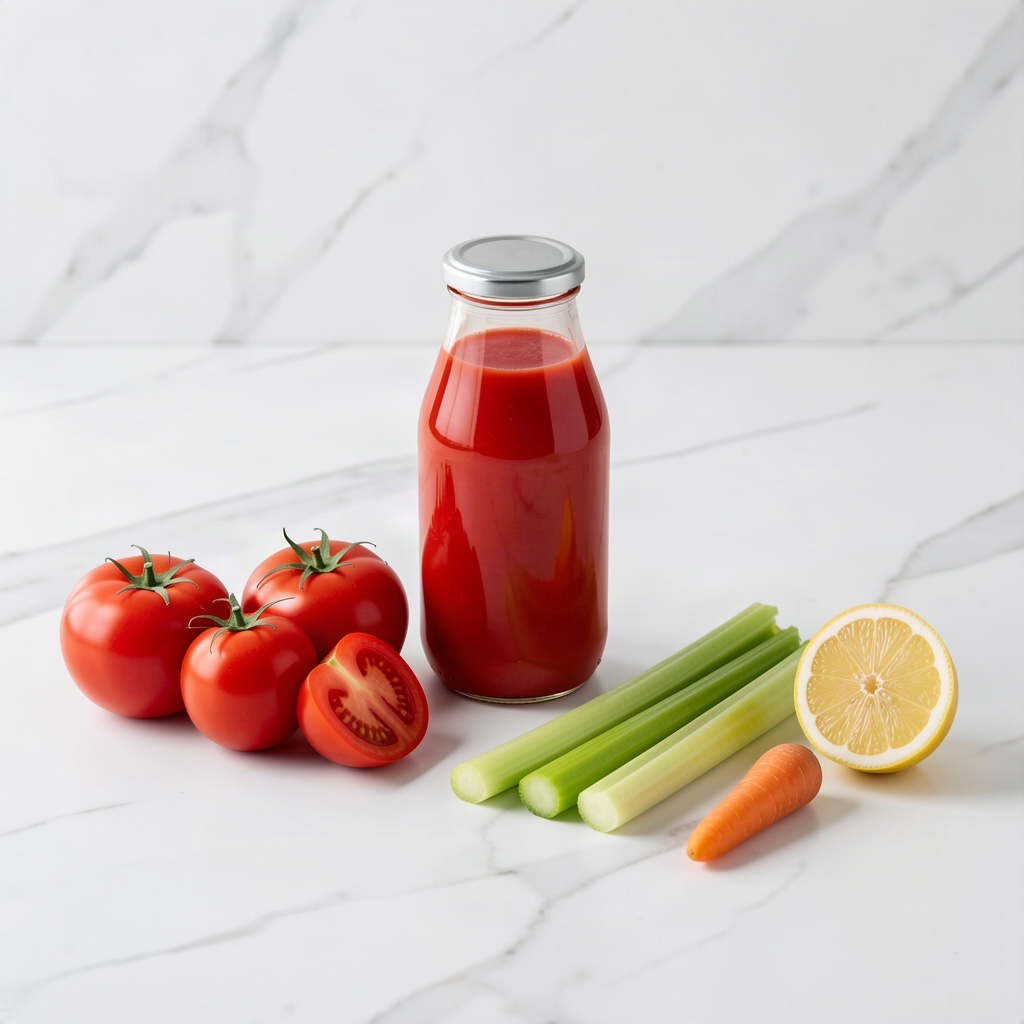
I came to tomato juice by accident, on a flight where it was the only thing on the trolley I actually wanted, and then spent a fortnight wondering why it tasted so much better than the cartons I remembered. The answer was that it was not the same drink. Carton tomato juice is cooked, salted and built to sit on a shelf. This is the fresh version, and it is the only juice I make that I would happily drink alongside a cooked breakfast.
It is worth making in the couple of months when tomatoes actually taste of something. A pale, watery winter tomato makes a pale, watery glass, which is exactly what the lemon is there to rescue, but it is a rescue rather than a fix. Use the ripest ones you can get, the slightly soft ones the shop is trying to move on, and the drink looks after itself.
Why these ingredients work
Tomatoes are about 94 per cent water and only around 3 per cent sugar, so a glass of this comes in at roughly 70 kcal and 9 g of sugar while still tasting sweet. The thing that earns it a place on the weight loss shelf is potassium. Raw tomato carries about 237 mg per 100 g, so this recipe lands at around 800 mg a glass, which is a meaningful slice of the 3,500 mg a day that NHS blood pressure advice points towards. Potassium rich diets and lower blood pressure is one of the better supported relationships in nutrition, and it is the reason the DASH work keeps coming back to fruit and vegetables rather than to pills.
Now the honest part about lycopene, because every article about tomato juice gets this wrong in the same direction. Tomatoes really are full of it, but raw juice is not the efficient way to get at it. Lycopene sits inside the cell walls, bound up with protein, and heat breaks that structure down. Gärtner, Stahl and Sies measured this directly and found lycopene was considerably better absorbed from tomato paste than from fresh tomatoes (American Journal of Clinical Nutrition, 1997, 66, 116-122). A little fat alongside it helps again. So drink this because it is a low sugar, high potassium drink that tastes good, not because you think it is a lycopene supplement. If lycopene is the point, cook the tomatoes.
The celery is doing a quieter job than it looks. It is what makes this taste like a drink rather than passata, and it brings a savoury green note that holds the tomato up. It also carries a little natural sodium, around 80 mg per 100 g, so taste before you reach for the salt. One thing worth knowing: celery is one of the fourteen allergens UK law requires to be labelled, and if you react to mugwort or birch pollen you may react to celery too. People who have never thought of celery as an allergen find that surprising.
One small carrot, and no more. It takes the hard edge off the acidity and gives the glass some body, but two carrots and you are drinking carrot juice with a tomato in it. The half lemon is the difference between a glass that tastes flat and one that tastes finished, and it is doing the same job as the vinegar in a dressing.
Four things I would rather you heard from me than found out later. Straining leaves most of the fibre in the sieve, so a tomato eaten whole still beats a tomato drunk. Do not juice green or unripe tomatoes, which carry solanine, the same family of compounds as green potatoes, and taste grim anyway. Do not put the vine or the leaves in the juicer either. They contain tomatine and there is no upside to finding out how much matters. And if you have kidney disease and have been told to watch your potassium, a glass with 800 mg in it is not a daily habit to start without asking your team. If you get heartburn, tomato is a common trigger, so have it with food rather than on an empty stomach.
FAQ
Should I peel the tomatoes before juicing them?
No. The skin and the seeds carry flavour, and the sieve catches the bits you do not want, so peeling is extra work for a slightly smoother glass. If you want it really silky, strain it twice instead, once through a sieve and once through a nut milk bag. Peeling is only worth the trouble if you are serving it to somebody who will notice a fleck of skin, in which case blanch the tomatoes for thirty seconds, drop them in ice water, and the skins slip off.
Can you drink tomato juice hot?
Yes, and warm is arguably the better version. Heat it gently to just below a simmer, no further, and it turns into something closer to a light soup, which is a good thing on a cold morning. Warming also nudges the lycopene into a form you absorb more easily, and if you add a knob of butter or a spoon of olive oil you get more again. Do not boil it, because the flavour goes flat and the juice separates.
Is shop bought tomato juice just as good?
It is a different drink rather than a worse one. Most carton tomato juice is cooked, which actually helps the lycopene, and salted, often 400 to 500 mg of sodium per 250 ml, which is a fifth of a day’s limit in one glass. Making it yourself means you decide both of those things. Neither version detoxes anything, and the claim that tomato juice flushes the liver is nonsense, since the liver does that on its own without help from a glass of anything.
More weight loss recipes: see the full Weight Loss collection.
Tomato, Celery and Carrot Juice
Equipment
Ingredients
- 4 ripe tomatoes about 500 g, the ripest you can get
- 2 celery sticks about 80 g, leaves trimmed off
- 1 small carrot about 50 g, scrubbed
- 0.5 unwaxed lemon
- 100 ml cold water blender method only
- fine salt and black pepper optional, to taste
Instructions
Juicer method
- Wash the tomatoes and cut out the stalk scar, then quarter them. There is no need to peel or seed them, the juicer deals with both.
- Trim the celery and cut the sticks in half so they feed properly. Scrub the carrot, or peel it if the skin is rough.
- Put the carrot and the celery through the juicer first. They are the firm ones and they need the basket dry.
- Follow with the tomatoes, then squeeze the lemon half through at the end. The tomato is soft and watery, so it flushes everything else through with it.
- Stir, taste, and add a small pinch of salt and a grind of pepper if you want it savoury rather than sweet. Drink it straight away, or bottle it and keep it in the fridge for up to two days.
Blender method
- Quarter the tomatoes, chop the celery into short lengths and cut the carrot into rough chunks.
- Blend the carrot and celery with the 100 ml of cold water first, until there are no big pieces left. Doing it in that order stops the carrot rattling around unloved.
- Add the tomatoes and blend for 30 to 45 seconds. Do not leave it running for minutes, because the seeds turn bitter once they are properly smashed.
- Squeeze in the lemon, then strain through a fine sieve or a nut milk bag and press gently with a spoon. Stop before the last thick pulp goes through or the juice turns grainy.
- Season to taste and serve. If you want it warm, heat it gently to just below a simmer and no further.