
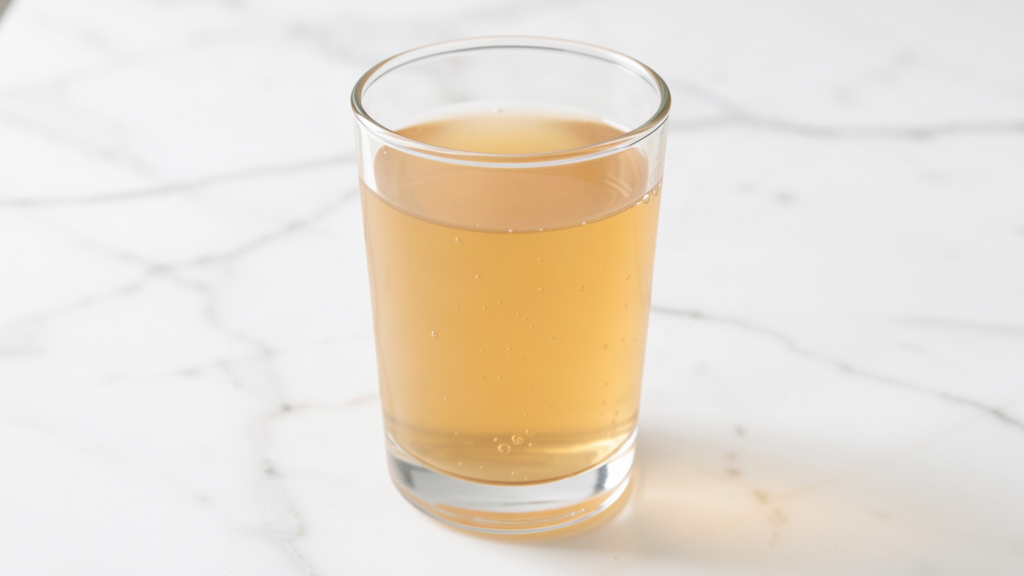
Yes, mostly. When you push fruit and vegetables through a juicer, most of the insoluble fibre stays behind in the pulp bin. A little soluble fibre and some fine pulp do make it into the glass, but nothing close to what you would get from eating the whole thing.
That is the short answer, and it is worth knowing before you spend money on a machine. It does not make juice a bad idea. It changes what juice is good for. I have a glass most mornings and I still eat fruit and vegetables through the day, because a juice and an apple do different jobs.
What the juicer takes out and what it leaves
Fibre comes in two broad types. Insoluble fibre is the structural stuff: skins, seeds, the stringy threads in a celery stalk, the cell walls of every plant cell. Soluble fibre is the softer kind that dissolves or forms a gel, such as the pectin in apples and the inulin in asparagus and onions.
A juicer’s job is to break the cells open and squeeze the liquid out, then hold the solid material back with a mesh or a press cloth. That solid material is the insoluble fibre. It is the pile of pulp left in the collection bin. What comes through is the juice.
Soluble fibre behaves differently, and some of it travels with the liquid. That is why pressed apple juice is cloudy rather than perfectly clear, and why some juices thicken a little if they sit. The machine makes a small difference here. A fast centrifugal juicer tends to leave more fine pulp and foam in the glass, while a slow press gives drier pulp and a clearer juice. Neither of them keeps much fibre.
How much fibre you actually lose
Take an orange. A medium one has roughly 3 grams of fibre. A 250ml glass pressed from three oranges, strained, gives you a small share of that, and mostly the soluble part. The rest goes in the bin with the pulp.
So the claim you see on some juicing sites, that the soluble fibre still comes through, is only half true. Some of it does. Enough to count as a proper source of fibre? Not really.
There is one honest exception. If you do not strain the last of the pulp out, or you blend rather than juice, you keep most of it. Blending does not destroy fibre. It tears the plant structure apart and leaves all of it in the glass, which is the real difference between a juice and a smoothie. Both release the sugars from the fruit cells. Only one of them leaves the fibre behind.
Why the missing fibre matters
Fibre does two things that are relevant to a glass of juice. It slows the release of sugar into your bloodstream, and it helps you feel full. Take most of the fibre out and both get easier to overdo.
Fruit sugar is normally locked inside cells, so eating an apple takes time and your body deals with that sugar gradually. Juicing releases it into liquid, and you can drink three oranges in under a minute. The NHS is blunt about this: no more than 150ml of fruit juice or smoothie a day, and however much you drink it only ever counts as one of your 5 a day.
There is also the fibre you were not getting in the first place. UK adults are advised to have 30 grams of fibre a day, and most people fall well short of it. If juice replaces whole fruit and vegetables in your day rather than sitting alongside them, you are moving in the wrong direction.
How to keep more fibre in the picture
You do not have to choose one or the other. These are the things that worked for me.
- Leave the skin on. Most of the fibre sits in or just under it, and a scrub under the tap is enough for carrots, apples, cucumbers and pears.
- Do not strain the last of the pulp out. If your juice is cloudy, that cloudiness is partly fibre.
- Use the pulp. It goes into soups, muffins, oat bars and pasta sauce. It is food, not waste.
- Blend instead of juicing for berries, banana and mango, where there is nothing much to strain away.
- Treat juice as a side, not a meal. Keep eating whole fruit and vegetables through the rest of the day.
FAQ
Does juicing destroy fibre?
No. Fibre is not destroyed by juicing, it is separated from the liquid and left in the pulp. Removed is the honest word, not destroyed. Blending is the process that keeps everything in the glass.
Does juicing remove fibre from vegetables too?
Yes, the same way it does with fruit. Some vegetable fibre is soluble, so a little of it comes through, and asparagus is a good example because much of its fibre is inulin. Most of it still ends up in the pulp.
Is juice bad for you then?
No. A glass of fresh juice is a quick way to get vitamins, minerals and fluid, and some people find it easier than chewing through a pile of vegetables. It just is not a substitute for eating them, and it is easy to drink more sugar than you meant to.
If you want to see the fibre question in a glass, start with asparagus, apple and lemon juice, since asparagus carries more soluble fibre than most vegetables people juice. The DIGESTION hub collects the juices I make with gut health in mind, and juicing vs smoothies covers which method keeps what. For how a glass fits into the rest of your day, does juice count as 5 a day and how much juice a day are the versions I would read.