
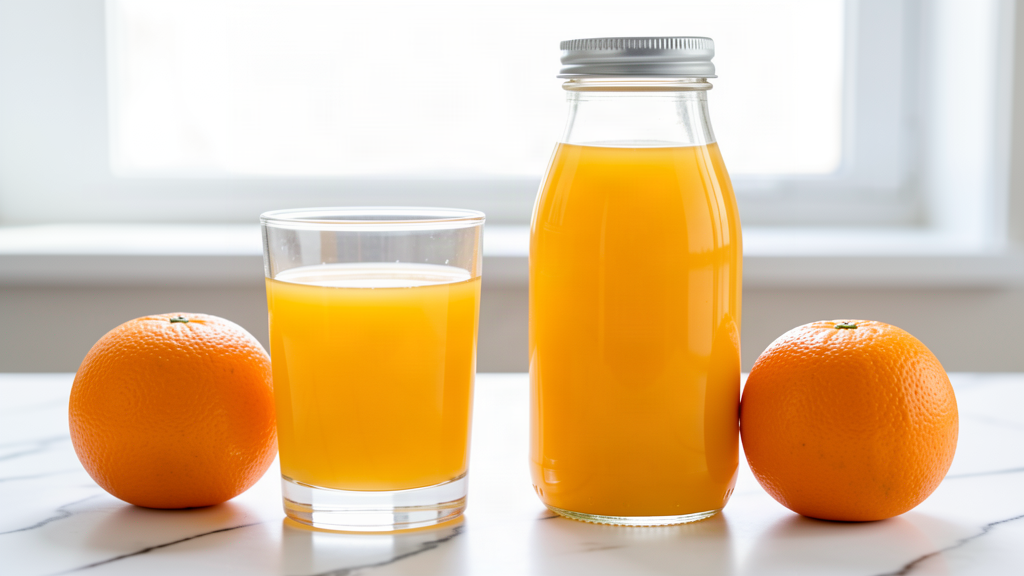
Mostly yes, with one big caveat. A chilled bottle of 100% juice gives you similar vitamins to fresh, just with a little less vitamin C because of the heat treatment. The caveat is the cheap “juice drink” that is mostly water and sugar with a splash of juice. That is not juice in any useful sense, and it is the thing to avoid.
I drink fresh juice at home most mornings, but I am not precious about a carton. Both have a place. The difference between them matters far less than the label does.
Fresh versus bottled: what actually changes
Fresh juice is pressed and drunk within a day or two. Bottled juice has to survive weeks on a shelf or in a fridge, so it gets pasteurised. That means it is heated to kill the bacteria and yeast that would spoil it. The heat is what makes a bottle safe to keep, and it is also what takes the edge off the vitamins.
There are two kinds on the shelf. “Not from concentrate” is pressed juice that has been pasteurised and chilled. “From concentrate” is juice that has had the water removed, then had water added back. Both are 100% juice if the label says so. Not from concentrate tends to taste closer to fresh and costs more.
The vitamin C question
Vitamin C is the nutrient most affected by all of this. It is water-soluble and it does not like heat, light or air. Press an orange and drink it straight away and you keep the most. Pasteurise it, then store it in a clear bottle on a warm shelf, and you steadily lose more of what is left.
So a chilled, not-from-concentrate juice kept in the fridge holds on to more than a long-life carton that has sat in a cupboard. If vitamin C is your reason for drinking juice, fresh or chilled beats ambient. If it is just about having a drink you enjoy that is better than fizzy pop, any 100% juice does the job.
Worth saying plainly: vitamin C does not stop you catching colds. The evidence only supports a small shortening of a cold once you have one. Drink juice because you like it and because it is a decent habit, not because it is a shield.
The label is where it gets muddy
This part matters more than fresh versus bottled. Three phrases to watch.
“Juice drink” or “fruit juice drink.” This is not juice. It is water, sugar and a small amount of juice, sometimes far less than you would guess. It is usually mostly sugar water with almost none of the vitamins. Look for the percentage of juice on the front.
“No added sugar.” Means nothing useful here. All the sugar in fruit juice is already in it, and your body treats it the same way as spooned-in sugar. Fruit juice counts as free sugars, which is the kind the NHS says to cut down on.
“1 of your 5 a day.” This can be true on a 100% juice. It can also appear on drinks that are mostly water and sugar. Check it says 100% juice before you trust it.
Neither one has much fibre
Fresh and bottled have this in common: both have had the fibre stripped out. Juicing leaves the pulp behind, so a glass gives you very little of what a whole orange gives you. Bottling does not make that worse, because it is already gone by then. If fibre is what you are after, eat the fruit.
Which one should you buy
If you have a juicer and the time, fresh is the best of the lot, drunk the same day. If you are buying, a chilled not-from-concentrate 100% juice is a sensible everyday choice, and there is no need to pay a premium for “cold-pressed” on a bottle unless you prefer the taste. Avoid anything called a juice drink. Do not drink juice in place of water.
Portion matters more than either. The NHS says a 150ml glass counts as one of your 5 a day, and no amount beyond that counts for more. Keep it to one small glass, ideally with a meal, and rinse your mouth with water afterwards. Citrus is acidic and juice is sugary, and both are hard on teeth if you sip them through the day.
FAQ
Is bottled juice healthy?
100% juice is a reasonable drink in a small glass, whether bottled or fresh. It counts once towards your 5 a day at 150ml. The problem is the volume and the type. A big carton of juice drink is mostly sugar, and sipping juice all day is bad for your teeth.
Does bottled juice lose all its vitamins?
No. It loses some vitamin C to the heat of pasteurisation and more over time in storage. Not-from-concentrate, chilled and kept in the fridge keeps more than a long-life carton. The other nutrients in juice are less fragile than vitamin C.
Is fresh juice better than bottled?
Slightly, on vitamin C and taste, because it has not been heated. That gap is small. The bigger difference is between 100% juice and a juice drink, so read the label before you worry about which one is fresher.
Once you have a juice you like, the rest is timing and portion, which I go into in best time to drink juice and does juice count as 5 a day. If you want to make your own, the detox and weight loss collections are a good place to start, and there is more on storage in how long fresh juice lasts.