
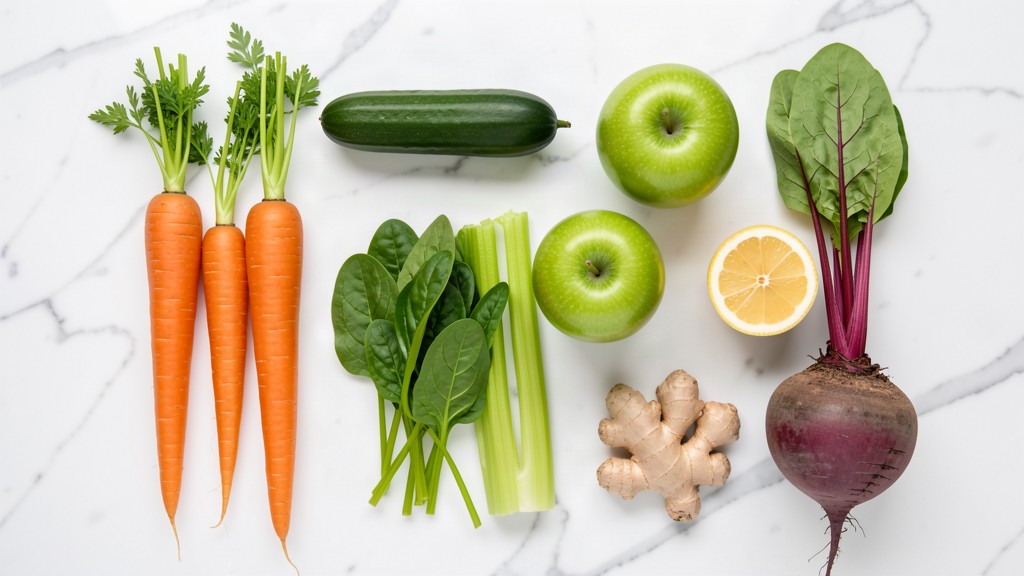
If you are just starting out, the easiest vegetables to juice are cucumber, carrot and celery. They give up plenty of juice, they taste mild, and they mix with almost anything. Greens like spinach and kale are worth adding too, but a small handful goes a long way.
I have made a lot of juice and the mistakes tend to be the same ones. Someone buys a juicer, loads it with raw kale and beetroot on day one, tastes something close to lawn clippings, and the machine ends up in a cupboard. Start with the vegetables that want to give you juice, then bring in the strong ones once you know what you like drinking.
The easy three: cucumber, carrot and celery
Cucumber is the friendliest vegetable in a juicer. It is mostly water, it tastes clean, and it carries other flavours instead of fighting them. If the idea of green juice puts you off, start here. A cucumber, mint and lime juice is about as gentle as juicing gets and it is very hard to ruin.
Carrot is sweet, so it does the job fruit usually does without adding much sugar. It is also cheap and keeps for ages, which matters when you are still deciding whether you enjoy this. One carrot, one apple and a little ginger makes a warming glass that tastes more like a treat than a health drink.
Celery is the one people expect to hate and often end up liking. It is mild, a little salty, and it adds a savoury edge that stops a green juice tasting like a smoothie. A celery, apple and ginger juice is a good way to find out where you stand.
Greens are worth adding, in small amounts
Spinach is the gentlest green to begin with. It is soft, it blends into the background, and a big handful does not overwhelm the taste. A spinach, orange and apple juice is a good next step once cucumber starts feeling too plain.
Kale is stronger and more bitter, so treat it as a seasoning rather than a base. Two or three leaves is plenty for one glass. Pile it in and the whole drink tastes of cabbage. For a gentler way in, try a kale, apple and cucumber juice where the cucumber and apple do most of the work.
One thing worth knowing if you take warfarin or another blood thinner: leafy greens are high in vitamin K, which affects how those medicines work. You do not need to avoid them. Just keep your intake steady rather than swinging from none to a pint of green juice, and mention any big change to your GP or anticoagulant clinic.
Beetroot, for colour and a bit of body
Beetroot convinces a lot of people that juicing is worth the washing up, mainly because a glass of it looks magnificent. It is earthy on its own, so it wants a partner. A simple beetroot and orange juice takes five minutes, uses two ingredients, and makes a good early win. Just be warned that beetroot stains everything it touches, so rinse the juicer parts straight away.
Vegetables that surprise people
Fennel tastes of aniseed and cuts through anything heavy. Tomato makes a savoury, low-sugar glass closer to a cold soup than a juice. Courgette is mild and cheap in summer. Broccoli and red pepper both add a fresh note and plenty of vitamin C. None of these need to be a first purchase. If the savoury idea appeals, tomato and celery is where to begin.
How to make it taste good
Sweetness is the dial you turn first. One apple per glass covers a lot of bitterness and is the easiest fix if a juice tastes too green. After that, lemon lifts the whole drink and ginger adds warmth. A slice of each is usually enough.
A rough rule for beginners is three parts vegetable to one part fruit by volume. You can push it greener as your taste adapts, but there is no prize for starting at the bitter end. If it tastes flat rather than strong, it usually wants acid, so reach for the lemon rather than the honey.
A few practical things worth knowing
Juicing removes most of the fibre, so a glass is not the same as eating the vegetable whole. It is a way to get more vegetables into your day, not a replacement for them. I have written about what juicing does to fibre in more detail.
The NHS counts one 150ml glass of unsweetened fruit or vegetable juice as one of your five a day, and only one, however much you drink. So a juice is a portion, not a shortcut to five. More on that in does juice count as 5 a day.
Drink it fresh. Vitamin C and the delicate flavours fade once the juice meets air, so a glass made twenty minutes ago beats one made yesterday. If you do make it ahead, keep it sealed in the fridge and read how long fresh juice lasts.
Two vegetables to leave alone raw: potato and sweet potato. They are starch, not juice, and raw potato is not something you want in a glass. Everything above is fine uncooked.
FAQ
Can I juice any vegetable?
Almost any vegetable that is safe to eat raw will juice, but soft watery ones give the most liquid and the mildest taste. Very starchy vegetables like potato and sweet potato do not juice well and are not meant to be eaten raw, so leave those out.
Do I need to peel everything?
No. Cucumber, celery, spinach and kale need no peeling at all. Carrots and beetroot can go in scrubbed and unpeeled, though peeling beetroot gives a cleaner taste. Wash everything properly first, because grit ends up in the glass.
What if it tastes too strong?
Add more cucumber or apple and taste again. Bitterness comes from the greens, so if kale or spinach is the problem, use less next time and lean on cucumber for volume. A squeeze of lemon also balances a strong juice.
Once you have a couple of glasses you like, the rest is easy. If you want somewhere to go next, the energy and digestion collections both have plenty of beginner-friendly recipes, and the immunity collection is a good place to land as the weather turns.