
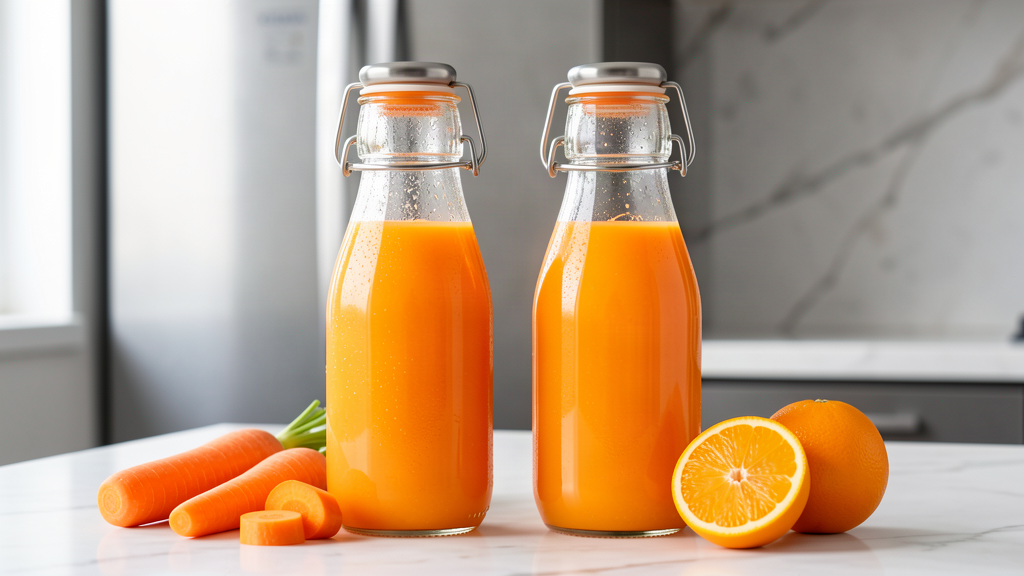
Pressed at home, drink it within 24 hours. A sealed cold pressed bottle from a shop keeps for as long as the date on the cap, usually three to five days. Past that most of the vitamin C has gone and you are mostly drinking sugar and water.
I juice most mornings and I have poured away more bottles than I would like to admit, nearly always because I made too much. The honest answer to storage is not a clever trick: make less and drink it sooner.
Why fresh juice fades so fast
Juice is what is left of a fruit once the fibre and the skin are out of the way. What remains is water, sugar, some vitamins and minerals, and a lot of surface area for oxygen to get at.
Air, light and warmth work against those vitamins, and vitamin C is the fragile one. It starts dropping as soon as the juice meets air, and it keeps going while the bottle sits in the light. That is why a juice that tasted bright on Sunday tastes flat by Tuesday. The sugar is still there. The thing you were drinking it for is not.
It is also why shop juice is often pasteurised or high pressure processed. Heat and pressure hold back the bacteria so it can sit on a shelf for weeks, and take some of the life out of it at the same time. That juice is not the drink you press yourself. The wider picture is in is juicing healthy.
Juice you press yourself: 24 hours
Home pressed juice has no preservative in it and no factory cap. It is a good home for bacteria, and your fridge is the only thing slowing them down.
Sealed and kept cold it is at its best for 24 hours, still fine at 48, and past that I would tip it. Not because it will make you ill, but because you are drinking the shell of it.
Shop bought juice: go by the date, not the label
Cold pressed looks like the fresh stuff because the bottle and the price say so. Read the small print. If it says pasteurised, or the use by date is weeks away, it has been treated to survive that long. Once opened the clock resets to about three days, and it goes straight back in the fridge. Raw cold pressed bottles behave like your own juice, so treat them the same way.
How to store it so it lasts
- Fill the bottle to the top. The air at the neck is the oxygen that dulls it.
- Use glass with a tight lid. A screw cap seals better than cling film.
- Keep it at the back of the fridge, not the door. Your fridge should run below 5C, and the door is the warmest part because you open it twenty times a day.
- Do not leave it out. Two hours on the counter is the most I would give it.
- Wash the juicer straight after. Old pulp is where the bacteria start, and then they are in your next batch too.
Can you freeze juice?
Yes, and it beats drinking something you have gone off. Freeze it the day you make it, leaving a couple of centimetres of headroom, because water expands and glass filled to the brim will crack.
Three months is the usual home freezing guideline, though I would drink it inside a month. Thaw it in the fridge overnight and stir it, because it will have separated. Thawed juice is never quite the same, so I use it as a base for a soup rather than drinking it straight.
When to pour it away
Not every change means the bin. Separation is normal, just the solids settling, and a shake sorts it. A colour drifting towards brown is oxidation, which is the vitamin C going. Safe to drink, past its best.
These I tip without arguing:
- It fizzes, or the cap pops when you open it. That is fermentation, and the sugar is turning into alcohol.
- It smells sharp, sour or yeasty instead of like the fruit.
- There is mould on the surface or around the rim.
- It has sat out of the fridge overnight.
If it has been in the fridge four days and the smell is fine, I still tip it. One small glass is not worth a day off work with food poisoning. The NHS puts the daily limit for juice at 150ml, as I went into in how much juice should you drink a day.
Who needs to be more careful
Unpasteurised juice carries a small risk of food poisoning bacteria for anyone, and a bigger one for pregnant women, young children, older people and anyone with a weakened immune system. It is why the FDA tells pregnant women and young children to avoid unpasteurised juice, and why NHS pregnancy guidance caps fruit juice and smoothies at 150ml a day. If you are in one of those groups, buy pasteurised and go by the date on the bottle.
Frequently asked questions
How long does fresh juice last in the fridge?
24 hours if you pressed it yourself, and up to three days for a sealed cold pressed bottle you have just opened and put back in the fridge. Past that it may still be safe, but most of the vitamin C has gone.
Can I make juice the night before?
Yes. Make it in the evening, fill the bottle to the top, seal it, put it at the back of the fridge and drink it in the morning. It loses a little overnight, nothing like what it loses on a counter.
How long can fresh juice sit out of the fridge?
Two hours at most, and nearer one on a warm day. The same rule the NHS gives for any perishable food applies here. If it has been out longer, especially overnight, tip it.
What you put in matters as much as how you store it. Our digestion juices lean on vegetables rather than fruit, which keeps the sugar down, and celery, apple and ginger juice is a good one to make in a batch. For the rest of the questions people ask, does juice count as 5 a day is the next one to read.