
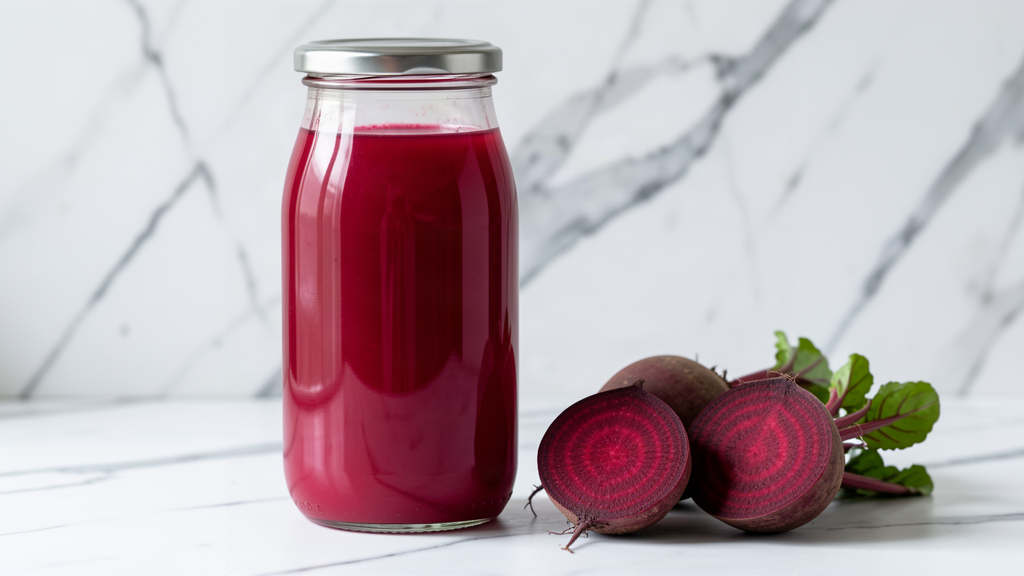
Yes, beetroot juice is good for you, but probably not for the reasons most of the internet gives you. The one thing it genuinely does, with real evidence behind it, is nudge your blood pressure down a little. Everything else is a normal root vegetable doing normal root vegetable things.
What beetroot juice actually does
Beetroot is one of the richest everyday sources of dietary nitrate. Your body turns that nitrate into nitric oxide, which relaxes the walls of your blood vessels, and that is why a glass of beetroot juice can lower blood pressure slightly for a few hours after you drink it. Blood Pressure UK and the British Heart Foundation both list beetroot as a source of nitrate for exactly this reason, and it is the effect the trials keep finding.
It is a real effect and it is a small one. It is not a replacement for blood pressure medication. If you are on tablets for your blood pressure or your heart, keep taking them, and talk to your GP before you make any change.
What you actually get in a glass
A glass of beetroot juice gives you nitrate, folate, potassium, manganese and a little vitamin C. Beetroot also carries iron, though the plant form is harder for your body to absorb than the iron in meat, and the vitamin C in the same glass helps a bit with that.
Then there is the sugar. Beetroot is a sweet vegetable and juicing concentrates it, so you are looking at roughly 10 g of sugar per 100 ml, which is in the same ballpark as apple juice. None of this is a detox. Your liver and your kidneys do the filtering in your body, and no juice makes them go any faster.
The fibre you leave in the machine
This is the honest bit that most beetroot juice articles leave out. Whole beetroot is a good source of fibre. When you juice it, nearly all of that fibre stays in the pulp and goes in the bin, so a glass of beetroot juice is not the same thing as eating beetroot. If fibre is what you are after, eat the vegetable. If you want the nitrate in a drink, juice it. I have gone through that trade-off properly in does juicing remove fibre.
Beeturia, kidney stones and mouthwash
Three things worth knowing. All of them are real, and none of them are scary.
First, beetroot turns your urine and stools pink or red for a day or so. It is called beeturia and it is harmless. Do not panic that something is bleeding.
Second, beetroot is high in oxalate. If you have had kidney stones, especially calcium oxalate stones, it is a food to go easy on, along with spinach and rhubarb. The usual advice for stone formers is to drink plenty of water and not to load up on high-oxalate foods.
Third, and this one is genuinely odd. Antibacterial mouthwash can blunt the blood pressure effect of beetroot juice. Your mouth bacteria are part of the chain that turns nitrate into nitrite before you swallow it. Kill them off and you lose some of the benefit. You do not need to bin your mouthwash, but if you are drinking beetroot juice for your blood pressure, do not rinse with it straight afterwards.
Does it help you think better?
Probably not in any way you would notice. Beetroot for brain power is a popular claim online, and the honest answer is that the trials are mixed. Some find a small effect, some find nothing at all. I would not drink beetroot juice expecting to sharpen your memory. Drink it for your blood pressure and for your vegetable intake, and treat the brain claims as unproven.
How to drink it
A small glass is plenty, somewhere around 150 to 250 ml. On its own it tastes earthy and sweet, which some people love and some people cannot stand. Apple and lemon soften it, carrot rounds it out, and a little ginger lifts it. Try our beetroot and orange juice or the beetroot and blueberry juice if you want a gentler way in. Have it with a meal rather than on an empty stomach if the sugar gives you a spike, and see the best time to drink juice for more on that.
FAQ
How much beetroot juice should I drink a day?
One small glass, roughly 150 to 250 ml, is a sensible amount. There is no need to drink it every day, and more is not better. If you are drinking it for your blood pressure, speak to your GP first, especially if you take medication.
Is beetroot juice good for anaemia?
It has iron and folate, which are both involved in making red blood cells, but it is not a treatment for anaemia. If you think you are anaemic, get a blood test. Guessing and drinking juice is how people miss the real cause.
Can beetroot juice be bad for you?
For most people it is fine. Go easy if you are prone to kidney stones, because it is high in oxalate, and skip it if you have been told to follow a low-oxalate diet. If you are on blood pressure medication, do not expect the juice to do the tablets’ job.
More detox and heart-friendly juice recipes: see the full DETOX collection.