
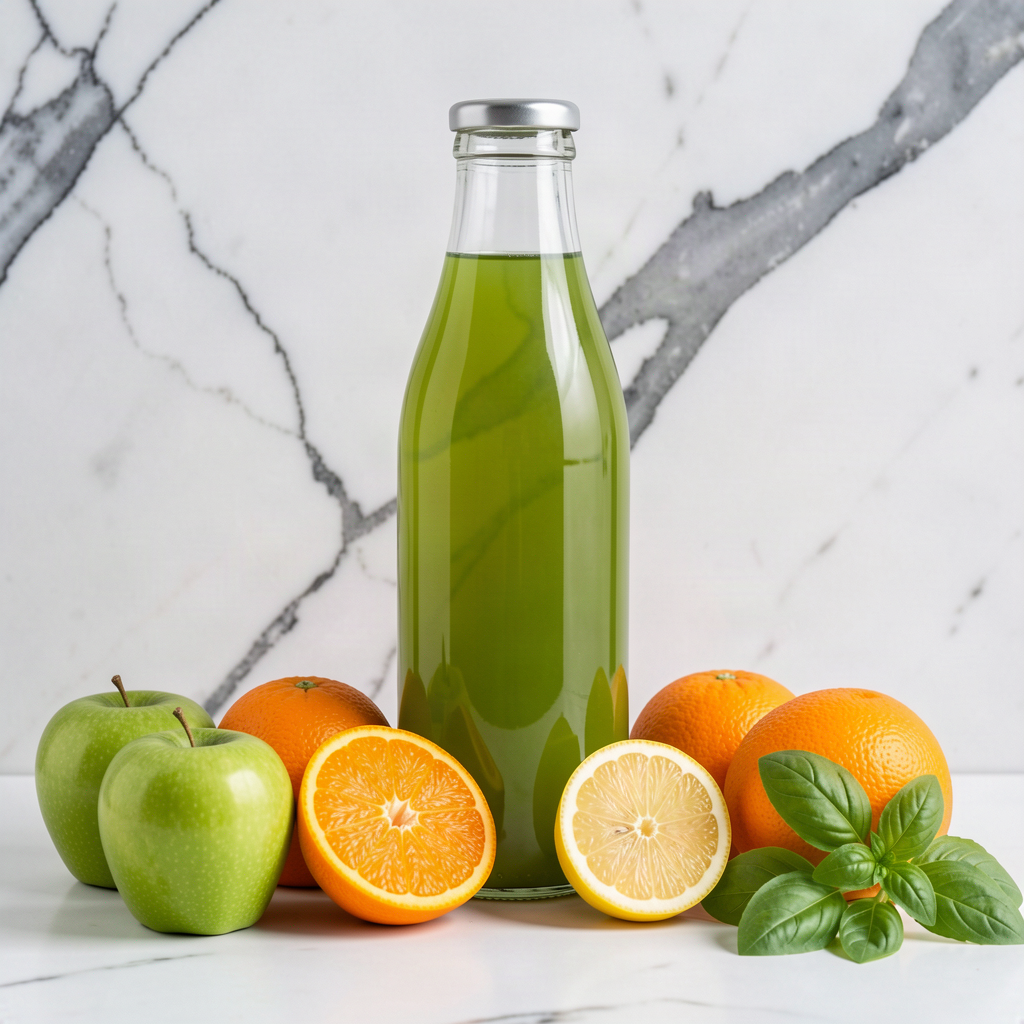
Basil is a herb I only ever use by the pinch. A few leaves torn over a tomato salad, a handful stirred through a curry at the end, and then the rest of the bunch sits in the fridge door slowly turning black. This is what I do with the end of it. A big handful of leaves, two apples, two oranges and half a lemon through the juicer gives you something I did not expect the first time I tried it: properly herby and perfumed underneath, but citrusy and sweet on top, because the oranges are doing most of the talking. It tastes like a green juice that somebody has actually thought about.
Why these ingredients work
Basil has a real reputation as a brain herb, and it is worth being straight about which basil. The plant in the supermarket pot is sweet basil, Ocimum basilicum. Almost all of the research people quote about basil, memory, stress and blood sugar is on holy basil, also called tulsi, Ocimum tenuiflorum, which is a different species with a different smell and a different chemistry. Those studies use concentrated tulsi extracts, not a handful of Genovese basil dropped in a juicer. Nobody has tested sweet basil juice against a memory test, so I am not going to pretend this glass sharpens your thinking. Drink it because it is a good drink.
What sweet basil does honestly bring is worth having anyway. Fresh leaves are one of the richest everyday sources of vitamin K there is, around 415 micrograms per 100 g, so the 30 g handful in this recipe carries roughly 125 micrograms across two glasses. That matters if you take warfarin, because the drug works by blocking vitamin K, and what upsets a stable dose is the amount swinging up and down rather than the amount itself. If you are on a blood thinner or have a bleeding disorder, keep your basil intake steady instead of cutting it out, and mention it to your doctor or pharmacist. The leaves also carry carotenoids that your body turns into vitamin A, and the aroma compounds eugenol and linalool that give basil its smell. One honest caveat on that chemistry: the aniseed note in basil comes from estragole, and food regulators treat estragole as a genotoxic carcinogen, which is why they police the levels allowed in concentrated flavourings and essential oils. A handful of fresh leaves in a glass is an ordinary culinary amount, the same order as a bowl of pesto, but basil essential oil is a different thing altogether and should not be swallowed.
The apples and oranges are doing the drinking side of the job. Two juicy apples sweeten the glass so no sugar is needed, and because I juice them with the skin on you keep the quercetin, which sits in the peel. Oranges bring around 53 mg of vitamin C per 100 g of flesh, so two of them push this well past a day’s worth, and vitamin C is what helps you absorb the iron that comes in with the leaves. The lemon lifts the whole thing and stops it tasting flat. Worth saying plainly as well: straining leaves most of the fibre behind, and there is still around 30 g of fruit sugar in a glass of this. It is juice, not a salad.
FAQ
Is basil juice good for memory?
The claim comes from holy basil, or tulsi, which is a different plant from the sweet basil you buy in the supermarket. The human studies behind it use concentrated tulsi extracts, and they are about stress and blood sugar as much as memory. Sweet basil has not been tested that way at all, so I would treat a glass of this as a nice drink rather than a brain supplement. If it is the herb and memory angle you are after, the rosemary and sage juices on the site are the more honest place to look.
Does basil juice interfere with warfarin?
It can, and it is worth knowing. Basil is very high in vitamin K and warfarin works by blocking vitamin K, so a big and erratic amount of basil in your diet can affect how well your dose is controlled. The usual advice for leafy greens applies here: keep your intake consistent rather than avoiding it, and tell your GP, anticoagulant clinic or pharmacist that you drink it. If you are not on a blood thinner, this is a non-issue.
Can I use dried basil or the herb from a jar instead of fresh?
No, and not only because it is weaker. Fresh basil’s whole character sits in the aroma compounds in the leaf, and drying drives most of them off, which is why dried basil smells like hay. Thai basil or lemon basil both work well if that is what you have growing, but the dried stuff will just make the glass taste dusty.
More brain juices: see the full Brain collection.
The juicer and blender links in the recipe card below are affiliate links, which means I earn a small commission if you buy through them. It does not change what you pay.

Basil, Orange and Apple Juice
Equipment
- Nut milk bag
Ingredients
For the juice
- 2 sweet apples such as Gala or Braeburn, about 300 g, cored and quartered, skin left on
- 2 oranges about 400 g, peeled and pulled into segments
- 30 g fresh basil leaves a big handful, thick woody stems removed
- 1/2 unwaxed lemon juiced, to taste
Instructions
Juicer method
- Pick the basil leaves off the thick woody stems and rinse them. Keep the small tender stems, they juice perfectly well, but the thick ones just wrap themselves round the blades and stop the fruit travelling.
- Wash the apples and cut them into quarters, core and all, leaving the skin on. Feed one apple through the juicer, then half the basil, then the second apple, then the rest of the basil. Sandwiching soft herb between hard fruit is what pushes it through cleanly instead of clogging the screen.
- Peel the oranges and pull the segments apart. Juice them a few at a time, or press them with a citrus press and stir the juice in with the apple and basil if your machine struggles with citrus. Same drink either way.
- Squeeze in the lemon to taste, stir, and pour into two glasses. Drink it straight away, the basil goes a bit dull within an hour or two.
Blender method
- Pick the basil leaves from the thick stems. Peel the oranges and flick out any pips. Core the apples and chop them into chunks, skin on.
- Blend everything with 100 ml of cold water on high for about a minute, until there is no solid left.
- Strain through a nut milk bag or a fine sieve, pressing the pulp so you get every drop out, then bin the pulp.
- Squeeze in the lemon, stir, pour over ice and drink straight away.