
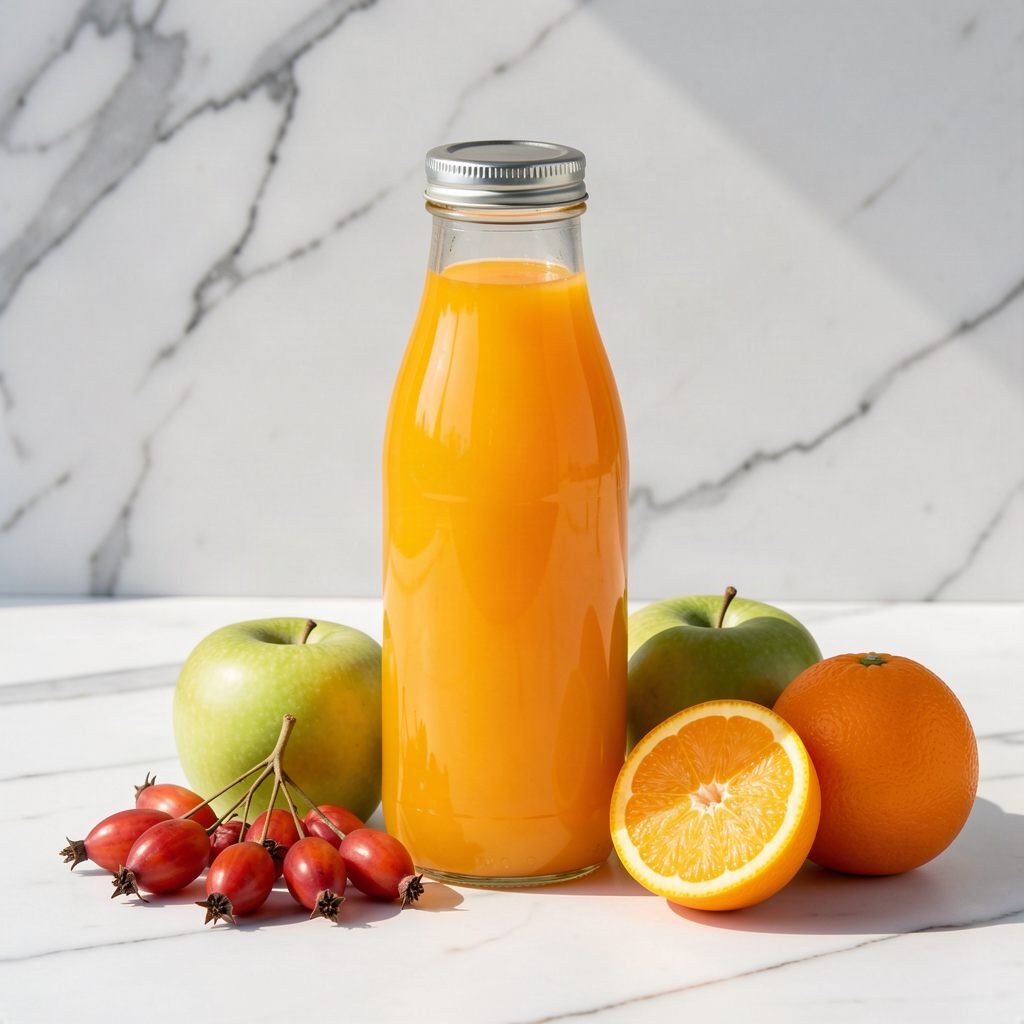
Every autumn I end up with a pocket full of rosehips after a walk, because the dog roses along our hedgerows fruit so heavily from late September. They make a beautiful bright orange juice, and they are one of the richest natural sources of vitamin C in Britain, which is exactly why the wartime Ministry of Food handed out rosehip syrup to children. That syrup was boiled for twenty minutes and sweetened with a lot of sugar though, and boiling is the one thing vitamin C does not survive, so this is the other way round: raw hips pressed with sweet apples and oranges, nothing cooked and nothing added.
Why these ingredients work
Rosehips carry far more vitamin C by weight than an orange does, and this raw version keeps far more of it than the boiled syrup did, because heat destroys vitamin C. Two oranges add more of the same and a lot of the liquid, and two crisp green apples bring the sweetness that balances the hips, which are tart and a little astringent on their own. One honest caution before you start: fresh rosehips are mostly seed and skin, so they give relatively little juice, and the fine hairs inside them are a real throat irritant, which is why straining is not optional. I will also say this plainly. Regular vitamin C does not stop healthy adults catching colds, the Cochrane reviews are quite clear on that, it can only shorten one slightly. So drink this because it is a genuinely nice autumn glass and a much better habit than a can of pop, not because it will keep you bulletproof through winter.
FAQ
Can I use dried rosehips instead of fresh ones?
You can, and they are easy to buy, but dried hips have lost a lot of their vitamin C in the drying and they will not juice. If dried is all you have, steep a handful in a little warm water, not boiling, strain it, and blend that liquid with the apple and the orange instead.
Do I need to take the seeds and hairs out of the rosehips?
Not for the juicer, the seeds and the hairs come out in the pulp. You do need to strain the finished juice through a fine sieve or a nut milk bag, because the fine hairs that sit around the seeds irritate the throat. If you are using a blender, strain the rosehips first, before they ever meet the glass.
When is the best time to pick rosehips?
From late September right through to the first frosts, when the hips are fat and deep red and at their softest. Pick from a clean hedgerow well away from busy roads, and use them within a couple of days of picking.
More immunity recipes: see the full Immunity collection.
Rosehip, Apple and Orange Juice
Equipment
- 1 Juicer A masticating or cold press juicer handles the rosehips far better than a centrifugal one.
- 1 Budget cold press juicer The cheapest sensible way in if you are not sure you will stick at it.
- 1 High-speed blender Use this route if you already own a blender and no juicer.
- 1 Nut milk bag Essential here, to strain out the fine hairs from the rosehips.
- 2 Airtight glass bottles For keeping a batch in the fridge, though this one is best drunk the day it is made.
Ingredients
- 2 green apples crisp eating apples such as Granny Smith or Braeburn, cored and quartered but not peeled
- 2 oranges peeled and pulled into segments
- 60 g fresh rosehips about a large handful, topped and tailed and rinsed
Instructions
Juicer method
- Top and tail the rosehips with a small knife and rinse them well. There is no need to try to de-seed them, the juicer does that work for you.
- Quarter and core the apples. Do not peel them, the skin is where a lot of the colour sits. Peel the oranges and pull them into segments.
- Feed the apples through the juicer first so the machine is running wet, then the orange segments, then the rosehips, and finish with any apple you have left. The juicy apple and orange carry the rosehips through.
- Strain the juice through a fine sieve or a nut milk bag. This step really matters with rosehips, because the fine hairs inside the hips are a throat irritant and you want them out of the glass.
- Pour into two glasses and drink it the same day. It loses its colour and its vitamin C quickly once it is pressed.
Blender method
- Top and tail and rinse the rosehips. Core and quarter the apples and peel the oranges.
- Blitz the rosehips with about 100 ml of water, then pass that through a fine sieve or a nut milk bag and throw the solids away. Never put raw rosehip pulp straight into the glass, blending releases the fine hairs.
- Blend the strained rosehip liquid with the apple and the orange until smooth.
- Strain the blend through the sieve or the bag again, then pour into two glasses. The blender version comes out a little thicker than the juicer one.