DIGESTION

Your gut works best when you feed it the right fibre and enzymes. These juices bring pineapple, fennel, prunes, papaya, cucumber, white cabbage, quince, okra, radicchio, leek, Jerusalem artichokes and red dragon fruit to ease bloating and keep things moving, with ginger and mint to settle your stomach. Asparagus brings soluble fibre that still carries into the glass, and quince brings the astringent tannins it has been used for long before juicers existed. Okra adds the slippery mucilage that is the whole reason okra water became a thing, and because mucilage dissolves rather than sitting in the pulp, more of it survives straining than you would expect. Radicchio is the bitter one of the group, and unlike the fibre in the other juices here, the bitterness is dissolved in the liquid rather than left behind in the pulp, which is why bitter greens have been taken before a meal for centuries. Leeks are the allium of the group, and the inulin-type fructans behind the allium family’s gut reputation partly dissolve, so unlike the tougher cellulose in a leek a share of them carries into the glass. Fennel is already on that list, and the fennel, orange and apple juice is one way to drink it, so one honest note about it: the carminative reputation people quote belongs to fennel seed and fennel tea rather than the fresh bulb, and what the bulb genuinely has going for it is that it is a low FODMAP vegetable most people find easier than onion or a big brassica. The cabbage, apple and lemon juice is the newest addition, and it works on the glutamine side rather than the fibre side, because glutamine is the preferred fuel for the cells lining the small intestine and the strain takes most of the cabbage’s fibre out. The dragon fruit, apple and lime juice works on a slightly different mechanism again: the flesh carries non-digestible oligosaccharides, and because they are dissolved rather than suspended they survive the strain, in the same way the inulin in the Jerusalem artichoke does. The honest limit is that the prebiotic evidence for pitaya is laboratory work rather than trials in people, so it is a good reason to drink it and not a treatment for anything. The Jerusalem artichoke juice carries the fibre story through the strain in much the same way: the tubers store their energy as inulin rather than starch, inulin dissolves, and so a good share of it reaches the colon instead of the pulp bin. Both ferment, which is the honest catch, so start with a small glass and build up.

All our digestion juices
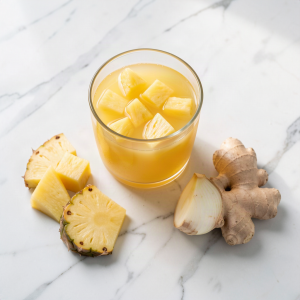
Pineapple Ginger Fennel Juice
Pineapple and fennel team up against bloating, with ginger to settle your stomach.
Check out this recipe
Pineapple ginger and fennel juice

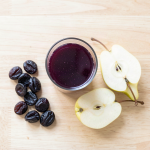
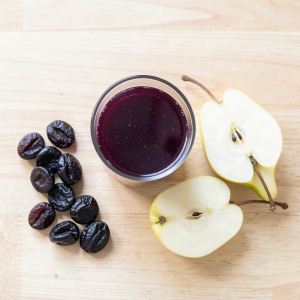
Prune Apple Pear Juice
Prunes, apple and pear bring natural sorbitol and fibre to get things moving gently.
Check out this recipe
Prune apple and pear juice

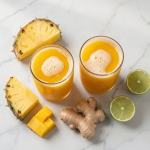
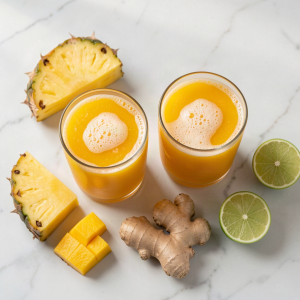
Pineapple Mango Ginger Juice
Sweet pineapple and mango with a proper kick of ginger. This is the one I reach for when my stomach needs settling and I still want it to taste like a treat.
Check out this recipe
Pineapple mango and ginger juice in a glass

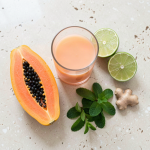
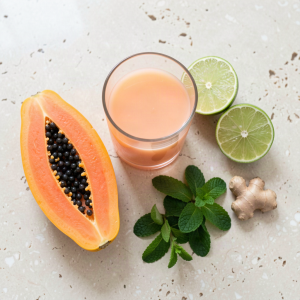
Papaya Lime Mint Juice
Papaya is the one I come back to when my stomach feels sluggish. It's naturally sweet and easy on the gut, thanks to the papain enzyme it carries. Lime keeps it bright, mint settles everything down, and a small knob of ginger gives it a clean finish.
Check out this recipe
Papaya lime and mint juice in a glass

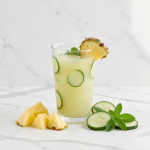
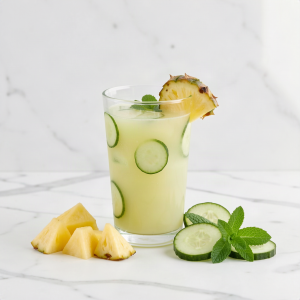
Pineapple Cucumber Mint Juice
Pineapple and cucumber make a light, cooling juice that settles the stomach, with fresh mint to freshen things up.
Check out this recipe
Glass of pineapple cucumber mint juice with pineapple chunks, cucumber slices and mint leaves on a marble counter

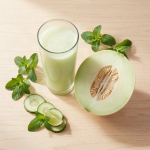
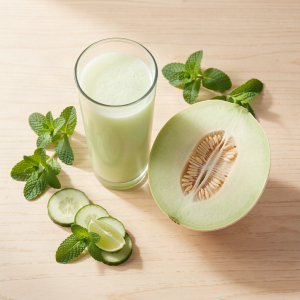
Honeydew Melon Cucumber Lime Juice
Honeydew is the quiet one of the melon family and it makes a beautifully light juice. Naturally sweet, hydrating and easy on the stomach, this honeydew, cucumber and lime mix is what I pour when I want something cold and refreshing that doesn't sit heavy.
Check out this recipe
Honeydew melon cucumber lime juice in a glass with a halved honeydew melon, cucumber slices and a lime wedge nearby

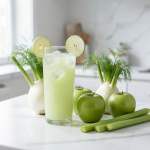
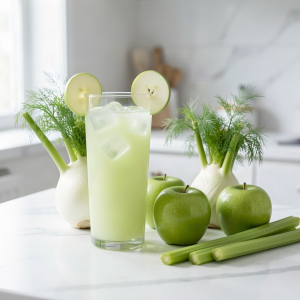
Apple Fennel Celery Juice
Green apple, fennel and celery juiced with half a lemon. Clean, aniseedy and savoury rather than sweet, this is the glass I pour after a heavy meal or when my stomach feels tight. Ten minutes from chopping board to glass.
Check out this recipe
Glass of pale green apple fennel and celery juice beside a fresh fennel bulb, green apples and celery stalks

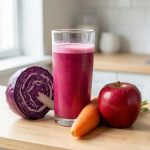
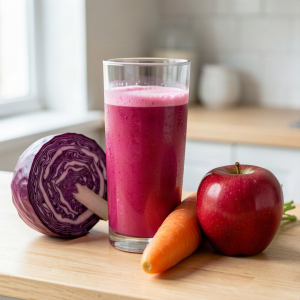
Red Cabbage Carrot and Apple Juice
A sweet, savoury juice from red cabbage, apple and carrot that comes out a brilliant magenta. Cabbage has a long folk history as a gentle gut soother, and this is the version you will actually finish.
Check out this recipe
Red cabbage carrot and apple juice in a glass with fresh ingredients

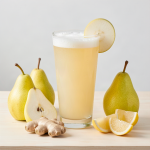
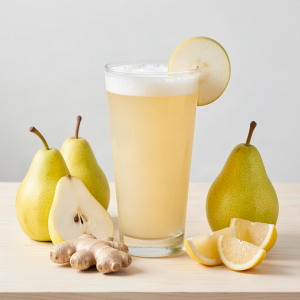
Pear Ginger Juice
I started making pear juice in September, when the fruit bowl fills up with soft Conference pears that are past their best for eating out of hand. Ginger gives it a warm, peppery edge and lemon stops it tasting flat, and the whole thing takes about ten minutes. It's the glass I reach for when my stomach feels off, and it keeps a couple of days in the fridge.
Check out this recipe
Pear ginger juice in a glass with fresh pears, ginger root and lemon wedges

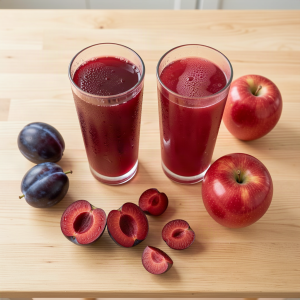
Plum Apple Juice
Fresh plums only turn up for a few weeks each September, so I make the most of them while they last. Sweet apple smooths out their sharp, jammy flavour and you end up with a deep ruby glass that is easy on your digestion, thanks to the sorbitol and fibre plums naturally carry. Two fruits, no added sugar, ten minutes from fruit bowl to glass.
Check out this recipe
Two glasses of fresh plum and apple juice beside ripe plums and red apples

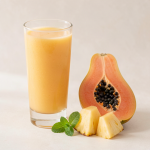
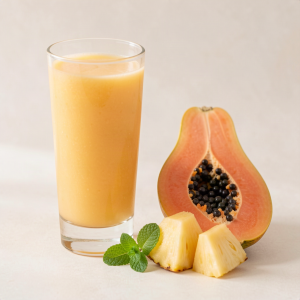
Papaya Pineapple Juice
Two fruits I always keep in for a sluggish stomach: ripe papaya and fresh pineapple. Pineapple brings bromelain and papaya brings papain, the two enzymes behind their long-standing reputation for helping digestion along. Five minutes, one glass, and it tastes like somewhere sunnier than Kent.
Check out this recipe
Glass of papaya pineapple juice with fresh papaya, pineapple chunks and a sprig of mint

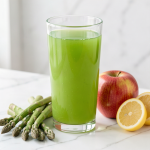
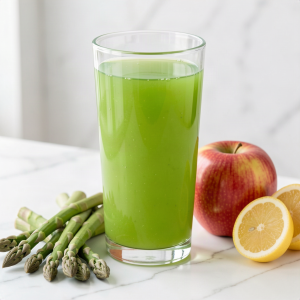
Asparagus, Apple and Lemon Juice
Green, grassy and only lightly sweet: asparagus juiced with two apples and a lemon. The apple does the sweetening and the lemon keeps it bright. Worth knowing this is one of the few juices that still carries some soluble fibre, because the fibre in asparagus dissolves in water and travels into the glass with the liquid.
Check out this recipe
Glass of fresh green asparagus, apple and lemon juice on a marble surface with asparagus spears, a red apple and half a lemon beside it

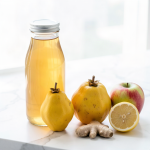
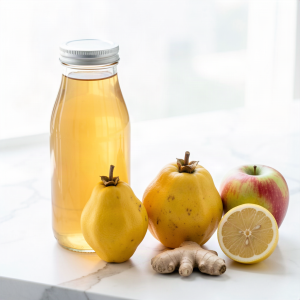
Quince, Apple and Ginger Juice
Quince is the awkward one in the fruit bowl. It is rock hard, dry and astringent raw, which is why nearly every quince recipe in the world simmers it with a pile of sugar. Through a juicer with two sweet apples and a knuckle of ginger it becomes something quite different: a sharp, floral, pale gold glass with no added sugar at all, where the apple does the sweetening and the ginger softens that dry grip at the back of your throat. Best made in October and November, when the quinces are in.
Check out this recipe
Fresh quince, apple and ginger juice in a sealed glass bottle beside two whole quinces, red and green apples, a knuckle of ginger and half a lemon on a marble surface

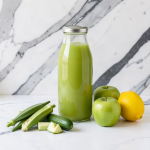
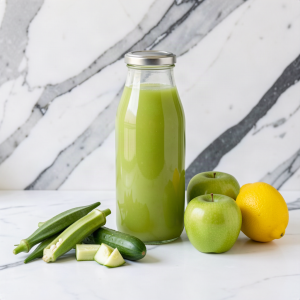
Okra, Cucumber and Apple Juice
Okra is the trendy one on social media, where soaking a few pods overnight and drinking the water has somehow turned into a whole wellness ritual. This is the proper juiced version. Okra's slippery mucilage is a soluble fibre, which means a good part of it stays in the liquid once you strain it rather than ending up in the pulp like most juice fibre. Cucumber keeps it light, two green apples and a lemon turn it into something you actually want to drink, and the whole thing takes about ten minutes.
Check out this recipe
Okra, cucumber and apple juice in a sealed glass bottle on a marble surface, with fresh okra pods, cucumber, green apples and a lemon beside it

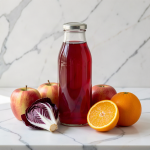
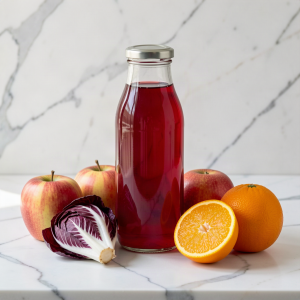
Radicchio, Apple and Orange Juice
Radicchio is the one properly bitter thing I keep coming back to in the juicer. It is a chicory, the same species as the pale endive sold through the winter, and in northern Italy a plate of it with orange is what lands on the table before a meal rather than after one, because bitter flavours are there to get your digestion going before the food arrives. As a juice it pours a deep ruby red and tastes like it looks: bitter first, then the apple and orange round it off. Keep it to a small glass and drink it before you eat, the way a bitter aperitif has always been taken.
Check out this recipe
Radicchio juice with apple and orange in a sealed glass bottle beside a head of radicchio, two apples and a halved orange on white marble

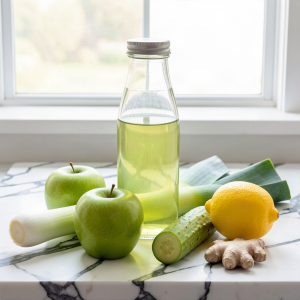
Leek Juice for Digestion: Apple, Cucumber and Lemon
Leeks are the quiet member of the onion family, and raw they are sharper than you would expect, so a glass of leek juice needs the right partners. Apple and cucumber soften the bite, the lemon keeps it bright and a little ginger rounds it off. It tastes like a savoury green juice with a warm allium edge, and it is not a low-calorie cleanse like celery juice, so drink it as a proper glass rather than a detox.
Check out this recipe
A sealed glass bottle of clear green leek, apple and cucumber juice on a white marble surface, with a fresh leek, two green apples, a cucumber, a lemon and fresh ginger beside it

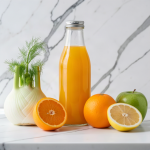
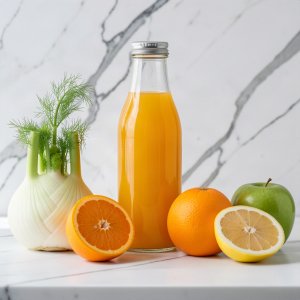
Fennel, Orange and Apple Juice
Fennel and orange is an old pairing from southern Italy and it works just as well in a glass as it does in a salad. The fennel is mild here, closer to sweet celery with a faint aniseed perfume than a shot of aniseed, and the orange and the apple round it off while the lemon keeps it fresh. It presses out to a clear golden orange carrying around 1,000 mg of potassium and 140 mg of calcium a glass, and it is honestly about 30 g of fruit sugar, so treat it as a proper drink rather than a water substitute.
Check out this recipe
Glass bottle of fresh fennel, orange and apple juice on white marble, with a fennel bulb, two oranges, a green apple and a lemon beside it

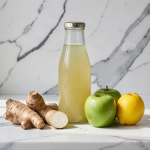
Jerusalem Artichoke, Apple and Lemon Juice
A pale, gently sweet glass built on Jerusalem artichokes, the knobbly sunflower root that most people walk past in the shop. The apple carries the flavour and the lemon keeps it from tasting earthy, but the real reason to make it is the inulin, a soluble fibre that survives the juicer and reaches your gut bacteria instead of the pulp bin.
Check out this recipe
Sealed glass bottle of pale golden Jerusalem artichoke, apple and lemon juice on a white marble surface, with knobbly sunchoke tubers, two green apples and a lemon beside it

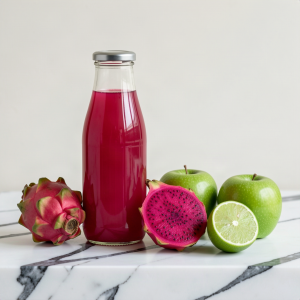
Dragon Fruit, Apple and Lime Juice
Dragon fruit looks as though it should taste of something dramatic and mostly tastes of very little, which is exactly why it works better with apple and lime than on its own. What it does bring is a vivid magenta colour, a soft pear-like flesh that gives up its juice easily, and oligosaccharides that feed the bacteria in your gut. Two minutes at the machine and you have a glass the colour of a sunset that tastes like a proper fruit drink.
Check out this recipe
Fresh dragon fruit, apple and lime juice in a sealed glass bottle on a white marble surface, with two pink pitaya dragon fruit (one halved to show magenta flesh and black seeds), two green apples and half a lime beside it

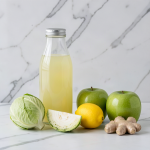
Cabbage, Apple and Lemon Juice
The one my grandmother swore by for a sour stomach, made properly. Raw white cabbage pressed with apple, lemon and a little ginger gives you a pale green glass that is sharp, clean and honestly quite drinkable, and it costs less than a coffee.
Check out this recipe
Sealed glass bottle of pale green cabbage juice beside a whole green cabbage, a cabbage wedge, two green apples, an unwaxed lemon and fresh ginger on a marble surface
Pineapple ginger and fennel juice

Pineapple Ginger Fennel Juice

Pineapple and fennel team up against bloating, with ginger to settle your stomach.
5 from 4 votes
Prep Time 10 minutes
Total Time 10 minutes
Course Drinks
Cuisine English
Servings 2 glasses
Calories 100 kcal

Equipment

Ingredients
  

  • 1 cup pineapple chunks
  • 1/2 fennel bulb
  • 1 inch ginger peeled
  • 1/2 lemon peeled
  • 1/2 cucumber

Instructions
 

Juicer method

  • Wash everything and chop the fennel to fit your juicer.
  • Juice the fennel, cucumber and ginger first, then the pineapple and lemon.
  • Stir and serve immediately.

Blender method

  • Blend all ingredients with a splash of water until smooth.
  • Strain through a fine sieve and serve.

Notes

Pineapple contains bromelain, an enzyme that helps break down protein, and fennel has long been used to ease bloating. Together they make this the one to reach for after a heavy meal. Nutrition is an estimate per glass.

Nutrition

Serving: 1glassCalories: 100kcalCarbohydrates: 25gProtein: 2gSodium: 50mgPotassium: 450mgFiber: 4gSugar: 18gVitamin A: 500IUVitamin C: 60mg
Keyword bloating, digestion, fennel, ginger, gut health, juice mix, pineapple
Tried this recipe?Let us know how it was!
Prune apple and pear juice

Prune Apple Pear Juice

Prunes, apple and pear bring natural sorbitol and fibre to get things moving gently.
5 from 4 votes
Prep Time 10 minutes
Total Time 10 minutes
Course Drinks
Cuisine English
Servings 2 glasses
Calories 140 kcal

Equipment

Ingredients
  

  • 4 prunes, pitted
  • 1 apple cored
  • 1 pear cored
  • 1/2 lemon peeled

Instructions
 

Juicer method

  • Pit the prunes, core the apple and pear.
  • Juice the prunes first, then the apple, pear and lemon.
  • Stir and drink straight away.

Blender method

  • Blend everything with a splash of warm water to soften the prunes.
  • Strain through a fine sieve and serve.

Notes

Prunes are famous for a reason: they contain sorbitol and fibre, both of which help keep you regular. If fresh prunes are hard to find, a good quality prune juice works as a base. Nutrition is an estimate per glass.

Nutrition

Serving: 1glassCalories: 140kcalCarbohydrates: 36gProtein: 1gSodium: 15mgPotassium: 500mgFiber: 5gSugar: 28gVitamin A: 200IUVitamin C: 25mg
Keyword apple, constipation, digestion, fibre, juice mix, pear, prune
Tried this recipe?Let us know how it was!
Pineapple mango and ginger juice in a glass

Pineapple Mango Ginger Juice

Sweet pineapple and mango with a proper kick of ginger. This is the one I reach for when my stomach needs settling and I still want it to taste like a treat.
5 from 4 votes
Prep Time 10 minutes
Total Time 10 minutes
Course Drinks
Cuisine English
Servings 2 glasses
Calories 130 kcal

Equipment

Ingredients
  

  • 2 cups pineapple, peeled and chopped
  • 1 ripe mango, peeled and stoned
  • 1 inch fresh ginger, peeled
  • 1 lime, peeled

Instructions
 

Juicer method

  • Peel the ginger, then top, tail and peel the pineapple and cut it into chunks. Halve the mango, cut the flesh away from the stone and scoop it out.
  • Feed the pineapple, mango and ginger through the juicer, finishing with the lime.
  • Stir, pour into two glasses and drink straight away.

Blender method

  • Peel the ginger, then top, tail and peel the pineapple and cut it into chunks. Halve the mango, cut the flesh away from the stone and scoop it out.
  • Add everything to a high-speed blender with the lime and 100ml of cold water.
  • Blend on high for 30 to 45 seconds until completely smooth.
  • Pour through a nut milk bag or fine-mesh sieve into a jug, squeezing the pulp to get every last drop, then serve.

Notes

Pineapple carries bromelain, an enzyme that helps break down protein, and ginger has long been used to settle an unsettled stomach. The blender method keeps a little more of the fibre, so it comes out thicker. Thin it with a splash of cold water if you prefer it lighter.
Nutrition is an estimate per glass.

Nutrition

Serving: 1glassCalories: 130kcalCarbohydrates: 34gProtein: 1gSodium: 10mgPotassium: 320mgFiber: 2gSugar: 28gVitamin A: 900IUVitamin C: 110mg
Keyword bloating, digestion, ginger, mango, pineapple, tropical juice
Tried this recipe?Let us know how it was!
Papaya lime and mint juice in a glass

Papaya Lime Mint Juice

Papaya is the one I come back to when my stomach feels sluggish. It's naturally sweet and easy on the gut, thanks to the papain enzyme it carries. Lime keeps it bright, mint settles everything down, and a small knob of ginger gives it a clean finish.
5 from 4 votes
Prep Time 10 minutes
Total Time 10 minutes
Course Drinks
Cuisine English
Servings 2 glasses
Calories 105 kcal

Equipment

Ingredients
  

  • 1 ripe papaya, peeled and deseeded
  • 1/2 cucumber
  • 2 limes, peeled
  • 1 inch fresh ginger, peeled
  • 10 fresh mint leaves

Instructions
 

Juicer method

  • Peel the ginger, then halve the papaya, scoop out the seeds and cut the flesh away from the skin. Top and tail the cucumber and cut it into chunks.
  • Feed the papaya, cucumber and ginger through the juicer, finishing with the limes and mint.
  • Stir, pour into two glasses and drink straight away.

Blender method

  • Peel the ginger, then halve the papaya, scoop out the seeds and cut the flesh away from the skin. Top and tail the cucumber and cut it into chunks.
  • Add everything to a high-speed blender with the limes, mint and 100ml of cold water.
  • Blend on high for 30 to 45 seconds until completely smooth.
  • Pour through a nut milk bag or fine-mesh sieve into a jug, squeezing the pulp to get every last drop, then serve.

Notes

Papaya contains papain, an enzyme that helps break down protein, which is why it turns up so often in digestion talk. Cucumber adds water without much sugar, and mint has long been a go-to for settling an upset stomach. The blender method keeps a little more of the fibre, so it comes out slightly thicker. Thin it with a splash of cold water if you prefer it lighter.
Nutrition is an estimate per glass.

Nutrition

Serving: 1glassCalories: 105kcalCarbohydrates: 26gProtein: 1gFat: 1gSodium: 8mgPotassium: 515mgFiber: 1gSugar: 17gVitamin A: 950IUVitamin C: 130mg
Keyword bloating, digestion, mint, papaya, papaya juice
Tried this recipe?Let us know how it was!
Glass of pineapple cucumber mint juice with pineapple chunks, cucumber slices and mint leaves on a marble counter

Pineapple Cucumber Mint Juice

Pineapple and cucumber make a light, cooling juice that settles the stomach, with fresh mint to freshen things up.
5 from 1 vote
Prep Time 10 minutes
Total Time 10 minutes
Course Drinks
Cuisine English
Servings 2 glasses
Calories 100 kcal

Equipment

Ingredients
  

  • 2 cups pineapple chunks peeled, core removed
  • 1 cucumber large, roughly chopped
  • 10 fresh mint leaves plus a few extra to garnish
  • 1/2 lime peeled

Instructions
 

Juicer method

  • Wash everything and peel the lime.
  • Feed the pineapple through first, then the cucumber and mint.
  • Finish with the lime, stir and pour over ice.

Blender method

  • Blend the pineapple, cucumber, mint and lime with a splash of water until smooth.
  • Strain through a nut milk bag or fine sieve into a jug.
  • Pour over ice and serve straight away.

Notes

Bromelain, the enzyme in pineapple, helps break down protein, which is why this juice works well after a big meal. Cucumber adds water and a little fibre without weighing it down. Nutrition is an estimate per glass.

Nutrition

Serving: 1glassCalories: 100kcalCarbohydrates: 24gProtein: 1gSodium: 10mgPotassium: 300mgFiber: 2gSugar: 17gVitamin A: 40IUVitamin C: 45mg
Keyword cucumber, digestion, gut health, hydration, juice mix, mint, pineapple
Tried this recipe?Let us know how it was!
Honeydew melon cucumber lime juice in a glass with a halved honeydew melon, cucumber slices and a lime wedge nearby

Honeydew Melon Cucumber Lime Juice

Honeydew is the quiet one of the melon family and it makes a beautifully light juice. Naturally sweet, hydrating and easy on the stomach, this honeydew, cucumber and lime mix is what I pour when I want something cold and refreshing that doesn't sit heavy.
No ratings yet
Prep Time 10 minutes
Cook Time 0 minutes
Total Time 10 minutes
Course Drinks
Cuisine English
Servings 2 glasses
Calories 95 kcal

Equipment

Ingredients
  

For the juice

  • 1/2 honeydew melon, peeled, deseeded and roughly chopped about 450g of flesh
  • 1/2 cucumber, roughly chopped
  • 1 lime, peeled the peel is bitter, so take it all off
  • 5 fresh mint leaves optional, lovely in the blender version

Instructions
 

Juicer method

  • Cut the honeydew in half and scoop out the seeds with a spoon. Peel it, chop the flesh into chunks that fit your juicer chute, then do the same with the cucumber.
  • Peel the lime and halve it. The white pith turns bitter in the glass, so take it all off before it goes anywhere near the juicer.
  • Feed the melon and cucumber through the juicer, alternating between the two so the soft melon doesn't clog the chute. Finish with the lime.
  • Stir the juice, pour it over ice if you like it properly cold, and drink it within the hour. The flavour fades fast once it's been juiced.

Blender method

  • Peel and chop the honeydew and cucumber, peel the lime, and drop everything into the blender with the mint leaves if you're using them.
  • Blend on high for 45 to 60 seconds until completely smooth, with no lumps left at all.
  • Pour the mixture through a nut milk bag or a fine sieve and press down to squeeze out every last drop.
  • Serve straight away over ice, or pour into an airtight bottle and keep it in the fridge for up to a day. Give it a shake before drinking.

Notes

Honeydew is naturally sweet, so there's no need to add anything to it. If your melon is underripe it will taste more watery than sweet, so leave it on the kitchen counter for a couple of days before you juice it. The foam that sits on top is normal, just give it a stir.

Nutrition

Serving: 1glassCalories: 95kcalCarbohydrates: 23gProtein: 2gSodium: 40mgPotassium: 700mgFiber: 1gSugar: 19gVitamin A: 120IUVitamin C: 45mg
Keyword cucumber, gut health, honeydew melon, hydration, lime, melon juice, summer
Tried this recipe?Let us know how it was!
Glass of pale green apple fennel and celery juice beside a fresh fennel bulb, green apples and celery stalks

Apple Fennel Celery Juice

Green apple, fennel and celery juiced with half a lemon. Clean, aniseedy and savoury rather than sweet, this is the glass I pour after a heavy meal or when my stomach feels tight. Ten minutes from chopping board to glass.
No ratings yet
Prep Time 10 minutes
Cook Time 0 minutes
Total Time 10 minutes
Course Drinks
Cuisine English
Servings 2 glasses
Calories 120 kcal

Equipment

Ingredients
  

  • 2 green apples, cored and quartered Granny Smith work best; about 360g in total
  • 1 fennel bulb, trimmed and quartered about 300g; keep the feathery fronds, they juice fine
  • 3 celery sticks washed; the pale inner sticks are the mildest
  • 1/2 lemon, peeled peel it first, the pith turns the whole glass bitter

Instructions
 

Juicer method

  • Wash the celery, apples and fennel. Core the apples and cut them into wedges that fit your feed tube, and cut the fennel into quarters.
  • Feed the celery through the juicer first, then the fennel, then the apple wedges. Finish with the peeled lemon half, which pushes the last of the pulp through.
  • Stir the juice well, pour into two glasses and drink straight away. Apple juice oxidises quickly, so it tastes best within the hour.

Blender method

  • Roughly chop the apple (core removed), fennel and celery so the blender can cope, and squeeze the juice from the lemon half.
  • Tip everything into a high-speed blender with 150ml of cold water and blend on high for 60 to 90 seconds, until completely smooth.
  • Pour through a nut milk bag or a fine-mesh sieve and squeeze out as much juice as you can.
  • Taste, thin with a splash more water if it is thicker than you like, and serve over ice.

Nutrition
Serving: 1glassCalories: 120kcalCarbohydrates: 27gProtein: 1gSodium: 30mgPotassium: 640mgFiber: 2gSugar: 22gVitamin C: 25mgCalcium: 25mg
Keyword apple, bloating, celery, digestion, fennel, green juice
Tried this recipe?Let us know how it was!
Red cabbage carrot and apple juice in a glass with fresh ingredients

Red Cabbage Carrot and Apple Juice

A sweet, savoury juice from red cabbage, apple and carrot that comes out a brilliant magenta. Cabbage has a long folk history as a gentle gut soother, and this is the version you will actually finish.
No ratings yet
Prep Time 10 minutes
Total Time 10 minutes
Course Drinks
Cuisine English
Servings 2 glasses
Calories 130 kcal

Equipment

Ingredients
  

Juice base

  • 300 g red cabbage, core removed and roughly chopped
  • 1 large sweet apple such as Gala or Pink Lady, cored
  • 2 medium carrots, scrubbed and trimmed
  • 1/2 lemon, peeled
  • 2 cm fresh ginger, peeled, optional

For the blender method

  • 150 ml cold water

Instructions
 

Juicer method

  • Wash the cabbage, apple, carrots and ginger. Cut the core out of the cabbage, quarter the apple and top and tail the carrots.
  • Push the carrot and apple through the juicer first, then feed the cabbage through, and finish with the lemon and ginger if using. The firmer pieces help drag the cabbage through.
  • Stir well, pour into two glasses and drink straight away, while the colour is at its brightest.

Blender method

  • Roughly chop the cabbage, apple, carrots and ginger and put them in a high-speed blender with the lemon and 150ml of cold water.
  • Blend on high for 45 to 60 seconds until completely smooth.
  • Strain through a nut milk bag or a fine-mesh sieve, squeezing the pulp well to get every last drop. Serve over ice if you like.

Notes

Red cabbage contains natural pigments that turn pink in acid and blue-purple in alkali. The lemon keeps the glass a bright magenta, and if your juice comes out looking more blue, an extra squeeze of lemon will bring the pink back.
Green or white cabbage works well here too. It is milder and less earthy, so you can leave the ginger out without losing much.
Drink this within 30 minutes of making. If you need to store it, keep it in an airtight glass bottle in the fridge for up to 24 hours and give it a good shake first.
Nutrition figures are an estimate per glass and will vary with your exact ingredients and how much pulp you leave in.

Nutrition

Serving: 1glassCalories: 130kcalCarbohydrates: 32gProtein: 3gFat: 1gSodium: 90mgPotassium: 700mgFiber: 3gSugar: 19gVitamin A: 12000IUVitamin C: 95mg
Keyword cabbage juice, digestion, gut health, red cabbage juice
Tried this recipe?Let us know how it was!
Pear ginger juice in a glass with fresh pears, ginger root and lemon wedges

Pear Ginger Juice

I started making pear juice in September, when the fruit bowl fills up with soft Conference pears that are past their best for eating out of hand. Ginger gives it a warm, peppery edge and lemon stops it tasting flat, and the whole thing takes about ten minutes. It's the glass I reach for when my stomach feels off, and it keeps a couple of days in the fridge.
No ratings yet
Prep Time 10 minutes
Total Time 10 minutes
Course Drinks
Cuisine English
Servings 2 glasses
Calories 125 kcal

Equipment

Ingredients
  

ripe pears

fresh ginger

lemon

cold water

Instructions
 

Juicer method

  • Wash the pears and quarter them, cutting out the stalks and the seeds. Ripe pear cores are soft enough to juice, but the seeds add a faint bitter note, so it's worth the extra minute.
  • Scrub the ginger. If the skin is young and thin you can leave it on; if it looks thick or wrinkled, peel it and chop it into a few pieces that will feed through the chute.
  • Feed the pears through the juicer with the ginger, alternating between the two so the ginger doesn't arrive all at once. The juice comes out pale gold with a fine foam on top.
  • Stir in the lemon juice and taste. Some pear varieties are sweeter than others, so add a squeeze more lemon if it needs lifting. Pour into glasses over ice, or into a bottle and chill for an hour.

Blender method

  • Quarter and core the pears the same way, then chop them into chunks small enough to sit below the blender blades.
  • Add the pear chunks, the peeled ginger cut into coins, the lemon juice and the cold water. Blend on high for 45 to 60 seconds, until completely smooth.
  • Pour through a nut milk bag or a fine-mesh sieve lined with muslin, squeezing the bag to get every last drop. You'll get a cloudier juice than the juicer version, with a little more fibre left in it.
  • Chill and serve over ice. It separates as it sits, so give the bottle a shake before you pour.

Nutrition
Serving: 1glassCalories: 125kcalCarbohydrates: 31gProtein: 1gSodium: 10mgPotassium: 300mgFiber: 1gSugar: 29gVitamin C: 12mg
Keyword digestion, ginger, pear, pear juice
Tried this recipe?Let us know how it was!
Two glasses of fresh plum and apple juice beside ripe plums and red apples

Plum Apple Juice

Fresh plums only turn up for a few weeks each September, so I make the most of them while they last. Sweet apple smooths out their sharp, jammy flavour and you end up with a deep ruby glass that is easy on your digestion, thanks to the sorbitol and fibre plums naturally carry. Two fruits, no added sugar, ten minutes from fruit bowl to glass.
No ratings yet
Prep Time 10 minutes
Total Time 10 minutes
Course Drinks
Cuisine English
Servings 2 glasses
Calories 110 kcal

Equipment

Ingredients
  

Juice base

  • 6 ripe plums Victoria or any sweet dark-skinned plum, about 350g. They should give slightly when you squeeze them; halved and stoned
  • 2 sweet apples about 300g, quartered. Gala or Jazz work well, the sweeter the better so nothing else needs adding
  • 100 ml cold water only if using the blender method

Instructions
 

Juicer method

  • Halve the plums, twist the halves apart and pick out the stones. Leave the skin on: it carries the colour and most of the fibre, and it juices without complaint.
  • Quarter the apples. I do not bother coring or peeling them, just cut out any bruised or brown bits.
  • Feed the fruit through the juicer, alternating a few plum halves with a wedge of apple. Plums are soft, so if things stall, push an apple wedge through behind them rather than leaning on the plunger.
  • Stir the juice well, pour into two glasses and drink straight away. Chill the fruit for an hour beforehand if you want it cold, rather than adding ice and watering it down.

Blender method

  • Prep the fruit the same way: plums halved and stoned, apples quartered.
  • Tip both into a blender with the cold water and blitz on high for 45 to 60 seconds, until smooth.
  • Strain through a nut milk bag or a fine-mesh sieve, squeezing the bag to get every last drop out. The pulp is mostly skin and fibre, and a spoonful stirred back in gives the juice more body.
  • Pour into two glasses and drink within the hour, or chill in an airtight bottle and give it a good shake before you pour.

Notes

Keeps for up to 24 hours in an airtight bottle in the fridge. It separates as it sits, so shake well before pouring. Riper plums make noticeably sweeter juice.

Nutrition

Serving: 1glassCalories: 110kcalCarbohydrates: 27gProtein: 1gSodium: 5mgPotassium: 420mgFiber: 1gSugar: 26gVitamin A: 600IUVitamin C: 23mg
Keyword apple, digestion, fibre, plum, plum juice
Tried this recipe?Let us know how it was!
Glass of papaya pineapple juice with fresh papaya, pineapple chunks and a sprig of mint

Papaya Pineapple Juice

Two fruits I always keep in for a sluggish stomach: ripe papaya and fresh pineapple. Pineapple brings bromelain and papaya brings papain, the two enzymes behind their long-standing reputation for helping digestion along. Five minutes, one glass, and it tastes like somewhere sunnier than Kent.
No ratings yet
Prep Time 10 minutes
Total Time 10 minutes
Course Drinks
Cuisine English
Servings 2 glasses
Calories 130 kcal

Equipment

Ingredients
  

  • 1/4 medium papaya peeled and deseeded, about 150g of flesh; scoop the black seeds out with a spoon
  • 200 g fresh pineapple chunks about a third of a small pineapple, skin and core removed
  • 6 fresh mint leaves plus a sprig to serve if you like
  • 100 ml cold water only if using the blender method

Instructions
 

Juicer method

  • Peel the papaya, halve it and scoop out the seeds with a spoon. Cut the flesh into chunks that fit your juicer's feed tube.
  • Trim the skin and core off the pineapple and cut it into spears.
  • Feed the pineapple through the juicer first, then the papaya, then the mint leaves. Pineapple is the wettest of the three, so it clears the chute between the softer fruit.
  • Stir the juice together, then pour it into two glasses over ice or chill it for twenty minutes first.

Blender method

  • Blend the papaya, pineapple and mint with 100ml of cold water on high for 45 seconds until completely smooth.
  • Pour through a nut milk bag or a fine sieve into a jug, pressing the pulp with the back of a spoon to get every drop out. Papaya pulp is thick, so take your time here.
  • Serve over ice, or keep it in an airtight bottle in the fridge and drink it within 24 hours.

Notes

Ripe but still firm papaya is the one to buy. Fruit that has gone soft turns the juice grainy and tastes flat. If your pineapple is very sweet, keep all six mint leaves in; if it is sharp, drop to four. Drink it fresh, as the enzymes in both fruits lose their edge after a day in the fridge.

Nutrition

Serving: 1glassCalories: 130kcalCarbohydrates: 33gProtein: 1gSodium: 5mgPotassium: 380mgFiber: 2gSugar: 25gVitamin A: 1400IUVitamin C: 160mg
Keyword digestion, mint, papaya, pineapple
Tried this recipe?Let us know how it was!

Glass of fresh green asparagus, apple and lemon juice on a marble surface with asparagus spears, a red apple and half a lemon beside it

Asparagus, Apple and Lemon Juice

Green, grassy and only lightly sweet: asparagus juiced with two apples and a lemon. The apple does the sweetening and the lemon keeps it bright. Worth knowing this is one of the few juices that still carries some soluble fibre, because the fibre in asparagus dissolves in water and travels into the glass with the liquid.
No ratings yet
Prep Time 10 minutes
Total Time 10 minutes
Course Drinks
Cuisine English
Servings 2 glasses
Calories 110 kcal

Ingredients
  

  • 250 g asparagus woody ends snapped off
  • 2 sweet apples Braeburn or Gala, roughly 300 g, quartered
  • 1 lemon peeled

Instructions
 

Juicer method

  • Snap the woody ends off the asparagus spears and cut the spears into short lengths that fit your juicer chute.
  • Quarter the apples and peel the lemon, taking off as much of the white pith as you can.
  • Feed the asparagus, then the apple, then the lemon through the juicer. The apple last helps push the grassy solids through.
  • Stir the juice, pour it into two glasses and drink it fresh. It keeps for about 24 hours in a sealed bottle in the fridge.

Blender method

  • Chop the asparagus and apples roughly and peel the lemon.
  • Blend everything with 150 ml cold water for about 60 seconds until it is completely smooth.
  • Tip the lot into a nut milk bag or a fine sieve set over a jug, then squeeze or press the liquid through. Do not skip this step, the point is the clear juice, not the puree.
  • Serve as is, or over ice if you want it cold.

Nutrition
Calories: 110kcalCarbohydrates: 28gProtein: 3gFat: 0.4gSaturated Fat: 0.1gPolyunsaturated Fat: 0.1gMonounsaturated Fat: 0.05gSodium: 4mgPotassium: 445mgFiber: 2gSugar: 18gVitamin A: 1030IUVitamin C: 27mgCalcium: 45mgIron: 2.8mg
Keyword asparagus apple juice, asparagus juice, asparagus juice benefits, digestion, fibre, green juice, gut health, vitamin k
Tried this recipe?Let us know how it was!
Fresh quince, apple and ginger juice in a sealed glass bottle beside two whole quinces, red and green apples, a knuckle of ginger and half a lemon on a marble surface

Quince, Apple and Ginger Juice

Quince is the awkward one in the fruit bowl. It is rock hard, dry and astringent raw, which is why nearly every quince recipe in the world simmers it with a pile of sugar. Through a juicer with two sweet apples and a knuckle of ginger it becomes something quite different: a sharp, floral, pale gold glass with no added sugar at all, where the apple does the sweetening and the ginger softens that dry grip at the back of your throat. Best made in October and November, when the quinces are in.
No ratings yet
Prep Time 15 minutes
Total Time 15 minutes
Course Drinks
Cuisine English
Servings 2 glasses
Calories 143 kcal

Ingredients
  

Ingredients

  • 2 ripe quinces about 450 g, peeled, cored and cut into wedges
  • 2 sweet apples such as Gala or Pink Lady, about 300 g, cored and quartered
  • 1 thumb of fresh ginger about 15 g
  • 1/2 unwaxed lemon peeled

For the blender method

  • 100 ml cold water for simmering the quince

Instructions
 

Juicer method

  • Wash the quinces and rub off the fine downy fuzz. Peel them, cut them into quarters and take the core out, scraping away the pips and throwing them in the bin rather than the juicer.
  • Cut the quince flesh into wedges thin enough to fit your feed chute. Quince is very hard, so feed it slowly and let the machine do the work instead of pushing.
  • Juice the quince wedges together with the apple quarters, the ginger and the peeled lemon half.
  • Give it a stir, pour it into two glasses and drink it straight away, or bottle it and keep it in the fridge for up to 48 hours. It will darken a little as it sits, which is normal.

Blender method

  • Peel and core the quinces and cut the flesh into chunks. Raw quince is far too hard to blend, so put the chunks in a small pan with the 100 ml of cold water, bring to a simmer and cook for 8 to 10 minutes until they soften. Leave them to cool completely.
  • Tip the cooled quince and its cooking water into the blender with the cored apples, the ginger and the peeled lemon. Blend on high until it is completely smooth.
  • Strain the lot through a nut milk bag or a fine sieve, pressing the pulp with the back of a spoon so you get all the juice out.
  • Serve over ice, or chill it and drink within 48 hours.

Notes

Quince pips contain amygdalin, the same compound you find in apple pips and apricot kernels, so core the fruit properly and keep the seeds out of the juicer. You would need to crush and eat a lot of them for it to matter, but there is no reason to juice them. Quince is also strongly astringent, which is rather the point of this drink, so if you are prone to constipation go easy on it. And if you have reflux, IBS or loose bowels that keep coming back, that is worth a conversation with your GP rather than another glass.

Nutrition

Calories: 143kcalCarbohydrates: 36gProtein: 1gFat: 0.3gSaturated Fat: 0.1gPolyunsaturated Fat: 0.1gMonounsaturated Fat: 0.05gSodium: 3mgPotassium: 390mgFiber: 1gSugar: 27gVitamin A: 60IUVitamin C: 30mgCalcium: 20mgIron: 0.9mg
Keyword apple, digestion, fibre, ginger, gut health, quince apple juice, quince juice, quince juice benefits, quince juice for digestion
Tried this recipe?Let us know how it was!
Okra, cucumber and apple juice in a sealed glass bottle on a marble surface, with fresh okra pods, cucumber, green apples and a lemon beside it

Okra, Cucumber and Apple Juice

Okra is the trendy one on social media, where soaking a few pods overnight and drinking the water has somehow turned into a whole wellness ritual. This is the proper juiced version. Okra's slippery mucilage is a soluble fibre, which means a good part of it stays in the liquid once you strain it rather than ending up in the pulp like most juice fibre. Cucumber keeps it light, two green apples and a lemon turn it into something you actually want to drink, and the whole thing takes about ten minutes.
No ratings yet
Prep Time 10 minutes
Total Time 10 minutes
Course Drinks
Cuisine English
Servings 2 glasses
Calories 128 kcal

Equipment

  • 1 Juicer A masticating or cold press juicer handles okra better than a centrifugal one, which can clog on the mucilage.
  • 1 Budget cold press juicer The cheapest sensible way in if you are not sure you will stick at it.
  • 1 High-speed blender Use this route if you already own a blender and no juicer.
  • 1 Nut milk bag For the blender method, to strain the pulp and let you choose how much mucilage to keep.
  • 2 Airtight glass bottles For keeping a batch in the fridge, though this one is best drunk the day you make it.

Ingredients
  

  • 8 okra pods about 120 g, hard stalk ends trimmed, cut into 2 cm lengths
  • 1 cucumber a medium one, about 300 g, peeled only if the skin is thick and waxy
  • 2 green apples crisp eating apples such as Granny Smith or Braeburn, cored but not peeled
  • 1 unwaxed lemon rinsed if unwaxed, scrubbed and peeled if waxed, then cut into halves

Instructions
 

Juicer method

  • Rinse everything. Top and tail the okra pods, trim away the hard stalk end, and cut them into short lengths of about 2 cm. They turn slippery as soon as the knife goes through them, so do not worry if they feel slimy, that is the mucilage you are after.
  • If the lemon is waxed, give it a scrub in warm water and dry it, then cut it into halves. Quarter the apples and cut out the cores, there is no need to peel them. Cut the cucumber into rough chunks.
  • Feed the cucumber and the apple through the juicer first so the machine is running wet, then drop the okra in, then finish with the lemon. If your juicer labours over the okra, alternate it with a few pieces of apple or cucumber to keep everything moving.
  • Stir the juice and pour it into bottles. It comes out a little thicker than most juices because of the okra, and it will settle if you leave it standing, so give it a quick stir before you drink it.

Blender method

  • Prepare everything the same way, cutting the okra, cucumber and apple into smaller pieces so the blender can cope with them.
  • Tip it all into the blender with 150 ml of cold water and blend on high for about a minute, until the okra has broken down and there are no big lumps left.
  • Pour it through a nut milk bag or a fine sieve over a jug and squeeze gently. Squeeze lightly for a cleaner, thinner juice, or a little harder if you want more of the okra's slippery texture left in the glass.
  • Taste it and adjust. If it is thicker than you would like, loosen it with another splash of cold water, then bottle it and drink it the same day.

Notes

Per glass, based on two servings. Okra goes slippery the moment it is cut, so work reasonably quickly once the pods are trimmed and do not be put off by how slimy they feel on the board, that texture is the whole reason it works. If your juicer starts to clog, alternate the okra with the cucumber and the apple, which keep the pulp moving through.

Nutrition

Calories: 128kcalCarbohydrates: 33gProtein: 3gFat: 0.5gSaturated Fat: 0.1gSodium: 8mgPotassium: 630mgFiber: 1gSugar: 20gVitamin A: 500IUVitamin C: 40mgCalcium: 95mgIron: 1.2mg
Keyword apple, bloating, cucumber, digestion, fibre, green juice, gut health, lemon, okra cucumber juice, okra juice, okra juice benefits, okra water, vitamin k
Tried this recipe?Let us know how it was!
Radicchio juice with apple and orange in a sealed glass bottle beside a head of radicchio, two apples and a halved orange on white marble

Radicchio, Apple and Orange Juice

Radicchio is the one properly bitter thing I keep coming back to in the juicer. It is a chicory, the same species as the pale endive sold through the winter, and in northern Italy a plate of it with orange is what lands on the table before a meal rather than after one, because bitter flavours are there to get your digestion going before the food arrives. As a juice it pours a deep ruby red and tastes like it looks: bitter first, then the apple and orange round it off. Keep it to a small glass and drink it before you eat, the way a bitter aperitif has always been taken.
No ratings yet
Prep Time 10 minutes
Total Time 10 minutes
Course Drinks
Cuisine Italian
Servings 2 glasses
Calories 135 kcal

Equipment

  • 1 Juicer Any juicer works. A masticating or cold press juicer handles the soft radicchio leaves best; on a centrifugal machine feed them in behind the apple and orange so they do not wrap around the basket.
  • 1 Budget cold press juicer The cheapest sensible way in if you are not sure how often you will juice.
  • 1 High-speed blender For the blender method any decent blender will break this down in under a minute.
  • 1 Nut milk bag Needed if you blend rather than juice, to squeeze the pulp out.
  • 1 Airtight glass bottles It keeps for about a day in the fridge, though the bitterness softens, so it is best fresh.

Ingredients
  

  • 1/2 small head radicchio about 120 g of Chioggia or Treviso radicchio, base trimmed and leaves separated
  • 2 sweet apples crisp eating apples such as Gala or Pink Lady, about 300 g, cored and quartered but not peeled
  • 1 orange a large one, about 180 g, peeled and pith removed

Instructions
 

Juicer method

  • Trim the base off the radicchio and separate the leaves. About 120 g, half a small head, is the right amount for two glasses. A little goes a long way, and being brave with radicchio gives you a drink you have to force down.
  • Quarter and core the apples but leave the skin on. The skin carries a lot of the flavour and the sweetness that balances the bitterness.
  • Peel the orange and pull off as much of the white pith as you can. If you want the bitterness turned up rather than down, leave a thin strip of zest on one segment.
  • Feed the apple and orange through the juicer first, then push the radicchio leaves through behind them. The firmer fruit gives the machine something to grip so the soft leaves come out as juice instead of clogging the basket.
  • Stir, pour into a small glass and drink it ten to fifteen minutes before a meal. It keeps in a sealed bottle in the fridge for about a day.

Blender method

  • Chop the radicchio, apples and peeled orange into pieces that fit your blender.
  • Add 150 ml of cold water and blend on high for about 45 seconds until completely smooth.
  • Pour the lot through a nut milk bag or a fine sieve and squeeze out as much liquid as you can. The pulp holds a surprising amount of juice.
  • Serve the same way, in a small glass about ten minutes before you eat.

Notes

Take this one as a small glass, about 100 to 150 ml, ten to fifteen minutes before a meal rather than a pint after it. Radicchio is one of the richest everyday sources of vitamin K there is, so if you take warfarin or another blood thinner keep your intake steady from week to week and mention it to your anticoagulant clinic. If you get reflux or heartburn easily, start with a couple of leaves and see how you get on, because bitter greens do not suit everyone. And if you have persistent bloating, reflux or gut pain, please see your GP rather than trying to drink your way round it.

Nutrition

Calories: 135kcalCarbohydrates: 34gProtein: 2gFat: 0.5gSaturated Fat: 0.1gSodium: 15mgPotassium: 505mgFiber: 1gSugar: 24gVitamin A: 300IUVitamin C: 59mgCalcium: 56mgIron: 0.7mg
Keyword apple, bitter greens juice, bloating, digestion, digestive bitters juice, fibre, gut health, orange, radicchio apple juice, radicchio juice, radicchio juice benefits, vitamin k
Tried this recipe?Let us know how it was!
A sealed glass bottle of clear green leek, apple and cucumber juice on a white marble surface, with a fresh leek, two green apples, a cucumber, a lemon and fresh ginger beside it

Leek Juice for Digestion: Apple, Cucumber and Lemon

Leeks are the quiet member of the onion family, and raw they are sharper than you would expect, so a glass of leek juice needs the right partners. Apple and cucumber soften the bite, the lemon keeps it bright and a little ginger rounds it off. It tastes like a savoury green juice with a warm allium edge, and it is not a low-calorie cleanse like celery juice, so drink it as a proper glass rather than a detox.
No ratings yet
Prep Time 10 minutes
Total Time 10 minutes
Course Drinks
Cuisine English
Servings 2 glasses
Calories 145 kcal

Equipment

  • 1 Juicer Any juicer works. A masticating or cold press juicer handles the soft leek best; on a centrifugal machine feed the leek in behind the apple so the fibres do not wrap around the basket.
  • 1 Budget cold press juicer The cheapest sensible way in if you are not sure how often you will juice.
  • 1 High-speed blender For the blender method, if you do not have a juicer.
  • 1 Nut milk bag For straining the blended version.
  • 1 Airtight glass bottles For keeping it in the fridge for a day.

Ingredients
  

  • 1 leek a medium leek, about 150 g, white and pale green parts only, split lengthways and washed well to shift the grit
  • 2 sweet apples crisp eating apples such as Gala or Pink Lady, about 300 g, cored and quartered but not peeled
  • 1/2 cucumber about 150 g, roughly chopped
  • 1 unwaxed lemon peeled, or just the juice if you want it milder
  • 1 fresh ginger a small thumb-sized piece, about 10 g, peeled (optional)

Instructions
 

Juicer method

  • Split the leek lengthways and rinse between the layers. Leeks grow in sandy soil and the grit hides right down inside, so this is the one step worth taking slowly.
  • Trim off the dark green tops and the root end, keeping the white and pale green stalk. The dark leaves are tough and bitter and only dull the juice.
  • Quarter and core the apples but leave the skins on, chop the cucumber roughly, and peel the lemon and the ginger.
  • Feed everything through the juicer, alternating the leek with the apple so the softer leek does not clog the basket. Strain through a fine sieve if you want it completely clear.
  • Drink straight away over ice, or pour into a sealed bottle and keep it in the fridge for up to 24 hours.

Blender method

  • Chop the leek, apples, cucumber, peeled lemon and ginger into small pieces and put them in the blender with 150 ml of cold water.
  • Blend on high for about a minute until there are no big pieces left.
  • Tip the lot into a nut milk bag or a double layer of muslin over a jug and squeeze hard until only dry pulp is left.
  • Serve over ice, or bottle and chill for up to 24 hours.

Nutrition
Calories: 145kcalCarbohydrates: 37gProtein: 2gFat: 0.6gSaturated Fat: 0.1gSodium: 19mgPotassium: 455mgFiber: 1gSugar: 20gVitamin A: 800IUVitamin C: 29mgCalcium: 70mgIron: 2.1mg
Keyword apple, bloating, cucumber, digestion, fibre, ginger, gut health, leek apple juice, leek juice, leek juice benefits, leek juice for digestion, lemon, vitamin k
Tried this recipe?Let us know how it was!
Glass bottle of fresh fennel, orange and apple juice on white marble, with a fennel bulb, two oranges, a green apple and a lemon beside it

Fennel, Orange and Apple Juice

Fennel and orange is an old pairing from southern Italy and it works just as well in a glass as it does in a salad. The fennel is mild here, closer to sweet celery with a faint aniseed perfume than a shot of aniseed, and the orange and the apple round it off while the lemon keeps it fresh. It presses out to a clear golden orange carrying around 1,000 mg of potassium and 140 mg of calcium a glass, and it is honestly about 30 g of fruit sugar, so treat it as a proper drink rather than a water substitute.
No ratings yet
Prep Time 10 minutes
Total Time 10 minutes
Course Drinks
Cuisine English
Servings 2 glasses
Calories 171 kcal

Ingredients
  

  • 1 large fennel bulb about 300 g. Trim the base but keep a few of the feathery fronds back for the glass
  • 2 oranges about 300 g of flesh once peeled
  • 1 large sweet apple about 200 g, cored
  • 1/2 unwaxed lemon peeled

Instructions
 

Juicer method

  • Wash the fennel and cut it into wedges through the base so each piece stays together, then keep a few of the fine feathery fronds back to drop into the glasses at the end. Quarter the apple and cut out the core, and peel the oranges and cut them into chunks.
  • Juice the orange and the apple first so the basket is already wet and running, then feed the fennel through in wedges, alternating it with the last pieces of apple so the fennel never sits in the basket on its own, which is how a centrifugal juicer starts to struggle. Finish with the lemon.
  • Give it a stir, then pour straight over ice. It is best drunk the same day, and a squeeze of the fronds on top is all the garnish it needs.

Blender method

  • Trim the fennel and chop it roughly, then peel the oranges, core the apple and cut both into chunks.
  • Blend the fennel, orange and apple with 150 ml of cold water for about a minute until there are no lumps left.
  • Pour it through a nut milk bag or a fine sieve into a jug and press the pulp with the back of a spoon to get the last of the juice out, then squeeze in the lemon, stir and serve over ice.

Notes

Almost everything you read about fennel and bloating is really about fennel seed and fennel tea, not the fresh bulb in this glass. The seeds carry far more of the volatile oils, anethole and fenchone, that get credited with relaxing the gut, and the human evidence follows the seeds too. The trial everyone quotes gave a standardised fennel seed oil emulsion to babies with colic and it did better than placebo (Alexandrovich et al., 2003, PubMed 12868253), and the recent human work on fennel and stomach motility used fennel tea rather than juice (Annahazi et al., 2025, PMC12623265). A fresh bulb is a mild vegetable, so think of this as a light, easy after-dinner glass rather than a treatment.
The good news for most people with a sensitive gut is that fennel bulb is one of the vegetables Monash lists as low FODMAP at a normal serve, so it tends to be gentler than onion, garlic or a big brassica. Two cautions are worth knowing. Fennel is traditionally used to bring on breast milk, and concentrated fennel preparations have been linked to breast development in a twelve-month-old given fennel tea (Okdemir et al., 2014, PubMed 24030028), so it is not one to drink in quantity while pregnant or breastfeeding, and it is never a drink for babies. Second, fennel is high in vitamin K, so if you take warfarin or another blood thinner, keep your fennel intake steady and mention it at the clinic.
Straightforward honesty on the rest: straining leaves most of the fibre in the pulp, so this is not the same as eating the fennel and apple whole, and you are still getting around 30 g of fruit sugar a glass. Drink it with a meal rather than sipping it all day, and if you brush your teeth, wait half an hour because of the citrus.

Nutrition

Calories: 171kcalCarbohydrates: 43gProtein: 3gFat: 0.7gSaturated Fat: 0.1gSodium: 79mgPotassium: 1010mgFiber: 1gSugar: 30gVitamin A: 610IUVitamin C: 107mgCalcium: 140mgIron: 1.4mg
Keyword antioxidant, apple, bloating, calcium, digestion, fennel, fennel apple juice, fennel juice, fennel juice benefits, fennel juice for digestion, fennel orange juice, fibre, gut health, lemon, orange, potassium, vitamin c, vitamin k
Tried this recipe?Let us know how it was!
Sealed glass bottle of pale golden Jerusalem artichoke, apple and lemon juice on a white marble surface, with knobbly sunchoke tubers, two green apples and a lemon beside it

Jerusalem Artichoke, Apple and Lemon Juice

A pale, gently sweet glass built on Jerusalem artichokes, the knobbly sunflower root that most people walk past in the shop. The apple carries the flavour and the lemon keeps it from tasting earthy, but the real reason to make it is the inulin, a soluble fibre that survives the juicer and reaches your gut bacteria instead of the pulp bin.
No ratings yet
Prep Time 10 minutes
Total Time 10 minutes
Course Drinks
Cuisine English
Servings 2 glasses
Calories 190 kcal

Ingredients
  

  • 300 g Jerusalem artichokes about 4 to 6 small knobbly tubers, scrubbed, not peeled
  • 2 sweet apples about 300 g in total
  • 0.5 unwaxed lemon

For the blender method

  • 150 ml cold water

Instructions
 

Juicer method

  • Scrub the tubers under cold running water with a stiff brush and trim only the stem scar and any soft patches. Do not peel them. The skin is thin and a peeler takes half the vegetable with it because of the knuckles. Cut them into pieces that fit your feed chute.
  • Juice the apples first so the basket is already wet, then alternate the artichoke pieces with the rest of the apple. Firm tubers dropped into a dry basket bounce around and leave the pulp stuck to the mesh.
  • Add the lemon last, cut to fit, rind and all.
  • Stir once and drink it soon. The colour dulls and the juice separates within about half an hour, which is normal for this one.

Blender method

  • Scrub and trim the tubers and cut them into rough 2 cm chunks. They are dense, so small pieces matter here.
  • Blend the artichoke with the 150 ml of cold water on high for about 45 seconds, until there is no grit left.
  • Add the cored and chopped apples and blend for another 30 seconds, then squeeze in the lemon juice and pulse once.
  • Strain through a nut milk bag or a fine sieve, pressing the pulp gently with the back of a spoon. Stop before the last starchy mouthful goes through.

Notes

Inulin is the reason to bother with this one. Jerusalem artichokes store their energy as inulin rather than starch, and we have no enzyme to break it down, so it travels to the colon and feeds bifidobacteria there. Because inulin dissolves, a fair share of it stays in the strained glass, which is unusual for a juice, where most fibre ends up in the pulp you throw away. On a label inulin counts as carbohydrate, but we do not get the full four calories a gram out of it, so the usable energy is lower than the nutrition panel suggests.
Start with one small glass. Inulin ferments, and gas is the ordinary result, which is where the old nickname fartichoke comes from. Build up over a week or two rather than starting with a pint. If you follow a low FODMAP diet for IBS, inulin is a fructan and this is not the juice for you.
The sugar here, about 28 g a glass, is mostly the apples, so treat it as a drink to have with a meal rather than something to sip all day. Jerusalem artichokes keep for about a week in the fridge and go soft quickly once the skin wrinkles, so buy them firm and use them.

Nutrition

Calories: 190kcalCarbohydrates: 46gProtein: 3gFat: 0.4gSaturated Fat: 0.1gSodium: 8mgPotassium: 800mgFiber: 3gSugar: 28gVitamin A: 20IUVitamin C: 18mgCalcium: 30mgIron: 2.5mg
Keyword antioxidant, apple, bloating, digestion, fibre, green juice, gut health, inulin, jerusalem artichoke apple juice, jerusalem artichoke juice, jerusalem artichoke juice benefits, jerusalem artichoke juice for digestion, lemon, prebiotic, sunchoke juice, vitamin c
Tried this recipe?Let us know how it was!
Fresh dragon fruit, apple and lime juice in a sealed glass bottle on a white marble surface, with two pink pitaya dragon fruit (one halved to show magenta flesh and black seeds), two green apples and half a lime beside it

Dragon Fruit, Apple and Lime Juice

Dragon fruit looks as though it should taste of something dramatic and mostly tastes of very little, which is exactly why it works better with apple and lime than on its own. What it does bring is a vivid magenta colour, a soft pear-like flesh that gives up its juice easily, and oligosaccharides that feed the bacteria in your gut. Two minutes at the machine and you have a glass the colour of a sunset that tastes like a proper fruit drink.
No ratings yet
Prep Time 10 minutes
Total Time 10 minutes
Course Drinks
Cuisine English
Servings 2 glasses
Calories 215 kcal

Ingredients
  

For the juice

  • 2 dragon fruit (pitaya) red-fleshed if you can find them, about 700 g whole for roughly 450 g of flesh
  • 2 sweet apples about 300 g, Gala, Jazz or Braeburn
  • 1 lime unwaxed, juice only

For the blender method

  • 100 ml cold water the blades will not catch the flesh without it

Instructions
 

Juicer method

  • Halve the dragon fruit lengthways and scoop the flesh out with a spoon, leaving the skin behind. Cut it into rough chunks. There is no need to be neat about it.
  • Quarter and core the apples but leave the skin on, because that is where a good deal of the colour and flavour sits.
  • Juice the apples first. Two apples wet the basket and give the dragon fruit something to travel through, otherwise soft pitaya flesh just smears across a dry mesh and clogs it.
  • Alternate the dragon fruit chunks with the rest of the apple, then add the lime last so the acid runs through the mesh rather than sitting in the pulp.
  • Stir once and taste. If it seems flat, squeeze in a little more lime. Drink it straight away, or bottle it and keep it in the fridge for no more than a day.

Blender method

  • Scoop the dragon fruit flesh into the blender with the apples, cored and roughly chopped but not peeled.
  • Add 100 ml of cold water. Without it the blades simply push the flesh around the jug and nothing happens.
  • Blend for 30 to 40 seconds until smooth. Do not leave it running for a minute, because the tiny black seeds break up and the drink turns gritty.
  • Strain through a nut milk bag or a fine sieve, pressing gently with the back of a spoon. A light press keeps some body, a hard one gives you a thinner, clearer drink.
  • Stir the lime juice in at the end rather than blending it, so the sharpness stays bright rather than muddy.

Notes

Red-fleshed pitaya gives the colour and slightly more fibre and minerals than the white-fleshed sort, which is milder and paler. The magenta comes from betacyanins, the same pigment family as beetroot, and in some people it turns urine and stool pink for a few hours afterwards. That is harmless, it is called beeturia, and it is worth knowing before it frightens you.
Dragon fruit is not a vitamin C fruit. It carries about 3 mg per 100 g, well under an apple, so the vitamin C in this glass comes from the apple and the lime. What pitaya does bring is non-digestible oligosaccharides, and because they are dissolved rather than suspended they stay in the glass after straining, unlike the fibre which mostly ends up in the bag. That is the interesting part, but be clear about the limits: the prebiotic work is laboratory and petri-dish work, not trials showing a glass of juice changes anything in a person.
Oligosaccharides are fermentable, so if you have IBS or a sensitive gut, start with one small glass rather than a pint. The sugar is about 33 g a glass and nearly all of it is the apples. Dragon fruit is imported a long way and is mild, so treat this as a nice drink rather than a daily staple. The colour fades in heat and light, so drink it fresh or keep it in an airtight bottle in the fridge for no more than a day.

Nutrition

Calories: 215kcalCarbohydrates: 51gProtein: 3gFat: 0.5gSaturated Fat: 0.1gSodium: 4mgPotassium: 640mgFiber: 1gSugar: 33gVitamin A: 80IUVitamin C: 18mgCalcium: 55mgIron: 1.8mg
Keyword antioxidant, apple, bloating, digestion, dragon fruit apple juice, dragon fruit juice, dragon fruit juice benefits, dragon fruit lime juice, fibre, gut health, hydration, lime, pitaya juice, potassium, prebiotic, vitamin c
Tried this recipe?Let us know how it was!
Sealed glass bottle of pale green cabbage juice beside a whole green cabbage, a cabbage wedge, two green apples, an unwaxed lemon and fresh ginger on a marble surface

Cabbage, Apple and Lemon Juice

The one my grandmother swore by for a sour stomach, made properly. Raw white cabbage pressed with apple, lemon and a little ginger gives you a pale green glass that is sharp, clean and honestly quite drinkable, and it costs less than a coffee.
No ratings yet
Prep Time 10 minutes
Total Time 10 minutes
Course Drinks
Cuisine English
Servings 2 glasses
Calories 118 kcal

Equipment

Ingredients
  

  • 250 g white or pale green cabbage about a quarter of a small head, core removed, cut into wedges that fit your feed chute
  • 2 crisp green apples about 300 g, cored, skin left on
  • 1 unwaxed lemon halved, peel left on if you like it sharp
  • 2 cm fresh ginger peeled, optional but it rounds off the cabbage

Instructions
 

Juicer method

  • Cut the cabbage into wedges and slice away the hard triangular core. You want about 250 g, which is roughly a quarter of a small head.
  • Wash and core the apples but leave the skin on, because the skin carries most of the sweetness and the colour. Peel the ginger if you are using it.
  • Feed the cabbage through first, then the apples, then the ginger, and finish with the lemon halves. The apple and lemon push the cabbage through and rinse the last of the green out of the chute.
  • Strain once more through a fine sieve if you want it completely smooth. The juice settles quickly, so give the glass a stir before you drink it.
  • Drink it straight away, or bottle it cold and finish it within 24 hours.

Blender method

  • Chop the cabbage as finely as you can and cut the apples and peeled ginger into small chunks. Blenders struggle with big handfuls of leaf, so add it a little at a time.
  • Blend the cabbage with 100 ml of cold water first, until it looks like a rough green slush, then add the apples, ginger and the juice of the lemon.
  • Blend on high for about a minute, until there are no visible chunks left.
  • Tip the lot into a nut milk bag or a clean tea towel over a jug and squeeze it hard. It takes a few minutes and it is the step that turns a smoothie into a juice.

Notes

Cabbage juice is strong stuff, so start with one glass rather than a jug of it. If it tastes very sulphurous, that is the glucosinolates in the cabbage and it is normal: a little more apple or lemon balances it. Anyone on warfarin should keep their intake of leafy greens steady rather than swinging about, and anyone with a thyroid condition should not drink large amounts of raw brassica juice every day.

Nutrition

Calories: 118kcalCarbohydrates: 28gProtein: 3gFat: 0.4gSaturated Fat: 0.1gSodium: 45mgPotassium: 400mgFiber: 1gSugar: 20gVitamin A: 30IUVitamin C: 60mgCalcium: 55mgIron: 1.1mg
Keyword apple, bloating, cabbage apple juice, cabbage juice, cabbage juice benefits, digestion, fibre, ginger, green cabbage juice, green juice, gut health, lemon, vitamin c, white cabbage juice
Tried this recipe?Let us know how it was!

3 thoughts on “DIGESTION”

Comments are closed.

5 from 4 votes (1 rating without comment)