
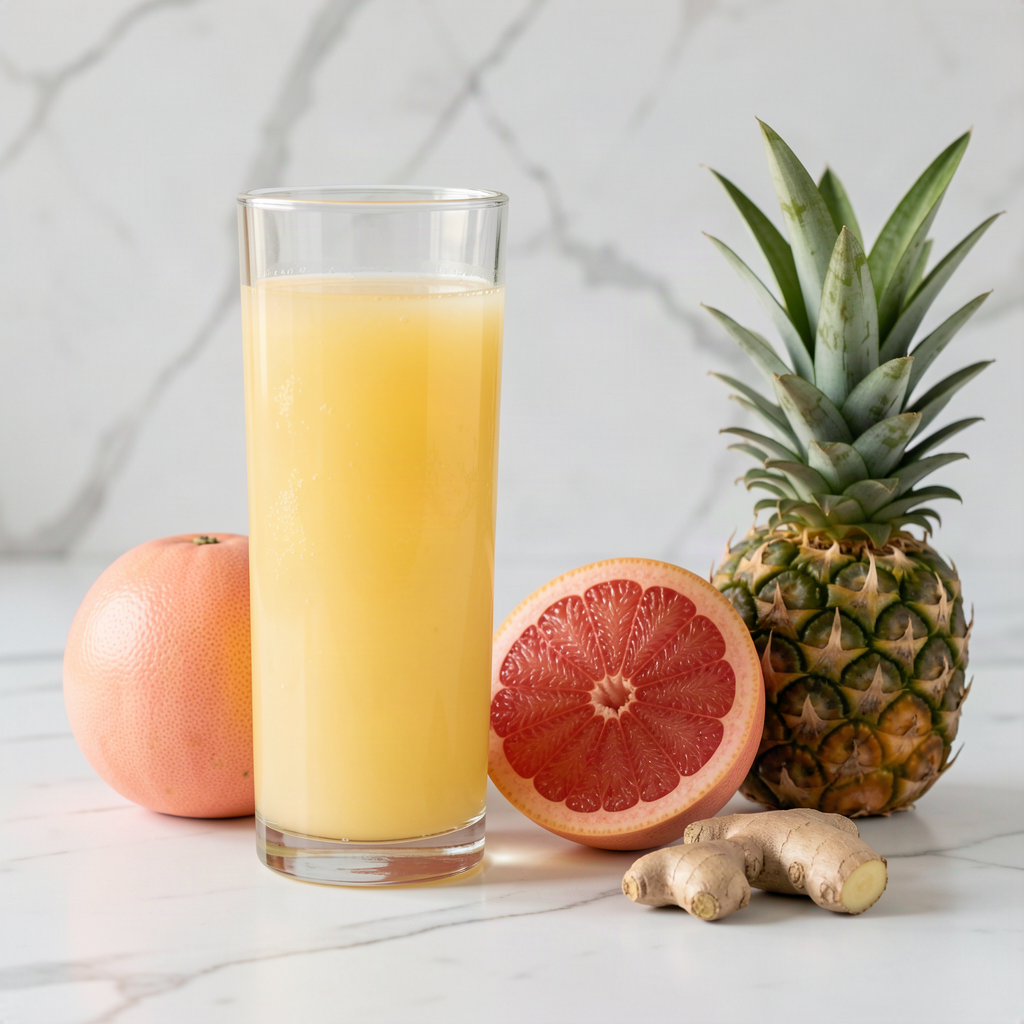
Pineapple and grapefruit are an odd pair on paper. One is soft, sweet and tropical, the other is sharp enough to make you wince. Put them together with a piece of ginger to hold the middle and you get one of the freshest glasses of juice I have made this year.
I make this one in the afternoon rather than at breakfast. It is light and clean in a way that suits the hour after a heavy lunch, and at around 90 calories a glass it is a better answer than another can of something fizzy. It is also, honestly, three ingredients and about ten minutes of work.
Why these ingredients work
Grapefruit carries most of the vitamin C here, about 73 mg a glass, which is close to an adult’s full daily requirement in one go. Pineapple brings bromelain, an enzyme that helps break down protein, which is the practical reason pineapple juice sits so well after a big meal. Ginger is the ingredient that makes the whole thing drinkable: it cuts the bitterness of the grapefruit and settles the stomach at the same time. There is 259 mg of potassium in the glass as well.
Worth being straight about one thing. No juice burns fat. What this glass does is replace something worse. It is hydrating, low in calories and sweet without any added sugar, and that is a fair enough reason to keep it in rotation.
FAQ
Can I use tinned pineapple?
You can, but it tastes flatter and sweeter because tinned fruit sits in syrup. Fresh pineapple also still has its bromelain, which processing largely destroys. If fresh is not happening, buy pineapple in its own juice rather than in syrup.
Do I have to peel the ginger?
Not strictly, but the skin is tough and slightly bitter. Scraping it off with the edge of a teaspoon takes about fifteen seconds and gives you a cleaner, warmer heat.
Is grapefruit juice safe with medication?
Not always. Grapefruit changes how the body breaks down a long list of common medicines, including statins, some blood pressure tablets and certain antidepressants. If you take anything daily, ask a pharmacist before you drink this regularly. That is a genuine interaction rather than a scare story.
More weight loss juices: see the full Weight Loss collection.
Pineapple Grapefruit Juice with Ginger
Equipment
- 1 Juicer a masticating juicer handles citrus and pineapple better than a fast centrifugal one
- 1 Budget cold press juicer the cheaper slow juicers manage this one fine
- 1 High-speed blender for the blender method
- 1 Nut milk bag to strain the blended juice
- 2 Airtight glass bottles if you are bottling the second glass for later the same day
Ingredients
- 1 large pink grapefruit peeled, all pith and membrane removed
- 150 g pineapple fresh, cut into chunks that fit your juicer
- 2 cm fresh ginger peeled
Instructions
Juicer method
- Take the skin off the grapefruit with a knife, then cut away the white pith and the membrane around each segment. That is where the bitterness sits, and it also clogs the juicing basket.
- Chop the pineapple into chunks that will fit your feed chute. Fresh only, or pineapple in its own juice at a push.
- Scrape the skin off the ginger with the edge of a teaspoon. It is quicker than peeling with a knife and you lose less of the root.
- Juice the grapefruit first, then the pineapple, then the ginger. The wet fruit pushes the ginger through the machine so less of it sticks to the basket.
- Stir well. Grapefruit and pineapple separate quickly, so give it a swirl before you pour.
Blender method
- Peel the grapefruit and pull the segments apart, leaving the pith behind. Cut the pineapple into smaller pieces than you would for a juicer.
- Blend the grapefruit and pineapple with 100 ml of cold water for about 45 seconds, until there is no fruit left.
- Add the peeled ginger and blend for another 15 seconds. Ginger is fibrous and needs the second pass.
- Strain through a nut milk bag or a fine sieve. Press the pulp with the back of a spoon to get the last of the juice out rather than throwing it away.
- Serve straight away over ice, or bottle it and drink it the same day.