
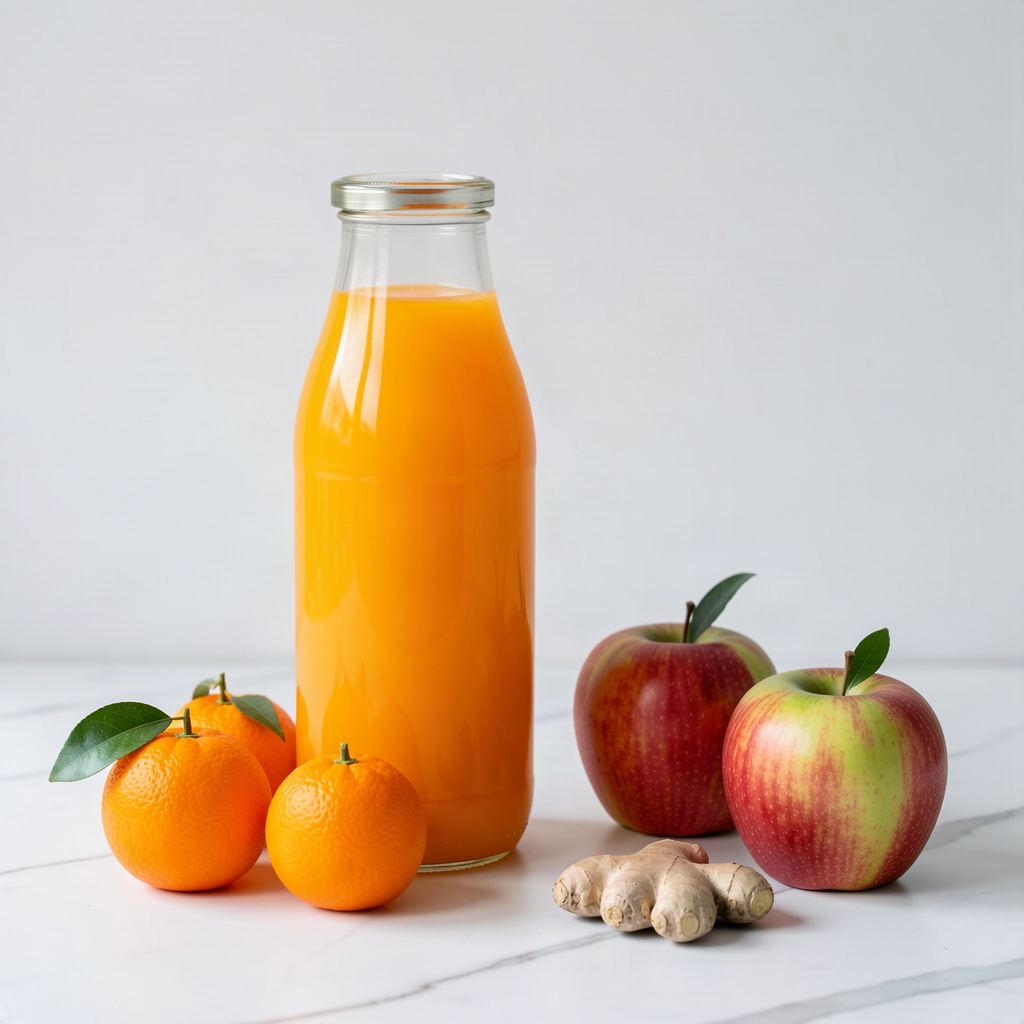
Clementines are the one citrus I actually look forward to. You can peel them with a thumbnail, they are sweet enough that you eat three without thinking, and from late autumn the shops are full of them. Most of the year I leave them in the fruit bowl. In the run up to Christmas, when everyone around me is coughing, I put six of them through the juicer with a couple of apples and a knuckle of ginger. It comes out a proper saturated orange, the sharpness rounded off by the apple and a bit of heat sitting at the back from the ginger. It is not medicine. It is a genuinely nice glass of juice that happens to carry a serious amount of vitamin C.
Why these ingredients work
Clementines get talked about as if they were just small oranges, and on vitamin C that is roughly right. There is about 49 mg per 100 g of flesh in a clementine against about 53 mg in a sweet orange, so you are not losing anything by choosing them. Six clementines and two apples gives you closer to 85 mg of vitamin C in a glass, comfortably more than a day’s worth. What vitamin C actually does about colds is the part that gets oversold. The Cochrane reviews are fairly blunt on this: in ordinary healthy adults, taking vitamin C regularly does not stop you catching colds, though it can shave a little off how long one lasts once you have it. So drink this because you like it and because it is a far better habit than a can of fizzy pop. Not because it will keep you well on its own.
The more interesting thing clementines bring is beta-cryptoxanthin, a carotenoid your body converts into vitamin A. Clementines and tangerines are among the best everyday sources of it. Population studies have linked higher intakes to better lung function and lower rates of lung cancer, but that is observational research, and people who eat a lot of fruit differ from everyone else in a hundred ways, so take it as a good sign rather than a promise. The apple is doing two jobs: it sweetens the glass so no sugar is needed, and because I juice it with the skin on you keep the quercetin, which lives almost entirely in the peel. The ginger is in there for flavour first and foremost. Its strongest evidence is for nausea, which is a different thing altogether, and I am not going to pretend it adds anything to your immune system that the clementines were not already doing.
FAQ
Is clementine juice as good as orange juice for vitamin C?
Very close. Roughly 49 mg per 100 g of flesh in a clementine against about 53 mg in a sweet orange, so a glass of either lands in much the same place. Tangerines are the odd one out at around 27 mg per 100 g, and because the two names get used interchangeably you will find wildly different numbers quoted online. Clementines are generally sweeter too, so you need fewer of them for a glass that tastes good on its own.
Do I have to peel them, or can the whole clementine go in the juicer?
Peel them. Clementine peel is thin but it is still packed with bitter oils, and an unpeeled one will make the drink taste like furniture polish. The thin white pith can stay on the segments if it comes away easily, it carries some of the flavonoids and is only bitter in quantity. Apples are the opposite way round: leave the skin on, that is where the quercetin sits.
Does clementine juice interfere with medication the way grapefruit does?
No. The grapefruit warning that covers statins, some blood pressure tablets and a handful of other medicines comes from furanocoumarins found in grapefruit, pomelo and Seville orange. Sweet oranges, clementines and mandarins do not carry them in anything like the same amounts, so a glass of clementine juice is not the same risk. If you are on one of those medicines and want certainty, ask your pharmacist rather than a juice blog.
More immunity juices: see the full Immunity collection.
The juicer and blender links in the recipe card below are affiliate links, which means I earn a small commission if you buy through them. It does not change what you pay.
Clementine, Apple and Ginger Juice
Equipment
- Nut milk bag
Ingredients
For the juice
- 6 clementines about 450 g, peeled and pulled into segments
- 2 sweet apples such as Gala or Braeburn, about 300 g, cored and quartered, skin left on
- 1 thumb of fresh ginger about 15 g
Instructions
Juicer method
- Peel the clementines and pull the segments apart. Take off the thick white pith where it comes away easily, but do not fuss over the thin bits, they are only bitter in quantity.
- Juice the apples and the ginger first, skin and all. Running the apples through ahead of the citrus coats the machine and helps the clementine segments travel.
- Now juice the clementine segments. If you are using a centrifugal juicer, feed them a few at a time so the pulp basket does not clog, or press them with a citrus press and stir that juice into the apple juice instead. Same drink either way.
- Stir it together, pour into two glasses and drink it straight away while the vitamin C is still intact.
Blender method
- Peel the clementines, remove the pith and flick out any pips. Core the apples and cut them into chunks, skin on. Peel the ginger.
- Blend everything with 100 ml of cold water on high for about a minute, until there is no solid left.
- Strain through a nut milk bag or a fine sieve, pressing the pulp so you get every drop out, then bin the pulp.
- Pour over ice and drink straight away.