
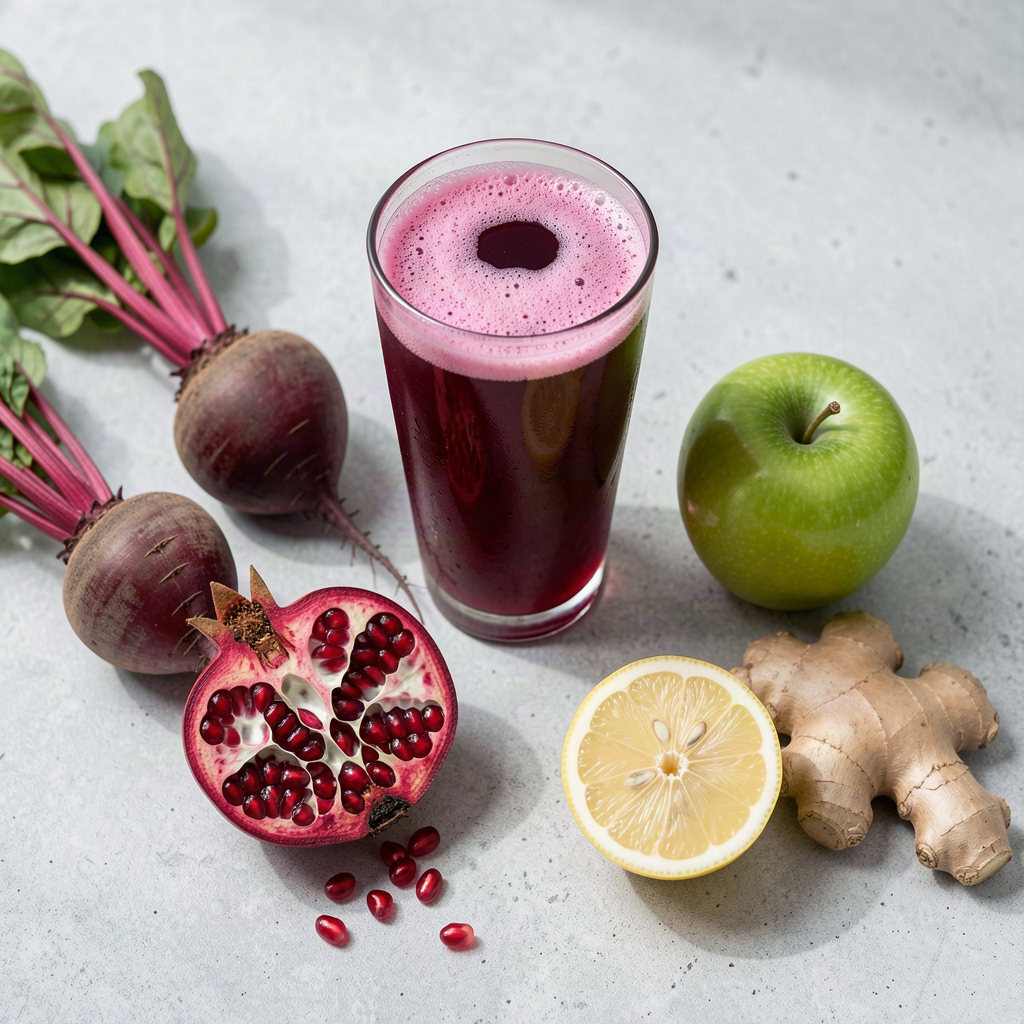
Beetroot juice has a reputation problem. Most people try it once, decide it tastes like a wet garden, and never go back to it. Pomegranate fixes that. It is sweet and sharp enough to carry the beetroot without burying it, and a green apple and half a lemon tidy up the finish so nothing tastes muddy. I started making this after a long walk left me flat on the sofa for the rest of the afternoon, and it has stayed in the rotation since. It is not a magic drink. It is a very good one, and it takes ten minutes.
Why these ingredients work
Beetroot is one of the best sources of dietary nitrate there is. Your body converts that nitrate into nitric oxide, which relaxes the walls of your blood vessels, so more blood reaches your muscles and your brain. Two medium beetroots works out somewhere between 300mg and 600mg of nitrate, depending on the beet and the soil it grew in, which is in the same range as the doses used in the sports studies.
Pomegranate is doing two jobs here. It makes the juice taste like something you would choose rather than something you are getting through, and it brings its own antioxidants along with it. It also adds a lot of potassium, about 780mg a glass once the beetroot is counted in.
The green apple and the lemon are there for balance rather than for health claims. Apple rounds off the earthiness, lemon keeps the finish clean. Ginger is 15g, enough to notice at the back of your throat without turning the whole glass into a ginger juice. What this is not is a low sugar drink. Thirty grams of sugar a glass is on the high side for this site, most of it from the pomegranate and the apple, which is why I drink it before I go out rather than sitting down with it in the evening.
FAQ
Does beetroot and pomegranate juice actually give you more energy?
It can help, but not in the way coffee does. Beetroot juice does not wake you up, it works on oxygen delivery. The nitrate becomes nitric oxide, your blood vessels widen, and your muscles get more oxygen for the same amount of effort. The evidence is strongest for endurance work in the three to ten minute range, and most studies use concentrated beetroot juice rather than a fresh glass, so treat this as a good everyday version of the same idea rather than a measured dose. On timing, two to three hours before exercise is where blood nitrate peaks. An hour is the compromise most people can actually stick to, and it is what I do.
Can it lower your blood pressure?
There is good evidence that beetroot juice lowers blood pressure a little, and nitrate is the reason. Trials tend to show a fall of a few points in systolic pressure. That is real, and it is also modest, so a glass of this is not a treatment for anything. If you are on blood pressure medication, this is a reason to mention the juice to your GP rather than a reason to drink more of it, because a small extra drop on top of tablets is worth knowing about. If you are not on medication and your reading is normal, it is simply a good drink.
Why has my pee gone pink?
Beeturia. It happens to somewhere between one in ten and one in five people, it is completely harmless, and all it means is that your body is passing a red pigment from the beetroot it did not absorb. It is more common in people with lower stomach acid and in people with low iron. It is not blood, and it is not a sign that anything is wrong. It also does not tell you whether the juice is working any better for you than for someone whose pee stays the same colour.
More energy juices: see the full Energy collection.
Beetroot and Pomegranate Juice
Equipment
- 1 Juicer masticating or centrifugal
- 1 High-speed blender for the blender method
- 1 Nut milk bag or fine-mesh sieve to strain the blender version
- 2 Airtight glass bottles for storing
- 1 Budget cold press juicer a good value alternative
- 1 Budget blender a good value alternative
Ingredients
- 2 beetroot, scrubbed and chopped medium, about 280g, topped and tailed
- 1 pomegranates, arils only large, about 180g of arils
- 1 green apples, cored and quartered about 150g
- 1 lemon, peeled white pith removed
- 15 g fresh ginger, peeled about a thumb sized piece
Instructions
Juicer method
- Scrub the beetroot, top and tail it, and cut it into wedges that fit your feed chute. Leave the skin on. A lot of the nitrate in beetroot sits in the layer just under it.
- Cut the pomegranate in half and knock the arils out into a bowl. Pick out any bits of white membrane, because they taste bitter. If you do it in a bowl of water the pith floats and the arils sink, which saves time.
- Feed the ginger and lemon through first, then the beetroot, then the apple, then the pomegranate arils. Beetroot is dense and juicing it slowly, so following it with the wetter fruit keeps the pulp moving through the mesh.
- Stir it, then drink it cold. Any spare keeps in a sealed bottle in the fridge for up to two days, though it is better on day one.
Blender method
- Peel the beetroot for this one and cut it into rough chunks, then core and chop the apple. A blender will not break the beetroot skin down the way a juicer will.
- Put the beetroot, apple, pomegranate arils, peeled lemon and ginger into the blender with 100ml of cold water.
- Blend on high for a full minute. Beetroot is fibrous, so give it the full minute rather than thirty seconds and hoping.
- Pour it through a nut milk bag or a fine sieve over a jug, squeeze the pulp hard to get the last of the juice out, then bin the pulp. Chill for half an hour before you drink it.