
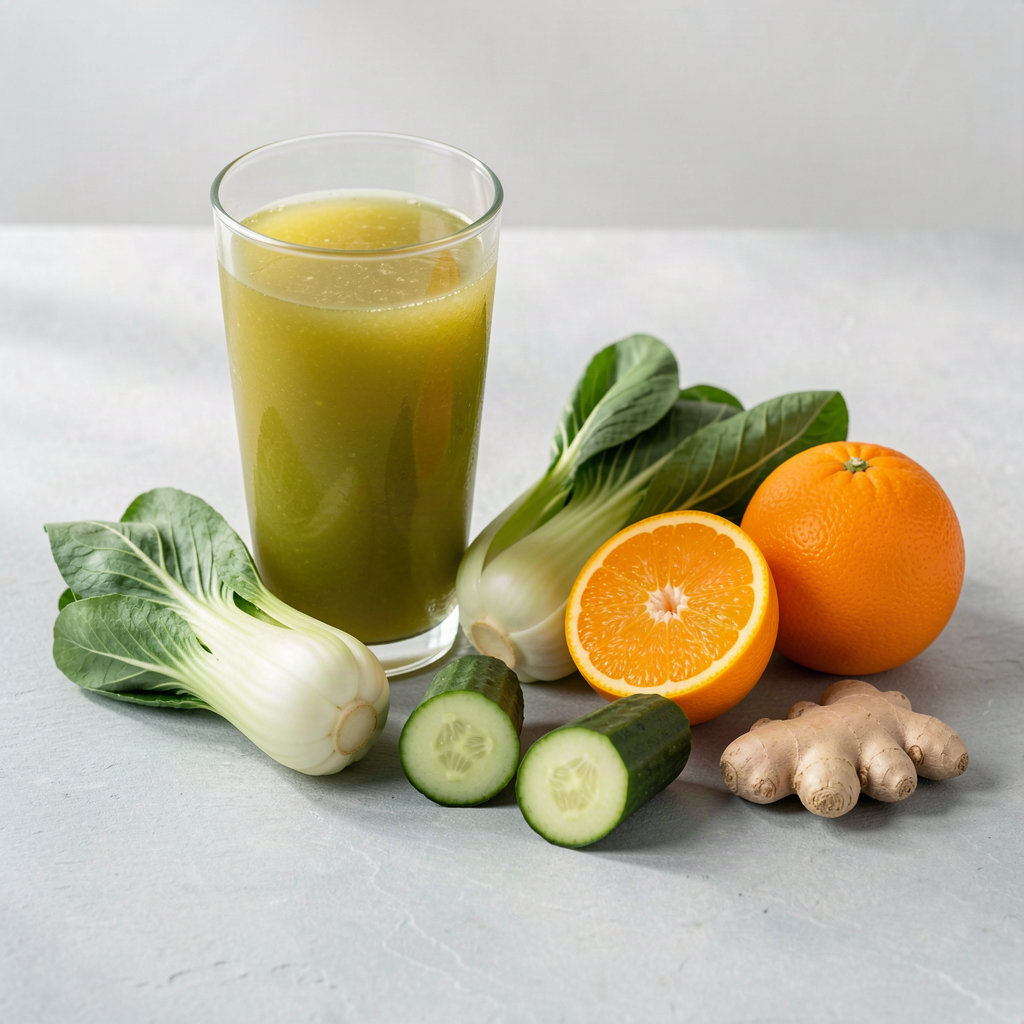
Pak choi is the green I keep coming back to when I want a bone health juice that does not taste like one. It is a brassica, so it sits somewhere between cabbage and spinach, mild and a little sweet, and it takes orange better than any other green I have tried. I buy a couple of heads with the weekly shop, juice one for this and stir fry the rest. Four ingredients, ten minutes, and a glass that comes out somewhere between olive and gold.
Why these ingredients work
Pak choi is one of the better plant sources of calcium going, around 105mg per 100g, and the part that matters is that your body can actually get at it. Spinach and chard look stronger on paper, but they are high in oxalates, which bind calcium and send most of it straight through you. Pak choi is low in oxalates, so roughly half of its calcium is absorbed rather than a small fraction. It also brings vitamin K, the nutrient that helps your body put calcium into bone rather than leaving it circulating, plus a useful amount of vitamin C.
The oranges do two jobs. They supply most of the liquid and the sugar that make a green juice drinkable, and their vitamin C helps you take up the calcium from the pak choi. Peel them properly, right down to the flesh, because the white pith is bitter and it clogs the mesh on a centrifugal juicer.
Cucumber keeps the glass light and stops it turning thick, and a thumb of ginger cuts through the sweetness of two whole oranges. Worth being straight about the numbers: a glass works out at around 95 calories and 16g of sugar, nearly all of that from the oranges, alongside roughly 140mg of calcium, 100mg of vitamin C and 45 micrograms of vitamin K. The UK reference intake for calcium is 700mg a day, so one glass is about a fifth of it. That is a real contribution, not a token one. If you are using this for your bones, pair it with the kale and watercress juices rather than drinking it alone forever.
FAQ
Do you need to cook pak choi before juicing it?
No. Pak choi is fine raw, and raw is where the vitamin C is. Rinse it well and get in between the stalks, which is where the grit hides. Cooking it first also defeats the purpose, because you lose the vitamin C and the texture changes completely if you are blending. Healthy adults can eat it raw without a second thought.
Which part of the pak choi goes in the juicer?
All of it, stalks included. The white stalks hold most of the water and juice more easily than the leaves, which tend to cling to the auger, so do not throw them away. Feed a handful of leaves through and push an orange chunk in behind to clear the way. In a blender the stalks need the full 60 seconds, so check for pale flecks before you switch it off.
Is pak choi juice good for bones?
It is one of the better juice options, for one specific reason: pak choi is low in oxalates, so the calcium in it is available to you. A glass gives you around 140mg of calcium and 45 micrograms of vitamin K, and vitamin K is what helps your body use calcium for bone instead of leaving it in the bloodstream. One glass does not replace a varied diet though. Vitamin D matters as much as calcium, and in the UK most of us need a supplement for that from October through to March.
More bone health juices: see the full Structure collection.
Pak Choi and Orange Juice
Equipment
- 1 Juicer masticating or centrifugal
- 1 High-speed blender for the blender method
- 1 Nut milk bag or fine-mesh sieve to strain the blender version
- 2 Airtight glass bottles for storing
- 1 Budget cold press juicer a great value alternative
- 1 Budget blender a great value alternative
Ingredients
Juice base
- 150 g pak choi about 4 large leaves, white stalks and all. Rinse well between the stalks and chop roughly
- 2 oranges large ones, about 300g peeled. Peel right down to the flesh and pull off the white pith
- 150 g cucumber about half a large one, unpeeled
- 10 g fresh ginger peeled, about a thumb-sized piece
- 150 ml cold water for the blender method only
Instructions
Juicer method
- Rinse the pak choi and shake off most of the water. Chop it and the cucumber into pieces that fit your feed tube, peel the oranges down to the flesh and cut them into chunks, and peel the ginger.
- Feed the pak choi through the juicer a handful at a time and push an orange chunk through behind each handful. Greens on their own give up very little juice and they can cling to the auger, so the orange clears the way and carries the pak choi with it. Follow with the cucumber, then the ginger.
- Stir, pour into two glasses and drink it straight away. If you want it properly cold, chill the ingredients for an hour first rather than adding ice, which only waters it down.
Blender method
- Peel the oranges and cut the pak choi, cucumber and ginger into rough chunks. Put everything in a blender with 150ml of cold water.
- Blend on high for about 60 seconds. The stalks take longer than the leaves, so check for pale flecks before you switch it off and give it another 15 seconds if you can still see any.
- Pour through a nut milk bag or a fine-mesh sieve and press the pulp with the back of a spoon to get the last of it out. Pour into two glasses and drink it fresh.