
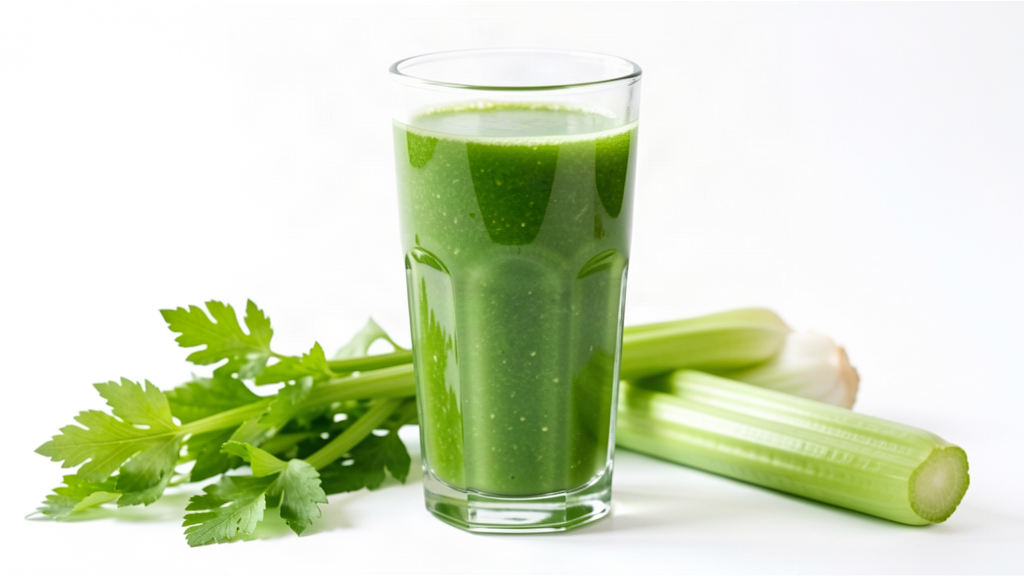
If you have spent any time on the wellness side of the internet, you have seen the celery juice ritual. A big glass of it, drunk first thing in the morning on an empty stomach, before coffee, before breakfast, before anything. The people who swear by it talk about glowing skin, better digestion and more energy. A few go much further and talk about healing chronic illness.
I am sceptical of anything that gets called a cure-all, and celery juice has picked up a lot of that energy over the last few years. But that does not mean it is useless. It is a cheap, hydrating, low-sugar drink made from a real vegetable, and there is a bit of actual science worth knowing before you decide whether to bother. Here is my honest take on whether celery juice is good for you.
What is actually in a glass
Before the claims, the basics. Celery is roughly 95% water, which is the first thing to understand. You are mostly drinking water with some nutrients dissolved in it. A 240ml cup of celery juice comes to about 33 calories, with around 3 grams of naturally occurring sugar.
Where it earns its keep is the micronutrients. That same cup gives you a decent chunk of potassium, roughly 13% of your daily value, plus vitamin K at around 58%, folate at 21%, and smaller amounts of vitamin A, vitamin C, calcium and magnesium. It also carries around 189mg of sodium, which is more than most fruit juices and worth remembering if you have been told to watch salt.
There are also plant compounds in celery called phytonutrients. The two most studied are apigenin and luteolin, and they are antioxidants. They are the reason a lot of the health chatter around celery exists at all.
What the evidence actually supports
This is where I have to be careful, because most of the research is not actually on celery juice. It is on celery the vegetable, or on individual compounds pulled out of it, often in lab dishes or in mice. There have not been proper human trials on celery juice itself. So the honest position is that celery looks genuinely healthy, but direct proof for the juice specifically is thin.
That said, a few things are solid.
Hydration. Celery is mostly water, so a glass of celery juice hydrates you. Staying properly hydrated supports blood pressure, body temperature, brain function and kidney health. Nothing magical, just useful.
Low in sugar. A cup has about 3 grams of sugar, compared with what you get in fizzy drinks or most shop-bought juices. If it replaces a can of something sweet, that is a genuine win.
Potassium. Celery’s potassium helps your kidneys clear excess sodium, which is partly why some people reach for it around salty meals. Cleveland Clinic also lists phthalides, another celery compound, as helping blood flow through the arteries.
Vitamin K. This is the quiet one. Celery juice is rich in vitamin K, which your body uses for blood clotting and building bone. That is a real connection between green juices and bone health, which is exactly what our green bone builder juice leans into.
One small study from 2019 in Indonesia found that celery juice lowered blood pressure in people with systolic hypertension. It was small, and there are no large-scale trials behind it, so I would treat that as a promising hint rather than settled fact.
What it does not do
Now the part people enjoy less. Celery juice has become famous for a handful of claims that do not hold up.
The detox thing. The most common claim is that celery juice flushes toxins out of your body. Your body already does that on its own. Your liver, kidneys, intestines and lungs handle detoxification, and there is no evidence a glass of celery juice improves that process. Detoxing as it is usually sold mostly means drinking juice instead of eating, which is really just calorie restriction with nicer branding.
The cluster salts. Much of the celery juice trend traces back to Anthony William, who writes as the Medical Medium. He claims celery contains undiscovered cluster salts that kill harmful gut bacteria. No evidence supports the existence of these salts, and William has no formal background in nutrition or medicine. That is worth knowing when you are weighing up his claims.
Cure-all promises. You will see celery juice linked to fixing acne, thyroid problems, obesity and even cancer. None of that has human evidence behind it. Again, there simply have not been human trials on celery juice.
The empty stomach ritual. The trend says to drink it on an empty stomach for maximum benefit. There is no evidence the timing matters. Drink it when you like.
Who should go easy or skip it
For most people, a glass of celery juice now and then is fine. A few groups should think twice.
If you take warfarin or a similar blood thinner, vitamin K affects how the drug works, and celery juice is high in vitamin K. The advice is not necessarily to avoid it, but to keep your intake consistent and check with your doctor or pharmacist before making it a daily habit.
If you have been told to limit salt, watch the sodium. One cup has around 189mg, and if you are drinking the larger 500ml servings the trend recommends, that adds up fast.
If you have a celery allergy, obviously skip it. This is more common than people realise. It often shows up as tingling or swelling in the lips and throat minutes after eating raw celery, especially if you are allergic to birch pollen. In rare cases it can trigger a serious reaction, so do not push through it.
And if you have had kidney stones, juicing removes the fibre and concentrates certain compounds, so run it past a professional first. The same applies to pregnancy or IBS, where a sudden daily celery juice habit is not something to start without checking in with someone qualified.
How to drink it without the nonsense
If you are going to drink celery juice, do it in a way that actually helps. The NHS caps unsweetened fruit and vegetable juice at 150ml a day as part of your five-a-day, and it is worth keeping that in mind. A small glass, not a pint.
Also remember that juicing strips out the fibre, and fibre is the part of celery that fills you up and feeds your gut. If you want the fibre, eat the celery, or at least do not strain the juice. Blending celery into a smoothie keeps more of it than running it through a juicer.
And you do not have to drink it neat. Celery juice on its own is fine, but a bit grassy and quite salty, an acquired taste. I prefer it mixed with cucumber and lemon, which is exactly how we do our celery, cucumber and lemon juice, or with apple and ginger for something friendlier.
Frequently asked questions
Does celery juice help you lose weight?
Only in the sense that it is low in calories. If it replaces something higher calorie, it can help, but there is no evidence celery juice itself burns fat or speeds up your metabolism.
Does celery juice help digestion?
The fibre in celery supports digestion, but juicing removes most of that fibre. The main gut benefit from the juice itself is hydration. For actual digestive help, you are better off with fibre-rich food or a blend that keeps the pulp. If you want the fibre angle done properly, have a look at the digestion collection.
Is it better to drink celery juice in the morning?
There is no evidence for timing. Morning works for some people because it becomes a habit, not because the juice does anything different at 7am.
Can celery juice replace a meal?
It should not. It is water and micronutrients, not a meal. Replacing breakfast with juice tends to leave you hungry, and regularly under-eating is not a health strategy.
The bottom line
So, is celery juice good for you? Yes, in the way any low-sugar, hydrating, nutrient-dense vegetable drink is good for you. It is not a medicine, and it is not a detox. If you like the taste and treat it as a drink rather than a treatment, go for it. If you are drinking litres a day on the promise that it will fix something, you are paying for the trend, not the science.
For a gentler way to get celery in, try the celery, cucumber and lemon juice, or browse the bone health collection for more recipes built around real nutrients.
One last thing, because it matters. This is general information, not medical advice. If you are on medication, pregnant or managing a health condition, talk to someone qualified before you make celery juice a daily ritual.