
Short version: if you are choosing between the two every day, pick the smoothie. It keeps the fibre, so it fills you up and treats your blood sugar more gently. Juice is not bad. It just earns its place when it is mostly vegetables. Here is the longer answer.
I get asked the juicing vs smoothies question a lot, usually by someone stood in front of the juicer they bought in January, wondering if they should have asked for a blender instead. Both are a decent way to get more fruit and veg in. They are not the same drink though, and the difference is not marketing.
What is actually in your glass
A smoothie is the whole fruit or vegetable, blended. Skin, pith and pulp all stay in the drink. A juice is the liquid pulled out of the plant, and most of the fibre goes in the bin with the pulp. Everything else in this article follows from that one fact.
Why the fibre matters
Fibre does three jobs you notice. It slows down how fast sugar gets into your blood. It keeps you full. And it feeds the bacteria in your gut, which is more of your digestion than you might think.
Blending keeps all of that. Juicing removes most of it. So a smoothie made from whole fruit behaves more like eating the fruit, while a juice hits your system faster. If gut health is your main reason for drinking either, the digestion collection is the place to start.
The sugar bit nobody enjoys
When you juice fruit, you break the cell walls and release the sugar inside. That makes it a free sugar, the same kind you get in honey or in a can of pop. The NHS recommends keeping free sugars under around 30g a day. A 150ml glass of unsweetened apple juice has about half of that in it.
The NHS also says fruit juice and smoothies only count once towards your 5 a day, however many glasses you have. Drink juice by all means. Just do not treat it like water.
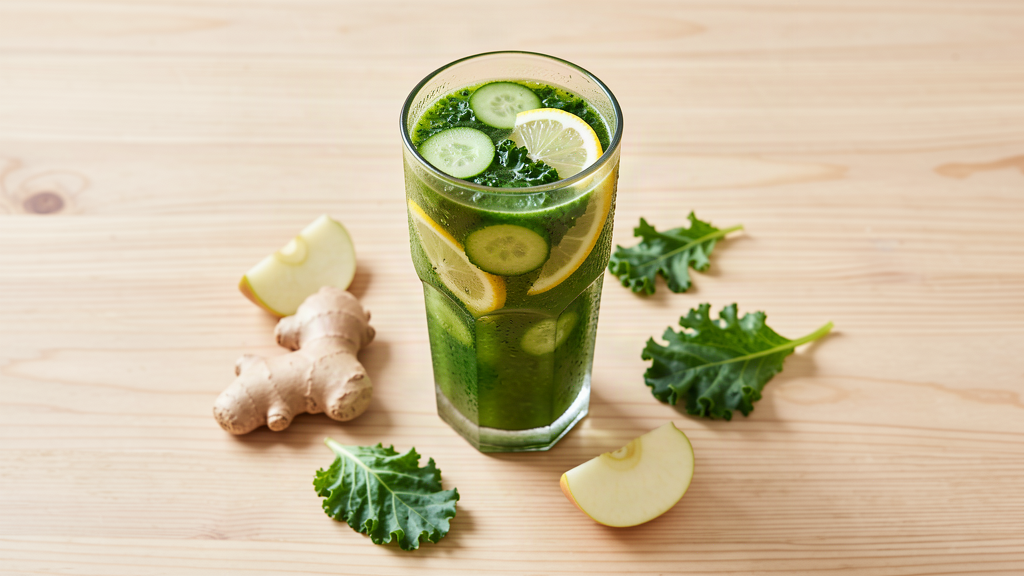
None of this means juice is a sugary treat. It means the fruit has to earn its place. A juice built on celery, cucumber, kale and lemon, with a single apple for sweetness, has a fraction of the sugar of an all-fruit one. That is the kind I actually drink.
Fullness and the weight question
A smoothie keeps the pulp, and pulp is what fills you up. Juice slips down in seconds and your stomach barely notices. If you want a drink that keeps you going through the morning, the energy hub is full of smoothie-friendly ideas, and if you want to feel full, smoothies win easily.
If your aim is weight loss, neither is a shortcut. A glass of mostly fruit juice still has real calories and real sugar, and liquid calories are easy to drink without ever registering as food. Both are a way to eat more plants, not a way to eat less.
Teeth and timing
One more thing worth knowing. Juice is acidic, and fruity juice is sugary too. Sipping it through the morning coats your teeth in it. Have it with a meal rather than as a constant companion, and keep the fruit portion honest.
So which should you pick?
Choose a smoothie when you need something that keeps you going: breakfast on the run, after exercise, or any time you would normally snack. Choose a juice when you want the vitamins without the bulk, or you simply cannot face another salad.
If you are buying rather than making, read the label. The word smoothie on the front tells you nothing. Added sugar or fruit concentrate in the ingredients tells you everything.
When I do juice, my green energy juice is the mostly veg kind I mean, and the celery, cucumber and lemon one is what I come back to after a week of eating badly.
Bottom line: smoothies are closer to real food because they are real food, blended. Juices have their place, mainly vegetables, alongside meals, not litres of fruit. I went deeper on the juice side of the argument in is juicing healthy. Whichever you pick, drink it with your meals and you are doing alright.