
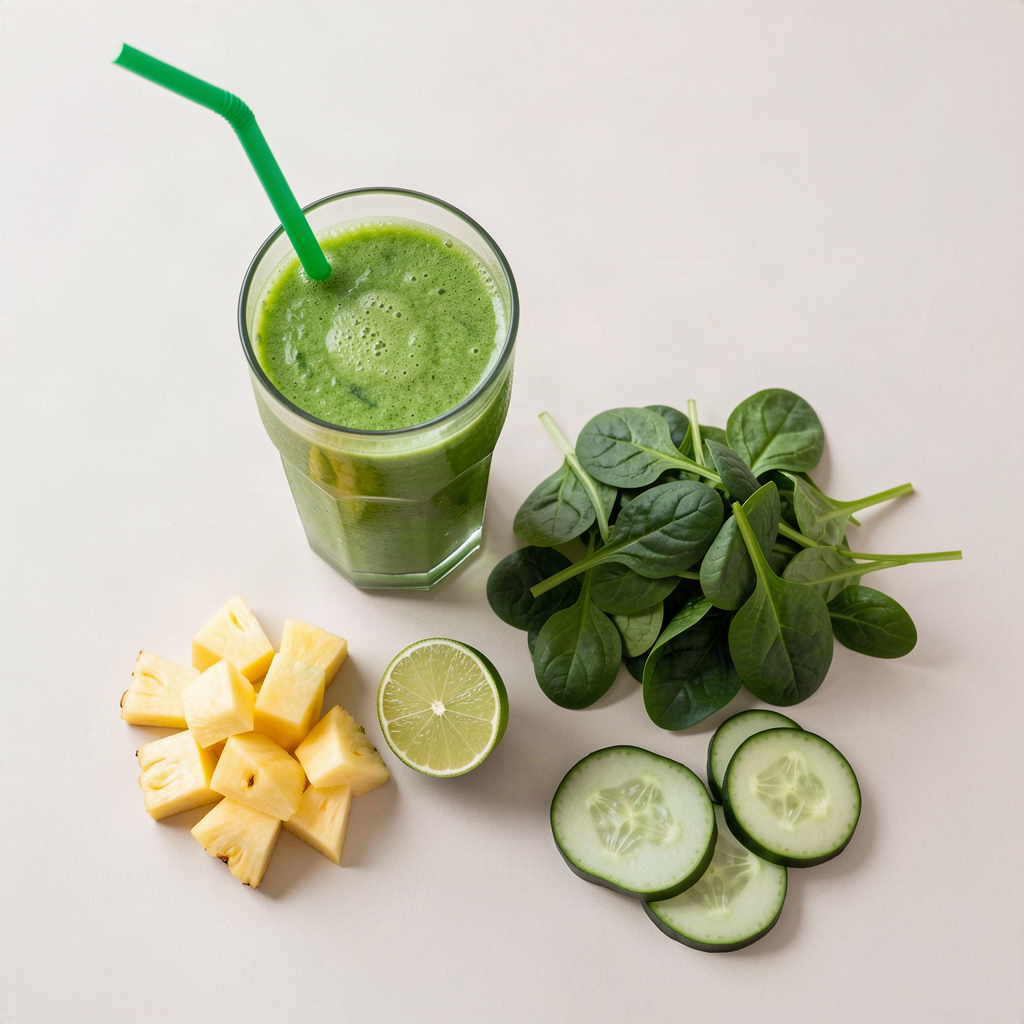
I was late to pineapple in green juice. It always felt like cheating, the sweetest thing in the fruit bowl turning up to make the vegetables taste nice. Then I worked out that is exactly the point. This glass carries more spinach than I used to get through in a week, and I cannot taste it at all. The pineapple does the talking, the lime keeps it sharp, and the cucumber stretches it out so you finish with two proper glasses rather than one greedy one.
Why these ingredients work
The spinach is what makes this a green juice in anything but name. A 60g handful brings around 150 micrograms of vitamin K per glass, plus folate and a little plant iron, all wrapped in a leaf mild enough to disappear into the pineapple. The pineapple earns its keep two ways: it is genuinely high in vitamin C, and it contains bromelain, an enzyme that helps break down protein, which is part of why fruit and greens sit together as well as they do. The lime adds more vitamin C and stops the whole glass tasting flat, and the cucumber is mostly water, which is what turns a thick green sludge into something you can actually drink.
FAQ
Does it taste like spinach?
Not really. Baby spinach is one of the mildest leaves you can juice, and a ripe pineapple will drown out almost anything you put next to it. If you can still taste it, the pineapple is probably under-ripe, so give it a day on the counter first, or add an extra slice of cucumber.
Is pineapple spinach juice good for you?
It is a proper green top-up rather than a sugar-water juice: around 90mg of vitamin C and 150 micrograms of vitamin K per glass, with 16g of sugar that all comes from the fruit. Spinach also carries plant iron, which your body does not absorb as easily as the iron from meat, so having the vitamin C in the same glass genuinely helps. It is not a cure for anything, just a decent way to get a leaf in before lunch.
Can I make it without a juicer?
Yes. The blender method on the card does the whole job in one go: blend everything with the cold water, strain it through a nut milk bag or fine-mesh sieve, and you are done. Frozen pineapple chunks work fine too, just soften them for ten minutes first and add a splash more water so the blender does not labour.
More detox recipes: see the full Detox collection.
Pineapple Spinach Juice
Equipment
- 1 Juicer masticating or centrifugal
- 1 High-speed blender for the blender method
- 1 Nut milk bag or fine-mesh sieve to strain the blender version
- 2 Airtight glass bottles for storing
- 1 Budget cold press juicer a great value alternative
- 1 Budget blender a great value alternative
Ingredients
Juice base
- 300 g fresh pineapple, peeled and cored about half a medium pineapple; the riper the sweeter
- 60 g baby spinach a generous handful, washed and shaken dry
- 1/2 cucumber no need to peel
- 1 lime, peeled peel it first; the pith is what turns juice bitter
- 100 ml cold water only if you are using the blender method
Instructions
Juicer method
- Wash the spinach and shake it dry. Peel the lime, and cut the pineapple into chunks that fit your juicer feed tube.
- Run the cucumber through first, then about half of the pineapple.
- Follow with the spinach, the lime and the rest of the pineapple, feeding the leaves a few at a time so they do not spin around and clog the chute.
- Stir well, pour into two glasses and drink straight away. It settles as it sits, so give it a swirl if you put it down.
Blender method
- Prep everything the same way: pineapple chunked, lime peeled, spinach washed, cucumber roughly chopped.
- Tip it all into a high-speed blender with the cold water and blend on high for 60 to 90 seconds, until completely smooth.
- Pour through a nut milk bag or a fine-mesh sieve and squeeze out as much juice as you can.
- Taste, thin with a splash more water if it is thicker than you like, and serve over ice.