
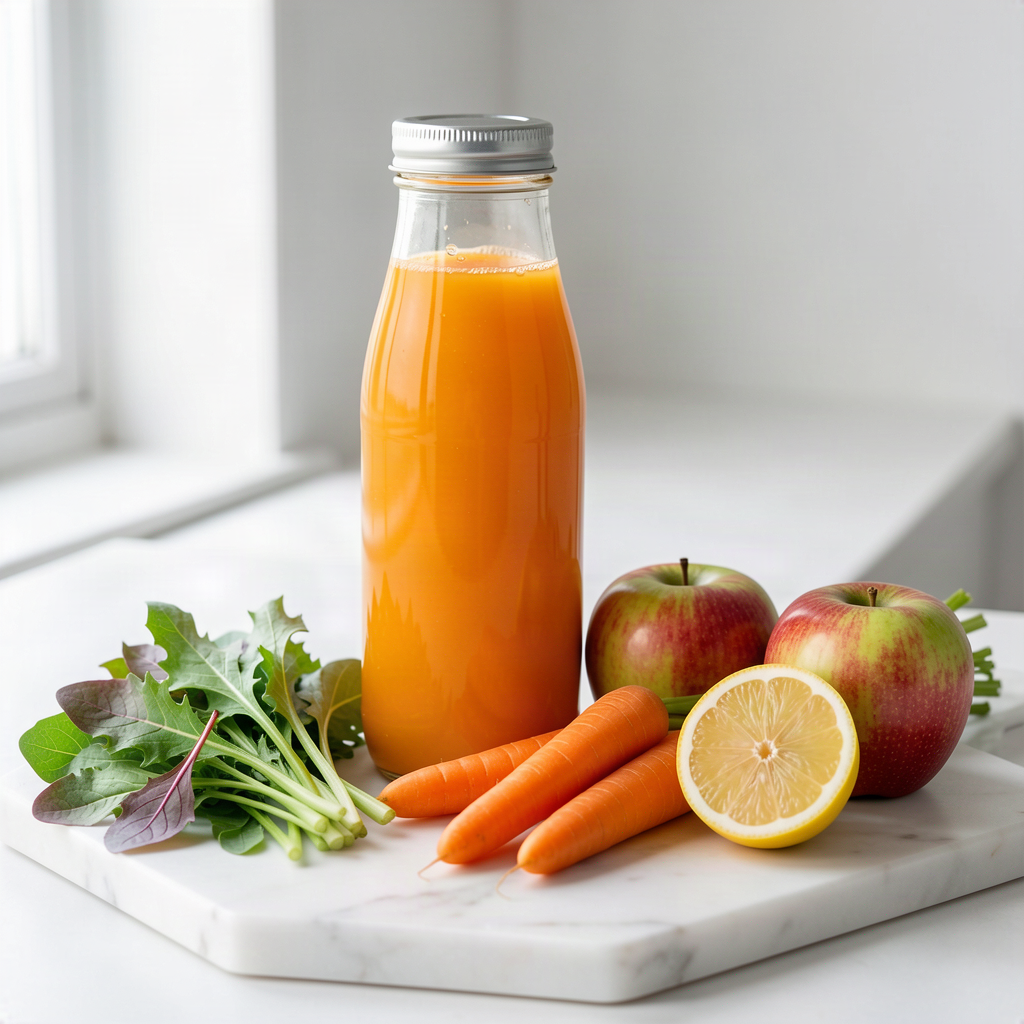
I went looking for a green juice that earns its place on the bone side of things, because most of them do not. Spinach and chard get called calcium sources, but both are high in oxalate and your body absorbs almost none of the calcium in them. Mustard greens sit in the other camp. They are one of the low oxalate greens, so the calcium in them is properly available, and they carry a serious amount of vitamin K at the same time. I make this one through autumn and winter when the mustard greens are cheap and sharp, and the carrot and apple are there to stop it tasting like punishment.
Why these ingredients work
Mustard greens are the reason to make it. Raw, they carry roughly 115 mg of calcium and about 258 micrograms of vitamin K per 100 g, and unlike spinach that calcium is not locked up with oxalate, which is why the research puts absorption from low oxalate greens at around half of what you take in, close to milk, against roughly 5 per cent from spinach. Vitamin K is the other half of the story: it is what activates osteocalcin, the protein that pulls calcium into bone, so a green that is high in both is doing more than one job at once. Carrot and apple are not just sweeteners, carrot brings its own calcium and its beta carotene while apple brings the vitamin C that helps you absorb the iron in the greens. The lemon matters as much as any of it: the greens are peppery because of sinigrin, and acid slows the enzyme that turns sinigrin into the sharp compound, the same reason mustard made with vinegar tastes milder than mustard made with water.
FAQ
Is mustard greens juice actually good for your bones?
It is a genuinely useful addition rather than a replacement for dairy or fortified milk. A glass of this gives you around 109 mg of calcium, which is modest next to a 200 ml glass of milk at about 240 mg, but because mustard greens are low in oxalate you absorb a far bigger share of what is there than you would from the same weight of spinach. Add the vitamin K and it is doing real work. It is not a treatment for osteoporosis and it does not replace anything your doctor has prescribed.
Can I drink this if I take warfarin or another blood thinner?
You need to be careful, because mustard greens are high in vitamin K, at roughly 148 micrograms a glass, and warfarin works by blocking vitamin K. The issue is not drinking it once, it is swinging your intake up and down, because that is what moves your INR. Keep the amount steady, and tell your GP or your anticoagulant clinic that you have started drinking it so they can keep an eye on your levels.
Why is it peppery, and can I make it milder?
The heat comes from sinigrin, a compound in mustard leaves that turns into allyl isothiocyanate once the leaves are crushed, the same chemistry that gives mustard and wasabi their bite. It is not a sign the juice is doing you harm, it is just pungent. To tame it, use more apple and carrot, squeeze in the rest of the lemon, or stir through a splash of cold water. If you get reflux, or you have IBS, keep the glass small and see how you get on, because a large raw brassica juice can sit heavily.
More bone-health recipes: see the full Structure collection.
Mustard Greens, Apple and Carrot Juice
Equipment
- 1 Juicer A masticating or cold press juicer gets more out of leafy greens, but a centrifugal one works if you alternate the apple through with the mustard greens.
- 1 Budget cold press juicer The cheapest sensible way in if you are not sure you will stick at it.
- 1 High-speed blender Use this route if you already own a blender and no juicer.
- 1 Nut milk bag For straining the blended version, a fine sieve also works.
Ingredients
- 100 g mustard greens about one thick bunch, stems and all
- 2 sweet eating apples roughly 250 g, cored and quartered
- 3 medium carrots roughly 250 g, scrubbed, tops trimmed
- 0.5 lemon unwaxed, cut in half, peel left on
Instructions
Juicer method
- Rinse the mustard greens well in cold water and shake them dry. They grow low and sandy, so a second rinse does no harm. Leave the stems on, they carry the same minerals as the leaves.
- Core and quarter the apples and cut the carrots into lengths that will fit your juicer's feed tube. Nothing needs peeling.
- Cut the lemon in half and leave the peel on, as long as it is unwaxed. It is what keeps the peppery heat from the greens in check.
- Feed the mustard greens through the juicer first, then alternate the apple, carrot and lemon so the drier leaves keep moving. If your machine is centrifugal, sandwich the greens between pieces of apple.
- Stir the juice, pour it into two glasses and drink it straight away, or bottle it and keep it in the fridge for up to 48 hours. Give it a shake before you drink it.
Blender method
- Chop the greens, apples, carrots and lemon into rough pieces and put them in the blender with about 150 ml of cold water. The water is not optional, without it a blender will not move mustard leaves.
- Blend on high for about a minute until there are no large pieces left. It will look thick and flecked with green at this stage, which is normal.
- Tip the lot into a nut milk bag or a fine sieve over a jug and squeeze or press it until only dry pulp is left. Take your time, the leaves hold on to their liquid.
- Taste it. If the peppery edge is too strong, stir in the rest of the lemon or a splash more cold water, then serve straight away.