
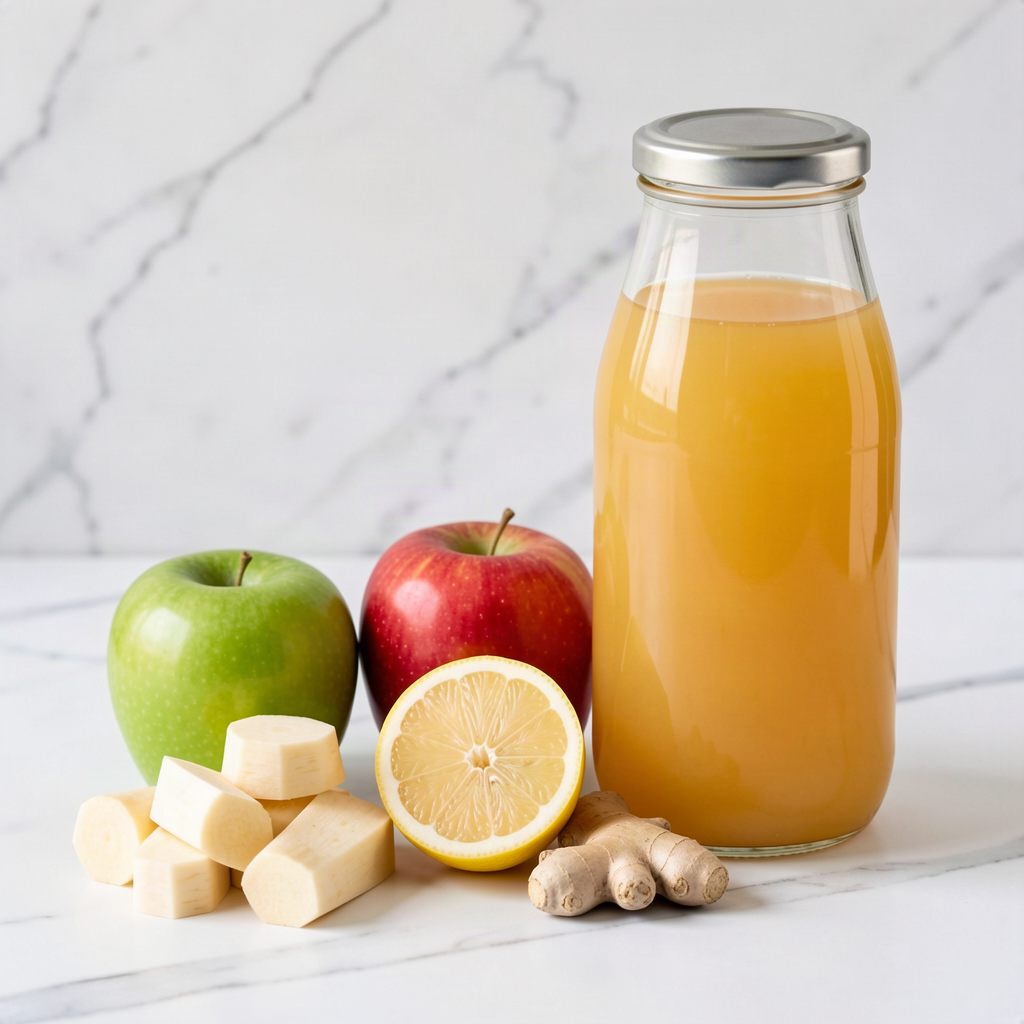
I only ever roasted parsnips until I wondered what they would do in the juicer, and it turns out they make one of the sweetest glasses on the site. Parsnips are a starchy root, and after the first frosts that starch turns to sugar, which is why a winter parsnip tastes like a completely different vegetable to a summer one. That sweetness means this one needs nothing added, no honey and no syrup, just two apples, a thumb of ginger for warmth and a lemon to stop it sliding into pudding. It pours a pale gold and it is far lighter than you would expect from a root vegetable.
Why these ingredients work
Parsnips are a proper winter root, around 75 calories per 100 g raw, and a good everyday source of potassium, vitamin C, folate and vitamin E. They are also the sweetest of the common root vegetables. Frost works on them the way it works on plenty of winter crops: the plant turns its stored starch into sugar to protect its cells from freezing, which is exactly why growers leave them in the ground until they have had a cold spell rather than lifting them early. The apples add a familiar sweetness and a little acidity so the glass does not taste flat, the ginger gives it a warm edge that carries the whole thing, and the lemon stops sweet parsnip and sweet apple from reading as dessert. The vitamin K is modest, around 28 µg a glass, but if you take warfarin or another vitamin K antagonist, keep your intake steady and mention it to your anticoagulant clinic, the same as you would with any green vegetable.
One thing worth saying plainly: straining the juice takes the fibre out. A whole parsnip is a genuinely fibrous vegetable, but almost all of that stays behind in the pulp, so this is a sweet drink rather than a filling one. It works out at roughly 22 g of sugar a glass, which makes it a good choice before a walk or in the mid-afternoon rather than something to sip all day.
FAQ
Do you need to peel parsnips before juicing?
I do, yes. The skin is where most of the earthy, slightly bitter taste sits, and it does not soften in a juicer the way it would in a roasting tin, so an unpeeled parsnip can make the whole glass taste muddy. Cut the leafy tops off as well and bin them rather than juicing them. Parsnip foliage contains furanocoumarins, the same family of compounds that makes wild parsnip sap such a nuisance, and handling the wet leaves in strong sun can leave a sunburn-like rash on your skin. The root itself is absolutely fine, it is only the leaves and the sap you want to keep off your hands.
Is parsnip juice actually good for energy?
It is a sensible one, but let us be straight about it. Parsnips carry a decent amount of potassium, and potassium is one of the minerals you lose when you sweat, so a glass like this fits well before a walk or a bike ride. What it is not is a fix for tiredness with a real cause. If you are sleeping badly, run down, low in iron, or your thyroid is underactive, no juice will sort that out and it is worth getting looked at properly. Treat this as a naturally sweet drink with a useful bit of potassium in it, not a remedy.
Can you make it without a juicer?
Yes. Peel the parsnips and cut them into rough chunks, core and quarter the apples, then peel the ginger and the lemon. Blend everything with about 150 ml of cold water for a full minute, pour it through a nut milk bag or a fine sieve, and squeeze the pulp hard, because parsnip holds on to a surprising amount of liquid. You will get a slightly thicker glass than the juicer gives you, and it will separate if it stands, so stir it before you drink it.
More energy recipes: see the full Energy collection.
Parsnip, Apple and Ginger Juice
Equipment
- Nut milk bag
Ingredients
For the juice
- 2 large parsnips about 250 g, topped, tailed and peeled, leafy greens binned not juiced
- 2 sweet apples such as Gala or Braeburn, about 300 g, cored and quartered, skin left on
- 2 cm fresh ginger peeled
- 1 unwaxed lemon peeled, or leave it out if your apples are sharp
Instructions
Juicer method
- Top and tail the parsnips and peel them. Cut the leafy greens off first and bin them rather than putting them through the juicer. Cut the peeled roots into chunks that will fit your juicer's feed chute.
- Wash the apples and cut them into quarters, core and all, leaving the skin on. Peel the ginger. Peel the lemon if your juicer struggles with citrus peel, or leave the pith on if it copes.
- Feed the parsnip and apple through the juicer in alternating pieces so the drier root gets carried through by the juicy apple instead of sitting on the screen. Add the ginger and the lemon with the last of the fruit.
- Stir the juice and pour it straight into a glass or a sealed bottle. It is best drunk the same day, and it will separate as it stands, so give it a stir before you drink it.
Blender method
- Peel the parsnips and cut them into rough 2 cm chunks. Core and quarter the apples, peel the ginger and peel the lemon.
- Put everything into the blender with about 150 ml of cold water and blend on high for a full minute, until there are no lumps of parsnip left at all.
- Tip the mixture into a nut milk bag or a fine sieve set over a jug and squeeze the pulp hard. Parsnip holds on to a lot of liquid, so keep going until the pulp is dry.
- Serve over ice, or chill it in a sealed bottle and drink it within a day.