
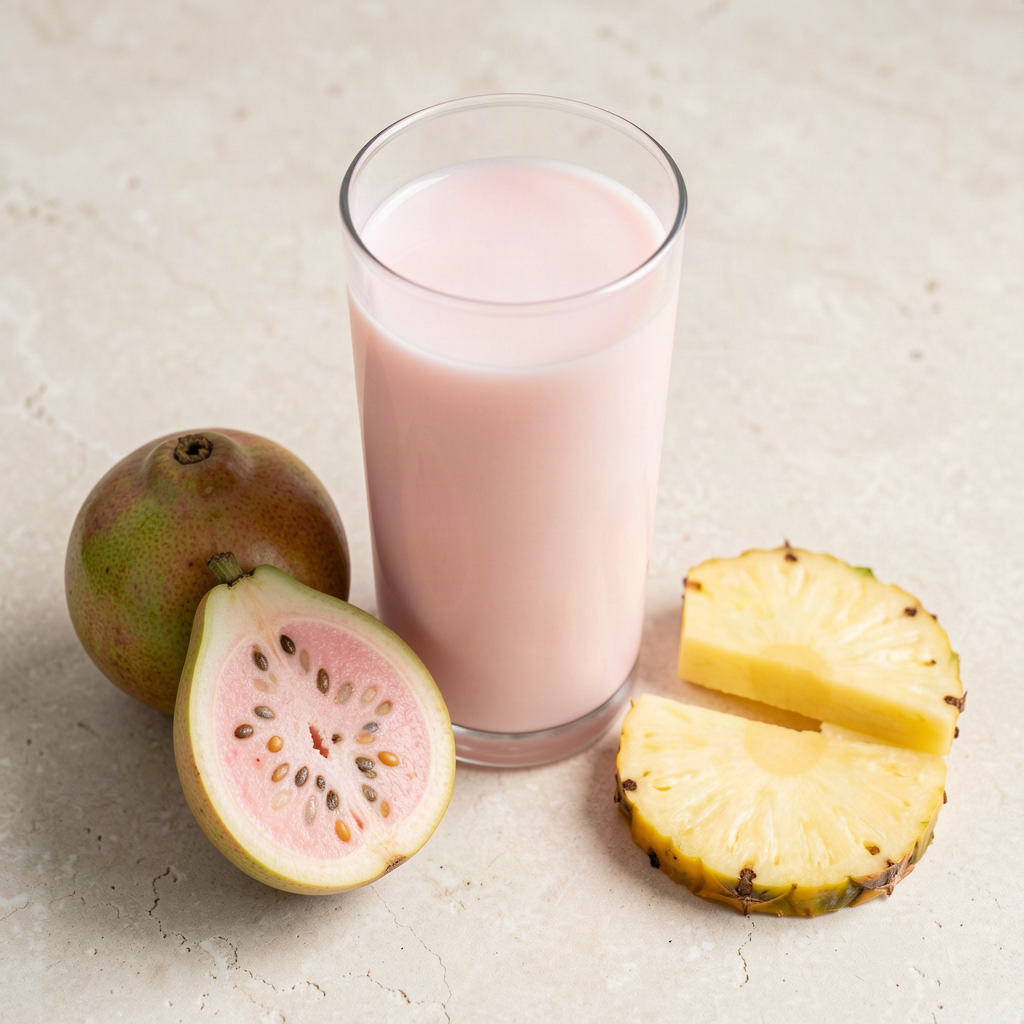
Guava is the fruit I always walk past in the shop and then regret not buying. It is not cheap, it is not tidy, and half the time you cannot tell whether it is ripe. But juice two of them with a quarter of a pineapple and you get something worth the faff: pale pink, thick enough to feel like a drink rather than water, and sweet in a way that tastes like it came off a tree.
This is the one I make when everyone around me is coughing. Guava carries more vitamin C than almost any fruit you can buy in a British supermarket, and one glass of this lands you around 250mg of it. The NHS says an adult needs 40mg a day, so one glass covers you several times over.
Why these ingredients work
Guava keeps its vitamin C in the flesh rather than the skin, so the whole fruit goes in, seeds and all. Those hard little seeds are also the reason this one needs straining; they are edible but gritty enough to spoil the glass. Guava brings a good dose of fibre and potassium too, and the pink varieties carry lycopene and beta carotene, which is where that colour comes from.
Pineapple does the job guava cannot do on its own. Guava pulp is dense and fairly dry, so it needs a wet partner to juice cleanly. Pineapple is mostly water, and its acidity lifts the musky, almost floral sweetness of the guava. It also brings bromelain, the enzyme that breaks down protein, which is why pineapple turns up in so many digestion juices.
Between them, two guavas and a quarter of a pineapple give you roughly 128 calories a glass, 6.5g of fibre and about 465mg of potassium, so it drinks more like food than most juices do.
FAQ
Do you peel guavas before juicing?
No. Wash them, cut the stalk end off and juice the rest, skin included. The skin is thin and holds fibre and a fair share of the fruit’s vitamin C. Just be ready to strain the finished juice, because the seeds are hard and a wide-mesh juicer will push them straight through.
Can you make guava pineapple juice in a blender?
Yes, and it is the easier route if you do not own a juicer. Scoop the flesh into the blender with 60ml of cold water, blend for a full minute, then strain through a nut milk bag or a fine sieve. Skip the water and the blades just push the pulp around the jug instead of breaking it down.
What does guava pineapple juice taste like?
Sweet and slightly floral at first, with a bit of musk sitting behind it, then the pineapple sharpens the finish. It is a heavier drink than straight pineapple juice, closer to a nectar in texture. Serve it cold and drink it fresh, because it separates within half an hour and tastes flat by the next morning.
More immunity juices: see the full IMMUNITY collection.
Guava Pineapple Juice
Equipment
- Juicer the quickest route if you already have one
- Budget cold press juicer worth it if guava is going to become a regular thing
- High-speed blender for the blender method
- Budget blender works fine, just blend a little longer
- Nut milk bag for catching the hard guava seeds
Ingredients
Fruit
- 2 ripe guavas about 170g of flesh. Pink-fleshed ones give the softer, sweeter juice
- 0.25 pineapple about 230g peeled flesh
- 60 ml cold water blender method only
- ice cubes to serve
Instructions
Juicer method
- Rinse the guavas, cut off the stalk ends and quarter them. Leave the skin on and keep the seeds in.
- Top and tail the pineapple, cut away the skin and the eyes, then cut the flesh into strips that fit your feed chute.
- Feed the guava and pineapple through the juicer, alternating pieces so the pineapple's moisture helps push the dense guava through.
- Stir the juice, then strain it through a fine sieve or a nut milk bag. Guava seeds are hard and they will slip through a wide-mesh machine.
- Pour into two glasses over ice and drink it straight away.
Blender method
- Scoop the guava flesh away from the skin into the blender, seeds and all. Cut the pineapple into chunks and add it too.
- Pour in 60ml of cold water. Guava pulp is dense and the blades need the liquid to get it moving.
- Blend on high for 45 to 60 seconds until it is completely smooth.
- Strain through a nut milk bag or a fine sieve into a jug, pressing the pulp with the back of a spoon to get all the juice out.
- Pour into two glasses over ice.