
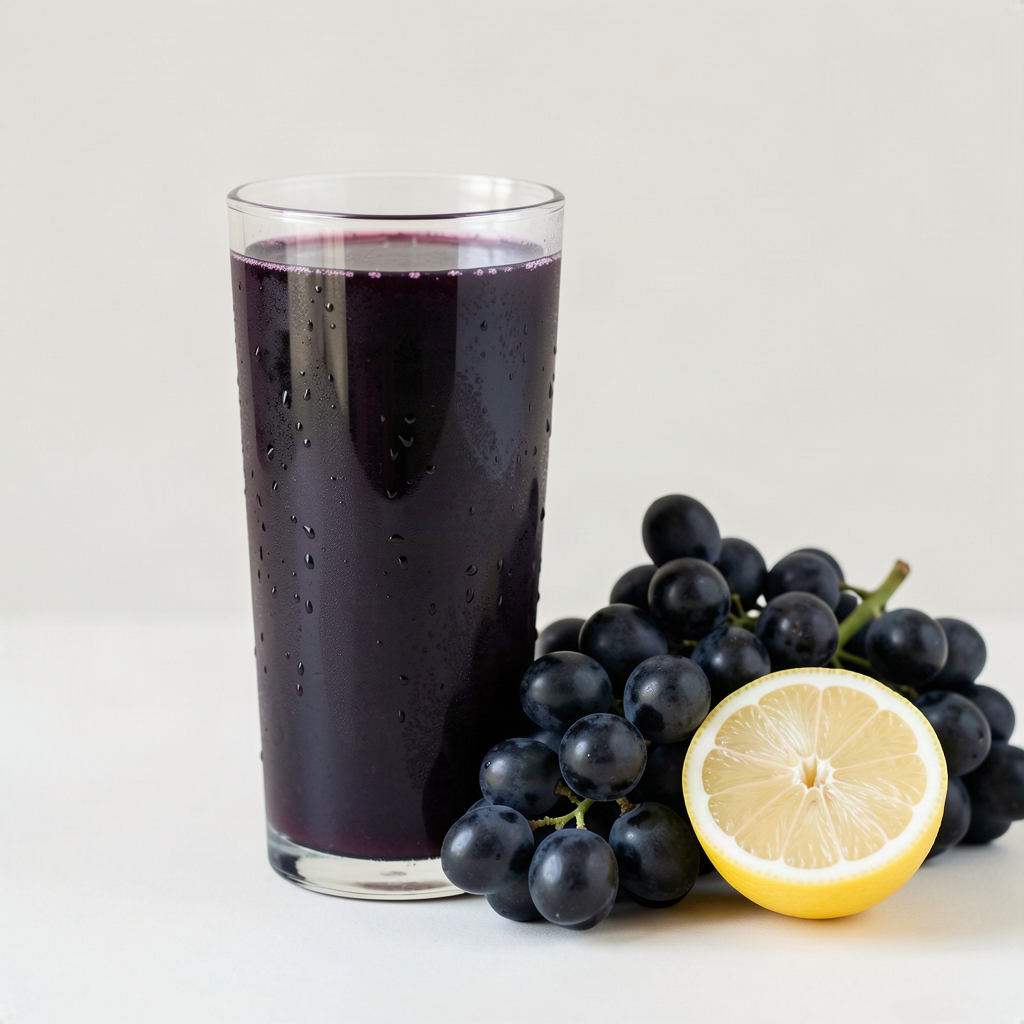
I never planned to make grape juice. Grapes are the fruit you eat out of the bowl while you’re waiting for the kettle, not the fruit you push through a juicer. Then a bag of black ones went soft at the back of the fruit bowl, too far gone to enjoy but too good to throw out, so I fed them through the juicer on a whim. The juice that came out was properly deep purple, thick and sweet in a way the bottled stuff never is, and it needed nothing but a squeeze of lemon to wake it up. I’ve made it from fresh bunches ever since, usually on the days I want something sweet that isn’t biscuits.
Why these ingredients work
Black grapes are one of the few fruits where the brain health research actually points somewhere. Most of that work used Concord grapes, the American variety grown for grape juice, but the same polyphenols are in the dark-skinned grapes on any UK supermarket shelf. They live mainly in the skins and seeds, which is where the deep colour comes from too: anthocyanins, the same pigments that make blueberries blue. In a 2010 trial at the University of Cincinnati, older adults with early memory decline drank Concord grape juice every day for twelve weeks and scored better on memory tests than the placebo group, and a 2012 follow-up saw a similar pattern in people with mild cognitive impairment. I’ll be straight with you: these are small, early studies, mostly in older adults, and no one is claiming grape juice reverses anything. What they do support is that grape polyphenols are absorbed well and may help with the blood flow the brain runs on. The lemon earns its place differently: grapes are not a big source of vitamin C, and I’m not going to pretend otherwise. The lemon stops the juice from browning and stops a very sweet glass from tasting flat, and that’s enough.
FAQ
Can I use red or green grapes instead?
Yes, though the colour changes the character. Red grapes make a similar juice with a bit less depth. Green grapes are sweeter and milder, and because the polyphenols concentrate in the dark skins, a green grape juice loses most of the angle this recipe is built around. If green grapes are all you have, they still make a lovely drink, just think of it as a different glass.
Do the grapes need to be seedless?
Seedless grapes make life easy and they’re what most shops sell, but seeded varieties juice fine too. In a juicer the seeds are handled without trouble. In the blender method they get crushed, which adds a bitter, tannic edge, so pick the seeds out first or stick to seedless grapes for that version. The skins stay on either way, that’s where the colour and the polyphenols live.
Is grape juice high in sugar?
Honestly, yes. There’s around 30g of natural sugar in a glass, close to double a standard glass of orange juice, because grapes are among the sweetest fruits there are. I treat this as a sweet treat rather than a thirst-quencher, and I’d drink it alongside food if I was watching my blood sugar. The upside is that the sugar arrives with those polyphenols, which is more than a glass of squash can say, and a half glass of 100ml is a sensible portion if you just want the taste.
More brain recipes: see the full Brain collection.
Black Grape Juice
Equipment
- 1 Juicer masticating or centrifugal
- 1 High-speed blender for the blender method
- 1 Nut milk bag or fine-mesh sieve to strain the blender version
- 2 Airtight glass bottles for storing
- 1 Budget cold press juicer a great value alternative
- 1 Budget blender a great value alternative
Ingredients
For the juice
- 700 g black seedless grapes washed and pulled from the stems; one generous bunch. Seeded black grapes juice fine too, but pick the pips out if you're using the blender method
- 1/2 lemon halved and juiced, pips out. It lifts a very sweet juice and stops it browning, but it's a background note, not a main flavour
- 100 ml cold water only for the blender method, to help the blades get going
Instructions
Juicer method
- Wash the grapes and pull them off the stems. It's the fiddly bit, but big stalks can clog a juicer, so take a minute over the bowl.
- Halve the lemon and squeeze the juice into a jug, fishing out any pips.
- Feed the grapes through the juicer a handful at a time. The juice comes out deep purple, and the foam on top settles within a minute or two.
- Stir in the lemon juice, taste, and pour into glasses or an airtight bottle. It's best properly cold, so add ice or give it an hour in the fridge.
Blender method
- Prep the grapes the same way: washed, off the stems and into the blender jug. Squeeze in the lemon juice.
- Add the cold water and blend on high for 30 to 45 seconds until the grapes are completely broken down.
- Pour through a nut milk bag or a fine-mesh sieve and squeeze firmly to get every last drop. The pulp left behind goes straight on the compost.
- Taste and serve. The blender version has a little more body to it, which some people prefer.