
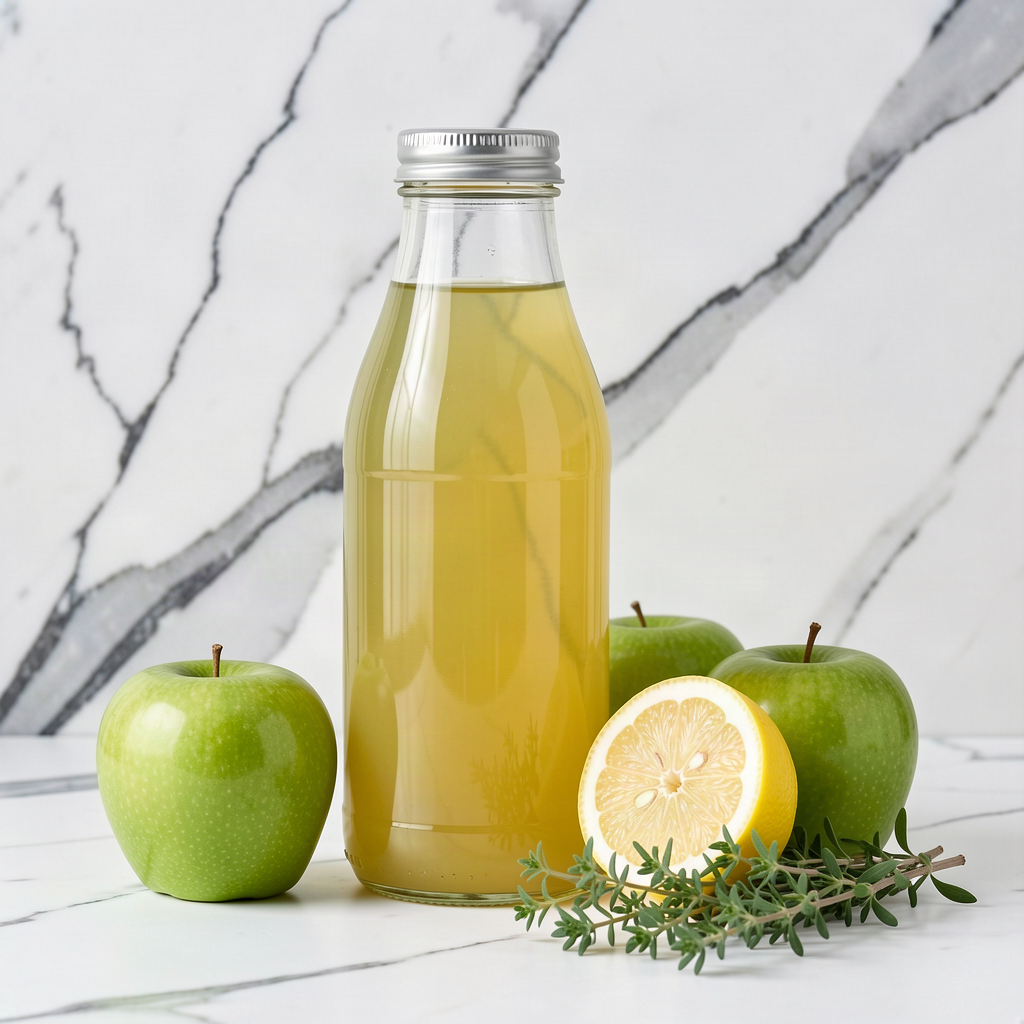
If you grew up with thyme and lemon for a sore throat, this is that drink as a fresh juice. I make it the moment a cold starts to circle, partly because it is something I actually want to drink and partly because ten minutes in the kitchen with a juicer beats sitting still and worrying about it. Two green apples do most of the work, the lemon keeps it bright, and the thyme sits over the top of both without ever tipping it into cough-medicine territory. Do not expect it to taste like a throat sweet. Expect it to taste like apple juice that someone has run a herb garden through.
Why these ingredients work
Thyme is the reason to make this and the reason to be careful about what you claim for it. Its main compounds, thymol and carvacrol, have real antimicrobial and antispasmodic activity, and the German Commission E has approved thyme herb for bronchitis, whooping cough and catarrh since 1984, which is why it turns up in so many cough syrups across Europe. The catch is the dose. The trials that show a benefit use concentrated fluid extracts and syrups, often alongside ivy leaf rather than on their own, like the Kemmerich trial in adults with acute bronchitis. Nobody has tested a handful of fresh thyme in a glass of apple juice. So take the herb seriously and treat the glass as a well-made food amount, which is all it needs to be.
The vitamin C here comes mostly from the apples and the lemon rather than the thyme. It is worth saying plainly that regular vitamin C does not stop healthy adults catching colds, although it can shave a little off how long one lasts, so drink it as a better habit than a fizzy drink rather than as a shield. For such a small handful, thyme also brings a genuine amount of vitamin K, calcium and iron, and those stay in the glass when it is juiced.
Two practical notes. Thyme is high in vitamin K for an herb, so if you take warfarin or another blood thinner, keep your intake steady and mention it to your anticoagulant clinic before making this a daily habit. And keep concentrated thyme essential oil well away from the glass. It is not for swallowing at any dose, whatever you read online, and it is a completely different thing from a few fresh sprigs.
FAQ
How much thyme should I use?
A good handful of sprigs, about 10 g once the leaves are stripped, split across two glasses. Thyme is strong and slightly resinous, so much more than that starts to taste like drinking the garden. Dried thyme works at a pinch, a good teaspoon, but fresh is far better here.
Can I make it in a blender?
Yes. Blend everything with about 100 ml of cold water, then strain through a nut milk bag or a fine sieve and squeeze the pulp hard. Blending pulls more of the thyme’s texture into the juice, so strain it properly if you want it clear. The juicer version is brighter and cleaner.
Does it actually help a cough or a cold?
It is a good drink and a pleasant way to take on fluid and a little vitamin C when you feel rough, but treat it as exactly that rather than as medicine. The human evidence for thyme is for concentrated extracts and syrups, not juiced leaves, and vitamin C does not prevent colds. If a cough has lasted more than three weeks, comes with breathlessness, or brings up blood, that is a conversation with your GP rather than with your juicer.
More immunity recipes: see the full Immunity collection.
Thyme, Apple and Lemon Juice
Equipment
- 1 Juicer A masticating or cold press juicer handles the herb and the lemon better than a centrifugal one.
- 1 Budget cold press juicer The cheapest sensible way in if you are not sure you will stick at it.
- 1 High-speed blender Use this route if you already own a blender and no juicer.
- 1 Nut milk bag Only needed for the blender method, to strain the pulp out.
- 2 Airtight glass bottles For keeping a batch in the fridge, though this one is best drunk the day it is made.
Ingredients
- 2 green apples crisp eating apples such as Granny Smith or Braeburn, cored but not peeled
- 1 unwaxed lemon rinsed if unwaxed, peeled if waxed, then cut into halves
- 1 large handful fresh thyme sprigs about 10 g, leaves stripped from the woody stems
Instructions
Juicer method
- Rinse the lemon. If it is not unwaxed, give it a scrub in warm water to take the wax off, then dry it. Cut it into halves.
- Cut the apples into quarters and take out the cores. There is no need to peel them, the skin is where a lot of the colour and flavour sits.
- Strip the thyme leaves off the woody stems. You want a good handful, about 10 g of leaves, and it does no harm if a few small soft stems go through with them.
- Feed the apples through the juicer first so the machine is running wet, then drop the thyme leaves in, then finish with the lemon. The apple juice carries the tiny thyme leaves through with it.
- Stir it well, then pour into two glasses or into a sealed bottle if you are making it ahead. Drink it the same day.
Blender method
- Core and quarter the apples and peel the lemon if it is waxed. Strip the thyme leaves from the stems.
- Put everything in a high-speed blender with a splash of cold water, about 100 ml, and blend for 45 to 60 seconds until it is completely broken down.
- Pour it through a nut milk bag or a fine sieve set over a jug, then squeeze the pulp hard to get all the liquid out.
- Chill it and drink it the same day. Blending leaves more of the thyme's texture in, so strain it properly if you want it clear.